 WhatIs.site
Table of Contents
What Is The Silk Road?
The Silk Road wasn’t a single road—it was a sprawling network of trade routes connecting China, Central Asia, the Middle East, and Europe for nearly 1,500 years. Goods flowed. Ideas flowed.
Religions spread. People collided, competed, and sometimes collaborated.
How This Ancient Trade System Actually Worked
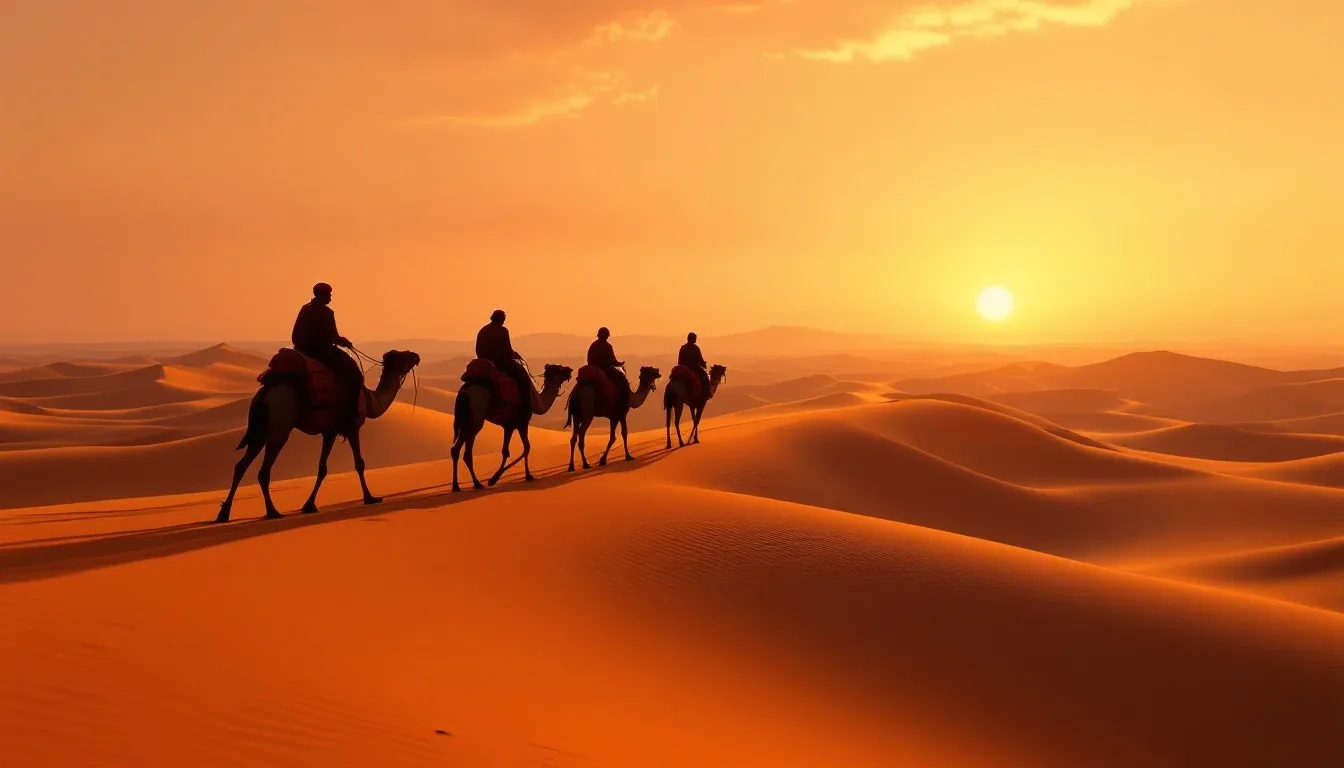
Here’s what catches most people off guard: merchant caravans didn’t typically travel the entire route from China to Rome. That would be suicide—literally. The journeys were brutal. Sand storms appeared without warning. Mountain passes became impassable with unexpected snow. Bandits ambushed unprepared travelers. Disease killed more people than bullets ever could. Instead, the system operated on a relay model.
A Chinese merchant might sell silk to traders in the Taklamakan Desert oasis town of Kashgar. Those traders would sell it to merchants heading west toward Samarkand. From there, it moved to Persian traders, then merchants based in the Levantine coast, and eventually reached European ports. Each intermediary took a cut, which meant prices skyrocketed the farther goods traveled. A bolt of silk that cost two silver coins in Chang’an might sell for twenty coins in Constantinople. The profit margins were obscene—and that’s exactly why merchants risked their lives.
This relay system meant that Central Asian cities became absurdly wealthy. Places like Samarkand, Bukhara, and Kashgar transformed into cosmopolitan hubs where fortunes were made and lost daily. You’d find Afghan lapis lazuli dealers, Jewish merchants, Chinese tea traders, Arab spice merchants, and Persian silk brokers all operating in the same bazaar. These cities acted as the beating heart of Eurasian commerce, drawing traders from every direction like a magnet draws iron filings.
The actual routes varied depending on the season, political stability, and which routes bandits currently controlled. Summer caravans often took the northern path through the Tian Shan Mountains—shorter, but with its own dangers: avalanches, thin air, and sudden temperature drops that killed horses and people alike. Winter travelers might brave the southern route through the Taklamakan Desert—one of Asia’s most inhospitable places. The Taklamakan was so deadly that travelers called it the “sea of death.” Sandstorms would appear out of nowhere, swallowing entire caravans. People and animals collapsed from dehydration. Oases marked the difference between survival and becoming a skeleton bleached white by the sun.
Why Silk Was the Star Product (But Not the Only One)
The Silk Road gets its name from silk, and for good reason. Silk was genuinely revolutionary—soft, lustrous, and impossibly difficult to produce. For centuries, only the Chinese knew how to manufacture it. They guarded the secret jealously, calling silk production the “Sericulture.” Foreign governments tried bribing Chinese officials to reveal the technique. Spies were executed when caught. It was treated like a military technology—because economically, it basically was one.
Roman Empire elites went absolutely crazy for Chinese silk. Pliny the Elder complained in the 1st century CE that Rome was hemorrhaging money buying silk—he estimated the trade deficit at 100 million sesterces annually. That’s like saying your country is spending billions on a luxury good it can’t produce itself. Seneca complained about silk-clad women at the circus, saying he could see through their garments. The Roman Senate periodically tried to ban silk because it represented moral decay and economic disaster. Nobody cared. Silk remained status—and status was everything to Roman elites.
But silk was just the headline. Merchants hauled spices—pepper from India, cloves from Indonesia, cinnamon from Sri Lanka—goods that were literally worth their weight in gold in European markets. They traded jade, which the Chinese had worked with for thousands of years and which wealthy Persians and Central Asians desired for jewelry and decorative carvings that demonstrated taste and power. Glassware moved east from the Mediterranean. Metal goods, furs, and textiles went both directions. Paper and printing technology eventually traveled from China westward, eventually reaching the Islamic world and transforming how knowledge was recorded and shared. Horses were crucial—Central Asian horses, particularly the “Heavenly Horses” from Ferghana, were taller, faster, and more powerful than anything Romans could breed locally. The Roman Empire wanted them badly.
Here’s what most people miss: intellectual and religious goods were equally important, maybe more so. Buddhist texts made the journey east to China and Japan, spreading a major world religion and reshaping the spiritual character of East Asia. Islamic scholars connected with Chinese mathematicians. Christian missionaries traveled the routes seeking converts. Agricultural knowledge spread—crops like grapes and pomegranates moved from Central Asia and Persia into China, while Chinese cultivation techniques influenced farming practices across the entire network. A Chinese farmer’s innovation in irrigation could reach Persia within a generation.
When the Silk Road Actually Got Started (It’s Complicated)
Most historians pin the birth of the Silk Road to around 130 BCE, when Chinese envoy Zhang Qian traveled westward on a diplomatic mission for the Han Dynasty. He got captured by Xiongnu tribes—hostile nomads who controlled the steppes. He spent thirteen years in captivity. He escaped. He continued his mission anyway, showing the kind of determination that makes history. He eventually returned with reports of wealthy civilizations to the west, which sparked Chinese interest in western trade and diplomatic relations.
But here’s the nuance: trade existed before Zhang Qian’s journey. Silk had been reaching the Mediterranean for centuries through Persian middlemen who never revealed the original source. What Zhang Qian’s mission did was formalize Chinese diplomatic and commercial interest in westward routes. The Han Dynasty then sent envoys and established way stations—supply depots where caravans could rest, resupply, and trade. Chinese merchants began pushing goods westward more aggressively, cutting out some Persian middlemen and capturing larger profits.
The Silk Road really hit its stride during the Tang Dynasty (618-907 CE). This was the golden age when everything aligned. Chang’an (modern-day Xi’an) became the world’s largest city, with about 1 million residents living in an urban environment of remarkable sophistication. Foreign merchants flooded in, creating vibrant immigrant communities. The Tang government actively encouraged trade, established official markets where goods could be bought and sold, and protected caravan routes through military force. Silk exports reached their peak. The cultural exchange was staggering—Persian influences entered Chinese art and music, Chinese poetry styles influenced Central Asian courts, and Buddhism reached its height of influence in China during this period, reaching even the imperial court.
The Economic and Political Game
The Silk Road wasn’t just commerce—it was power. Controlling routes meant controlling wealth and influence. The Chinese government recognized this early. They established the Silk Road partially to secure their western border against hostile nomadic tribes who threatened Chinese settlements, but also to monopolize trade profits. Chinese emperors didn’t want independent merchants getting too rich; they wanted state control of the most profitable industries. Merchants operated under strict regulations. The state extracted taxes. The state prevented competitors from undercutting official prices.
Similarly, Central Asian kingdoms understood their geographic position gave them power. They could tax passing caravans—and they did, extracting significant fees. They could control which routes remained open or closed based on political whims. They could extract favorable trade terms from both Chinese merchants to the east and Persian merchants to the west, playing them against each other. Political alliances formed around trade routes. Wars were fought over them. When the Sassanid Persian Empire controlled the western routes in the 6th century, they deliberately prevented Chinese silk from reaching Europe directly—they were the middlemen and profited enormously from their monopoly. Nobody could bypass them without losing massive amounts to tariffs or dealing with bandits they secretly sponsored.
This competitive advantage mattered intensely. In the 6th century CE, Byzantine Emperor Justinian reportedly sent spies to China to steal silkworm eggs and learn sericulture techniques. They succeeded, smuggling the precious eggs out in a hollow walking stick or perhaps in a monk’s robes—accounts vary. Suddenly, the Byzantine Empire could produce its own silk, which upended the entire trade situation. Less demand for Chinese silk meant lower prices and reduced Chinese profits. The monopoly was broken. But this still took centuries to fully impact trade.
How Ideas Actually Traveled
This is where the Silk Road gets genuinely fascinating. Commerce was the vehicle, but ideas were the payload. Buddhism traveled the Silk Road starting around the 1st century CE. Buddhist monks journeyed from India and Central Asia into China, established monasteries, translated scriptures, and fundamentally transformed Chinese religious and intellectual life. They faced resistance initially—the Chinese had their own established religions and philosophical traditions like Confucianism and Daoism. But Buddhism offered something different: a promise of salvation that appealed to common people, not just elites. By the Tang Dynasty, Buddhism was deeply woven into Chinese culture, influencing everything from art to poetry to philosophy.
In reverse, Chinese papermaking and printing technology moved westward. Paper technology reached the Islamic world by the 8th century, and eventually Europe. This was revolutionary—it was cheaper than parchment and enabled mass production of documents. Some historians argue paper technology had greater impact on human civilization than any amount of silk. It made knowledge reproducible and shareable. It enabled bureaucracy to expand. It democratized information access, at least compared to the handwritten manuscripts that preceded it. The consequences were enormous.
Artistic styles blended. Chinese painting absorbed influences from Central Asian and Persian artistic traditions, creating something uniquely hybrid. Islamic geometric patterns influenced Chinese ceramics in ways you can still see in museums today. Architectural styles cross-pollinated—Buddhist influences shaped Central Asian architecture, Greek influences from the ancient Hellenistic period reached Indian Buddhist sculpture, and Chinese influences permeated everything from clothing to decorative arts across the network. If you look at pottery, metalwork, or textiles from along the Silk Road during its peak, you see layers of influence from multiple civilizations mixed together in genuinely creative ways.
Scientific and mathematical knowledge flowed too. Islamic astronomy and mathematics influenced Chinese scholars, who made their own discoveries and sent knowledge back westward. Chinese printing and mechanical innovations eventually reached Europe, where they transformed technology and society. The Silk Road wasn’t just about getting stuff from Point A to Point B—it was a knowledge-sharing network that fundamentally reshaped multiple civilizations. Technology that took centuries to develop in one place could spread across the world within generations.
Why Central Asia Became the Crossroads of Everything
If you look at a map, Central Asia seems like the middle of nowhere. Mountains, deserts, steppes—harsh terrain that seems fundamentally uninviting. Yet it became the most cosmopolitan region on Earth during the Silk Road’s peak. Why? Geography—and I mean this in the most practical sense possible. If you wanted to move goods from China to Europe or the Middle East, you had to cross Central Asia. There was no way around it. The ocean routes weren’t viable for bulk goods until much later. The northern routes through Russia didn’t develop until centuries later. Central Asia was the only game in town.
This geography created opportunity. Cities that controlled key oases or mountain passes became wealthy beyond measure. Samarkand, in modern-day Uzbekistan, became a legendary center of learning and commerce. Scholars, merchants, and artists clustered there because that’s where the money was. The city became famous for its markets—bazaars so extensive and varied that merchants needed weeks to explore them all—and for its scholars and libraries where knowledge was preserved and debated. Bukhara, another Central Asian city, became a major center of Islamic learning where mathematicians, astronomers, and theologians worked. Kashgar, on the edge of the Taklamakan Desert, was the gateway between Chinese and western trade, positioned perfectly to capture profits from every transaction.
These cities were genuinely multicultural in ways that most medieval cities simply weren’t. You had Nestorian Christian communities—a branch of Christianity that had separated from the main church—operating alongside Jewish merchants who had been trading for centuries. Buddhist monasteries served as storage facilities for goods and as way stations for pilgrims. Islamic mosques served both spiritual and social functions. Zoroastrian temples preserved ancient Persian religious traditions. All of this coexisted in the same urban space. People spoke multiple languages—probably five or six languages were common in major cities. Intermarriage happened frequently. Children grew up speaking their parents’ native languages plus two or three others. Religions debated with each other. It was messy and sometimes violent, but it was also a genuine crossroads of civilizations where different worldviews collided and sometimes synthesized into something new.
Religion, Culture, and the Movement of Beliefs
One of the most significant aspects of the Silk Road that often gets overlooked is how it functioned as a highway for belief systems. Islam spread eastward along the routes, eventually reaching China and establishing Muslim communities that still exist today. Christianity traveled east, creating scattered communities across Central Asia and even reaching China, where a small Christian presence lasted for centuries until it eventually disappeared. These weren’t just merchants converting—they were religious communities establishing institutions, building places of worship, and converting local populations.
The spread of religions created cultural fusion. In cities like Samarkand, you had Buddhist-influenced art meeting Islamic artistic traditions. Chinese religious sensibilities mixed with Persian influences. Architectural styles blended—you see Buddhist pagodas with Islamic geometric patterns, or mosques built with Chinese construction techniques. Literature changed too. Stories traveled and got adapted. The famous tale of the monkey king that originated in India got reinterpreted in China, and versions of it spread back westward in altered forms.
This cultural blending wasn’t always peaceful. Religious tensions existed. Different communities competed for resources and influence. But the pressure to maintain peace for trade purposes kept things from exploding into constant warfare. Merchants needed stability—conflict was bad for business. So cities developed systems where different religious communities could coexist with minimal friction. They had separate quarters sometimes, or separate markets, or specific rules about religious displays. These weren’t always fair systems, but they were systems designed to allow commerce to continue.
The Routes and Their Challenges
The Silk Road’s physical geography shaped everything about how trade actually operated. The routes north and south of the Taklamakan Desert were the main arteries. The northern route went through cities like Kashgar, Samarkand, and Bukhara before reaching Persia. The southern route hugged coastlines and oases, passing through cities like Khotan. There were also sea routes that became increasingly important over time. These maritime routes ran from the Red Sea to the Indian Ocean to China, avoiding Central Asia entirely. As maritime technology improved and became safer, more goods moved by ship and less by land.
Every route had its own dangers. The Taklamakan Desert wasn’t just hot—it was actively hostile. Mirages played tricks on people’s minds. The terrain was otherworldly and disorienting. Travelers got lost despite guides who supposedly knew the area. Some routes went through mountain passes that only opened for a few months each year. Pass through at the wrong time and your entire caravan could freeze. Crossing rivers during rainy season meant risking flash floods that could sweep away hundreds of people and animals. Disease was constant—travelers got infections from wounds, diseases from insects, illnesses from contaminated water, plague that moved along the routes just as readily as goods.
Bandits were another problem. The term “bandit” usually meant organized groups of armed men—sometimes refugees, sometimes unemployed soldiers, sometimes people who had given up on legitimate work. Major routes had “protectors” who would escort caravans for fees, sometimes protecting them from bandits, sometimes being the bandits themselves under a different name. It was essentially organized crime protecting your goods from crime. The line between merchant and bandit was sometimes blurry—merchants might turn to banditry during lean years, or bandits might go legitimate when opportunities arose.
The Economic Networks That Connected Everything
The Silk Road wasn’t a spontaneous or accidental network. It emerged from deliberate decisions by governments and merchants. The Chinese government incentivized trade through subsidies, tax breaks, and military protection. Merchants formed guilds and trading companies that standardized practices. Regulations emerged about quality standards, weight measures, and fair dealing. Banks and credit systems developed so merchants didn’t have to physically carry tons of gold and silver across mountains—they could carry documents instead. It was surprisingly sophisticated for ancient commerce.
These systems allowed economies to specialize. Regions stopped trying to produce everything and instead focused on what they could produce best. China made silk, paper, and ceramics. India made spices and textiles. Central Asia bred horses and produced jade. Persia manufactured glassware and metalwork. This specialization increased efficiency—everyone produced more by doing what they did best and trading for the rest. Prices fell for consumers and profits rose for merchants. Everybody benefited, though obviously merchants benefited more.
The wealth generated by Silk Road trade allowed cities to fund cultural institutions. Universities developed in cities like Bukhara and Samarkand. Libraries accumulated thousands of manuscripts. Patronage networks emerged where wealthy merchants funded artists, scholars, and scientists. These investments in culture created lasting intellectual achievements. Mathematical advances came from scholars in Central Asian cities. Astronomical observations were recorded and shared. Poetry was written and celebrated. Architecture reached new heights of sophistication. The money from trade literally funded the intellectual and cultural achievements that we remember from this period.
Why the Silk Road Declined
The Silk Road began declining around the 15th century, and multiple factors contributed to the collapse. First, maritime trade routes became viable alternatives. European explorers figured out ocean routes to Asia—Vasco da Gama reached India by ship in 1498, and the Portuguese established direct sea routes to China. These maritime routes were faster and avoided the ridiculous taxes and fees that Central Asian kingdoms imposed on overland caravans. If goods took three months by sea instead of six months by land, and costs were lower because you didn’t need armed guards and way stations, merchants would choose the sea route every time.
Second, political fragmentation. The Mongol Empire, which had unified and secured Silk Road routes under Genghis Khan and his successors (roughly 1206-1368 CE), eventually collapsed. That collapse meant constant political instability in Central Asia—no unified government to maintain roads, protect caravans, or enforce contracts. Bandits weren’t afraid of authority anymore. Caravans faced increased dangers and rising costs. Some routes became so dangerous that merchants avoided them entirely.
Third, the Ottoman Empire’s rise created new obstacles. When the Ottoman Empire controlled the eastern Mediterranean and traditional Levantine routes in the 15th century, they increased tolls dramatically. They wanted to monopolize the spice trade like the Persians had centuries earlier. European merchants wanted alternatives—maritime routes provided them. Rather than negotiate with Ottoman authorities, European traders invested in ocean navigation and eventually bypassed the entire region.
Finally, certain traded goods became less valuable or cheaper to obtain directly. As European powers established colonial possessions in Southeast Asia, they didn’t need Central Asian middlemen anymore. They got spices directly from the source at lower prices. The monopoly advantages that made the Silk Road profitable evaporated. Why buy from a middleman when you could buy from the producer?
Why the Silk Road Still Matters
The Silk Road isn’t just historical trivia. It demonstrates how trade creates genuine cultural exchange and connection between distant peoples. It shows that cosmopolitan cities thrive when different peoples interact in contexts of commerce and mutual benefit. It reveals how knowledge travels and transforms societies—that a technology or idea developed in one place can spread globally and reshape civilization. Modern discussions about globalization often reference the Silk Road as the original “interconnected world.”
Today, the Chinese government actively promotes the “Belt and Road Initiative”—a modern infrastructure project explicitly framed as recreating the Silk Road. The irony is delicious: a network that was basically unplanned and organic, emerging from merchant incentives and government policies, is being deliberately revived through state investment. Whether that initiative succeeds or not, it shows how powerful the Silk Road metaphor remains. It represents something compelling about how humans connect, trade, and create together.
The physical routes themselves are seeing renewed interest. The Silk Road has been designated as a UNESCO World Heritage site. Archaeologists continue discovering buried cities and artifacts along the old routes, uncovering evidence of the sophisticated civilizations that thrived there. Every discovery adds pieces to our understanding of how ancient peoples actually connected across vast distances. Recent excavations have revealed the extent of cultural blending—identifying Greek-influenced art in Chinese tombs, Chinese technologies in Central Asian ruins, and Persian influences in Buddhist sculptures.
Understanding the Silk Road helps explain the modern world. It shows why Central Asia matters geopolitically—it always has, and it probably always will. It demonstrates how trade shapes politics and culture. It reveals that cultural exchange isn’t new—humans have been borrowing, adapting, and blending ideas across vast distances for millennia. The Silk Road was the original global supply chain, complete with all the messy human drama that entails. Merchants competed ruthlessly. Bandits preyed on caravans. Governments tried to maintain monopolies. Yet somehow knowledge spread, cultures blended, religions propagated, and the world became more interconnected. That same pattern continues today—the details change, but the fundamentals remain unchanged.
Frequently Asked Questions
When did the Silk Road actually exist?
The Silk Road wasn't a single fixed period—it evolved over roughly 1,500 years. Most historians mark its emergence around 130 BCE when Chinese envoy Zhang Qian opened diplomatic routes westward, peaking during the Tang Dynasty (618-907 CE), and gradually declining after the 15th century as maritime trade routes replaced overland routes.
Why was it called the "Silk Road" if it traded more than just silk?
The name is partly misleading—it comes from silk being the most prestigious and profitable trade good that moved westward from China. In reality, merchants exchanged spices, jade, glassware, metalwork, pottery, paper, and countless other goods. The name stuck because silk represented the luxury and exotic appeal of Asian trade to European markets.
How did the Silk Road actually work without modern infrastructure?
The Silk Road wasn't a single road but rather interconnected trade networks. Merchants rarely traveled the entire route themselves. Instead, goods passed through relay stations, oases, and cities where local traders bought and sold. These intermediaries made huge profits by controlling bottlenecks and managing the treacherous conditions—deserts, mountains, bandits, and disease were constant dangers.
Did regular people use the Silk Road, or just merchants?
Primarily merchants and traders made their living on the Silk Road, but pilgrims, missionaries, diplomats, and scholars also traveled these routes. Buddhist monks journeyed eastward to China to study and spread their faith. Diplomatic envoys carried official documents and gifts between emperors. However, most average people never traveled the Silk Road directly—they benefited from it through the goods and ideas that arrived in their local markets.
What caused the Silk Road to decline?
Several factors converged. Maritime trade routes became faster and safer after the 15th century, bypassing overland routes entirely. The rise of the Ottoman Empire disrupted traditional caravan routes and increased tolls. Political instability in Central Asia made travel riskier. Additionally, European nations began establishing direct sea routes to Asia, eliminating the need for middlemen traders along the old Silk Road network.
What was the most profitable good traded on the Silk Road?
Silk itself was extraordinarily profitable for Chinese merchants, but spices, jade, and glassware also commanded enormous markups. The profit margins grew larger the farther goods traveled from their origin. A spice that cost a few coins in India could sell for ten times that in the Mediterranean. The real fortune, however, went to the middlemen—the Central Asian traders who bought from one side and sold to the other.
Further Reading
Cite this article
APA
WhatIs.site. (2026). What Is The Silk Road?. Retrieved May 27, 2026, from https://whatis.site/silk-road MLA
"What Is The Silk Road?." WhatIs.site, March 6, 2026, https://whatis.site/silk-road. Accessed May 27, 2026. Chicago
WhatIs.site. "What Is The Silk Road?." Last modified May 12, 2026. https://whatis.site/silk-road. HTML
<a href="https://whatis.site/silk-road">What Is The Silk Road?</a> — WhatIs.site Related Articles
What Is Buddhism?
Buddhism is a religion and philosophical system founded in the 5th century BCE by Siddhartha Gautama, known as the Buddha.
religionWhat Is Islam?
Islam is a monotheistic religion founded in 7th-century Arabia, practiced by nearly 2 billion people. Learn about its beliefs, practices, and history.
everyday conceptsWhat Is Merchant Marine?
The merchant marine is a nation's commercial shipping fleet and the civilians who operate it. Learn about careers, history, and global trade's backbone.
everyday conceptsWhat Is Mongol History?
Mongol history covers the rise of Genghis Khan, the vast Mongol Empire, and its lasting impact on Eurasia. Learn about conquests, culture, and legacy.