 WhatIs.site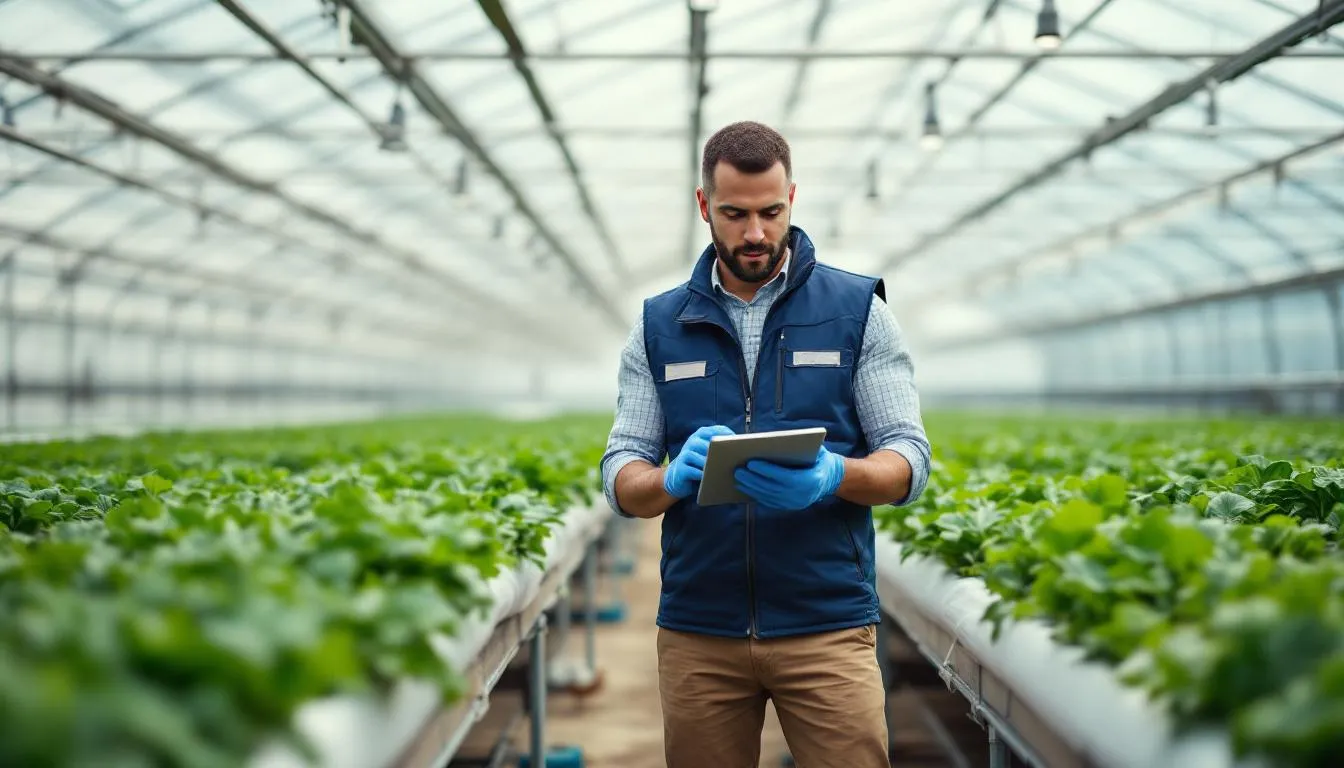
Table of Contents
What Is Greenhouse Management?
Greenhouse management is the science and practice of controlling the growing environment inside a greenhouse to optimize plant growth, health, and productivity. It involves regulating temperature, humidity, light, carbon dioxide levels, irrigation, and nutrition while managing pests and diseases—essentially giving plants the ideal conditions they’d never reliably get outdoors. As global demand for food increases and arable land decreases, greenhouse management has become a critical component of modern agriculture.
Why Greenhouses Exist
The basic idea behind a greenhouse is ancient. Roman Emperor Tiberius reportedly ate cucumbers year-round, grown under translucent stone sheets. But modern greenhouse technology really began in the Netherlands in the 17th century, where Dutch growers built glass structures to protect plants from the harsh Northern European climate.
Today, the reasons for growing under cover are more varied than ever:
Season extension: Growing crops outside their natural season—tomatoes in January, for example—when they command premium prices.
Climate independence: Growing tropical plants in temperate regions, or any crop in any location regardless of outdoor conditions.
Quality control: Producing consistent, unblemished produce that meets retail standards. Supermarkets reject surprising amounts of field-grown produce for cosmetic reasons.
Water efficiency: Greenhouses use 5-10 times less water than open-field farming because evaporation and runoff are minimized.
Pest reduction: Physical barriers reduce pest pressure, decreasing or eliminating pesticide use.
Yield maximization: Optimized growing conditions produce dramatically higher yields per square meter than field agriculture. Dutch greenhouse tomato yields reach 70-80 kg per square meter per year—roughly 10 times the field average.
The Netherlands, despite being smaller than West Virginia, is the world’s second-largest agricultural exporter by value. Greenhouses are a big part of why.
The Core Environmental Controls
Managing a greenhouse means managing six primary variables. Get them right, and plants thrive. Get them wrong, and you’ve built an expensive sauna full of dead plants.
Temperature
Temperature is the single most important greenhouse variable. Most greenhouse crops have an optimal temperature range of about 18-28 degrees Celsius during the day and 15-20 degrees at night. Temperatures above 35 degrees Celsius cause heat stress; below 10 degrees Celsius, many crops stop growing.
Heating: In cold climates, heating is the largest operating cost—often 30-50% of total expenses. Options include natural gas boilers (most common), heat pumps, biomass boilers, geothermal systems, and waste heat from industrial processes. The Dutch greenhouse industry has pioneered combined heat and power (CHP) systems that generate electricity while using the waste heat for greenhouses and the CO2 from combustion for crop enrichment. Elegant double-use.
Cooling: In warm climates, cooling is the challenge. Evaporative cooling (fan-and-pad systems or fogging) works well in dry climates. Shade screens reduce solar heat gain. Natural ventilation—opening roof and side vents—is the simplest and cheapest cooling method but only works when outdoor temperatures are moderate.
Thermal screens: Retractable screens inside the greenhouse reduce heat loss at night (saving energy) and can reduce solar gain during hot days. Some modern screens combine thermal insulation with light diffusion, improving both energy efficiency and light distribution.
Humidity
Relative humidity affects transpiration (water loss from leaves), disease pressure, and pollination. Most crops prefer 60-80% relative humidity. Below 50%, plants close their stomata to conserve water, slowing growth. Above 85%, fungal diseases explode.
Managing humidity is a constant balancing act. Plants transpire constantly, adding moisture to the enclosed greenhouse air. Without ventilation or dehumidification, humidity climbs rapidly. Dehumidification options include venting (exchanging moist inside air for drier outside air), heating (warm air holds more moisture, reducing relative humidity), and mechanical dehumidifiers (energy-intensive but precise).
In cold climates, the humidity challenge is worst during winter—when you need the greenhouse closed to retain heat, but plants keep transpiring and humidity keeps climbing. This is when fungal diseases like botrytis (gray mold) become most problematic.
Light
Light drives photosynthesis. Insufficient light produces weak, elongated plants with poor yields. Too much direct light can cause leaf burn and heat stress.
Natural light management: Greenhouse coverings affect light transmission. Glass transmits about 90% of visible light. Polyethylene film transmits 80-85%. Diffused glass or plastic scatters light, reducing shadows and improving light penetration into the canopy—Dutch research showed that diffused light can increase tomato yields by 8-10% compared to direct light.
Supplemental lighting: In northern latitudes or during winter, supplemental lighting extends the growing day and maintains yield. High-pressure sodium (HPS) lamps were the standard for decades. LED lighting is rapidly replacing them—LEDs use 40-60% less electricity, produce less waste heat, and can be tuned to specific wavelengths that plants use most efficiently.
The ability to tune light spectrum is genuinely exciting. Plants use primarily red (600-700nm) and blue (400-500nm) light for photosynthesis. Far-red light (700-800nm) influences stem elongation, flowering, and shade-avoidance responses. By adjusting the ratio of these wavelengths, growers can manipulate plant shape, flowering time, and nutritional content.
Photoperiod: Many plants respond to day length (photoperiod) for flowering. Short-day plants (like poinsettias and chrysanthemums) flower when nights are long. Long-day plants (like lettuce and spinach) flower when days are long. Greenhouse lighting systems can manipulate photoperiod precisely—critical for ornamental flower production where flowering time must be controlled to hit market windows.
Carbon Dioxide
Ambient CO2 concentration is about 420 ppm. Plants in an enclosed greenhouse can deplete CO2 to well below this level during active photosynthesis, limiting growth. CO2 enrichment—raising levels to 800-1200 ppm—can increase yields by 20-30% for many crops.
CO2 sources include combustion exhaust from natural gas heaters (after cleaning to remove harmful gases), compressed CO2 from industrial suppliers, and biogas. The Dutch CHP systems mentioned earlier produce CO2 as a byproduct of electricity generation—one of the reasons they’re so economically compelling.
Water and Nutrition
Greenhouse irrigation has evolved far beyond the watering can.
Drip irrigation delivers water directly to each plant’s root zone through emitters, minimizing waste. It’s the standard for most greenhouse crops.
Hydroponics grows plants without soil, in nutrient solutions. Several hydroponic systems exist:
- Nutrient Film Technique (NFT): A thin film of nutrient solution flows past bare roots in channels
- Deep Water Culture: Roots suspended in aerated nutrient solution
- Substrate culture: Plants grown in inert media (rockwool, perlite, coconut coir) with nutrient solution applied via drip irrigation
Hydroponics offers precise control over plant nutrition and eliminates soil-borne diseases. It uses 80-90% less water than soil-based field agriculture. About 90% of Dutch greenhouse vegetable production uses substrate culture on rockwool—essentially hydroponic growing in an inert medium.
Fertigation combines fertilization with irrigation, delivering dissolved nutrients directly through the irrigation system. Nutrient recipes are tailored to crop type, growth stage, and measured conditions—sensors monitor electrical conductivity (indicating total nutrient concentration) and pH in the root zone, with automated systems adjusting feed accordingly.
Air Movement
Still air promotes fungal disease and creates temperature gradients within the greenhouse. Horizontal airflow fans circulate air, reducing humidity pockets near foliage and evening out temperature differences. In larger greenhouses, air circulation patterns must be carefully designed to avoid dead zones.
Pest and Disease Management
Greenhouses aren’t immune to pests and diseases. In fact, the warm, humid, plant-dense environment can be pest paradise if not managed carefully.
Integrated Pest Management (IPM)
Modern greenhouse operations overwhelmingly favor integrated pest management over blanket pesticide application. IPM combines multiple strategies:
Biological control: Using natural predators to control pests. This is surprisingly effective in greenhouses. Predatory mites (like Phytoseiulus persimilis) eat spider mites. Parasitic wasps (like Encarsia formosa) control whiteflies. Ladybugs eat aphids. Nematodes control fungus gnats in growing media.
Biological control works especially well in greenhouses because the enclosed environment prevents beneficial organisms from dispersing. In the Netherlands, over 90% of greenhouse vegetable production uses biological pest control as the primary method—pesticide use has decreased by over 90% since the 1990s.
Physical controls: Insect screens on vents prevent entry of flying pests. Sticky traps monitor and reduce populations. UV-blocking plastic films disorient certain insects. Hygiene protocols—cleaning between crops, removing plant debris, sanitizing tools—prevent disease carryover.
Cultural controls: Proper spacing reduces humidity around foliage. Removing lower leaves improves air circulation. Grafting crops onto disease-resistant rootstocks eliminates soil-borne diseases. Resistant varieties reduce vulnerability to specific pathogens.
Chemical controls: Used as a last resort and selected to minimize impact on biological control agents. Some pesticides kill beneficial insects as effectively as pests—defeating the purpose of biological control.
Disease Prevention
Fungal diseases (botrytis, powdery mildew, downy mildew) are the biggest disease threats in greenhouses. Prevention focuses on climate management—controlling humidity and ensuring air movement—rather than reactive treatment. The mantra is: manage the climate, and diseases manage themselves.
Bacterial and viral diseases are harder to manage because they often spread through plant handling, contaminated tools, or insect vectors. Sanitation protocols—disinfecting tools between plants, restricting access, quarantining new plant material—are the primary defenses.
Automation and Technology
Modern greenhouse management is increasingly automated and data-driven.
Environmental Control Computers
Commercial greenhouses use dedicated climate computers that integrate data from dozens of sensors—temperature, humidity, light intensity, CO2, wind speed, rain—and automatically adjust heating, ventilation, screens, irrigation, and lighting. The operator sets target parameters; the computer handles execution.
These systems respond faster and more consistently than human operators. They can coordinate complex interactions—for example, opening vents for dehumidification while simultaneously adjusting heating to compensate for heat loss. The best systems learn from accumulated data, optimizing settings for specific crops and seasons.
Sensors and Monitoring
Environmental sensors measure air temperature, humidity, CO2, light intensity, and PAR (photosynthetically active radiation) at multiple points throughout the greenhouse.
Plant sensors are newer and more experimental. Sap flow sensors measure transpiration rates. Dendrometers measure tiny changes in stem diameter (which indicate water stress). Chlorophyll fluorescence sensors assess photosynthetic efficiency. Thermal cameras detect hot spots on leaves—early indicators of water stress or disease.
Root zone sensors measure substrate moisture, temperature, electrical conductivity (nutrient concentration), and pH. These guide irrigation and fertigation decisions with precision impossible through visual inspection.
Robotics
Greenhouse robotics is a growing field. Robots harvest tomatoes and peppers (though fruit-picking robots are still less efficient than human workers for most crops). Automated carts transport plants and supplies. UV-light robots treat powdery mildew at night without chemicals. Drone-mounted cameras scout for pest and disease outbreaks.
Labor is typically the largest or second-largest cost in greenhouse operations (after energy). Automation addresses both cost and the increasing difficulty of finding seasonal agricultural workers in many countries.
Data Analytics and AI
The latest frontier in greenhouse technology combines environmental data, plant data, and machine learning to optimize growing decisions. AI systems analyze historical data to predict optimal climate settings, forecast yields, and detect problems before they become visible to human growers.
Companies like Blue Radix and 30MHz offer AI-powered autonomous growing systems that manage greenhouse climate with minimal human intervention. In trials, AI-managed greenhouses have matched or exceeded the yields achieved by experienced human growers—a remarkable achievement given that greenhouse growing has traditionally been as much art as science.
Types of Greenhouses
Not all greenhouses are created equal. Design varies enormously based on budget, climate, and intended use.
Glass Greenhouses
The gold standard for commercial production. Glass provides maximum light transmission, lasts 25+ years, and creates a professional appearance. Multi-span (Venlo-type) glass greenhouses dominate Dutch and other European production. They’re expensive to build ($50-150+ per square foot) but highly productive and energy-efficient when well-designed.
Polyethylene Greenhouses
Plastic film greenhouses cost a fraction of glass—typically $5-25 per square foot. The film lasts 3-5 years before replacement. They’re less energy-efficient (thinner material, lower insulation) but adequate for many climates and crops. Most greenhouse production in the US, Spain, and developing countries uses polyethylene.
High Tunnels (Hoop Houses)
Simple, unheated structures covered with polyethylene film. No climate control—just season extension and rain protection. They cost $2-5 per square foot and provide a significant yield and quality boost for field crops at minimal investment. The USDA subsidizes high tunnel construction for small farmers through the EQIP program.
Polycarbonate Greenhouses
Multi-wall polycarbonate panels offer better insulation than single-layer glass or film while diffusing light effectively. They’re impact-resistant (important in hail-prone areas) and lighter than glass. Common for research greenhouses and moderate-budget commercial operations.
Economics of Greenhouse Production
Greenhouse farming is capital-intensive. Understanding the economics is essential for successful management.
Revenue: Greenhouse crops command premium prices due to higher quality, consistency, and off-season availability. Greenhouse tomatoes wholesale at $1.50-3.00 per pound; field tomatoes at $0.50-1.00. This premium justifies the higher production costs.
Energy: The biggest variable cost in heated greenhouses. Energy can represent 15-40% of operating costs depending on climate and fuel prices. Energy-efficient design, thermal screens, heat pumps, and renewable energy can dramatically reduce this.
Labor: Typically 25-35% of operating costs. Greenhouse work is demanding—hot, humid, repetitive. Finding reliable seasonal labor is an increasing challenge worldwide.
Yield: The economic case for greenhouses rests on dramatically higher yields per unit area. A hectare of Dutch greenhouse produces as much tomato as 10 hectares of open field. When land is expensive or scarce, greenhouses make economic sense even with higher per-unit costs.
The Future
Greenhouse management is evolving rapidly. Several trends stand out:
Energy independence: Solar panels on greenhouse roofs, geothermal heating, LED lighting replacing HPS, and heat storage systems are pushing greenhouses toward energy self-sufficiency. Semi-transparent solar panels that generate electricity while allowing light through for plant growth are in active development.
Closed-loop water systems: Recirculating irrigation systems that capture, treat, and reuse drainage water are becoming standard. Combined with rainwater collection, some greenhouses operate with near-zero water discharge.
Urban greenhouse integration: Rooftop greenhouses on commercial buildings use waste heat from the building below while supplying fresh produce to the local market. Projects like Gotham Greens in New York and Montreal’s Lufa Farms demonstrate the concept.
Climate adaptation: As climate change makes outdoor agriculture less predictable—more extreme heat waves, droughts, floods, and storms—controlled environment agriculture becomes increasingly attractive as insurance against weather variability.
Key Takeaways
Greenhouse management is the science of controlling growing environments to optimize plant production. It involves managing temperature, humidity, light, CO2, water, and nutrition while preventing pests and diseases—a complex balancing act that combines horticulture, engineering, and increasingly, data science.
Modern greenhouses produce dramatically more food per unit area using far less water than open-field farming. They enable year-round production regardless of outdoor climate and can virtually eliminate pesticide use through biological control. The tradeoffs are high capital costs, significant energy consumption for heating and lighting, and operational complexity.
As technology advances—LEDs, AI-driven climate control, robotics, renewable energy integration—greenhouses are becoming more efficient, more productive, and more sustainable. In a world with a growing population and shrinking arable land, greenhouse management isn’t just about growing better tomatoes. It’s about feeding people reliably in an increasingly unreliable climate.
Frequently Asked Questions
How much does it cost to build a commercial greenhouse?
Commercial greenhouse costs range widely, from about $5-25 per square foot for basic hoop houses to $50-200+ per square foot for high-tech glass greenhouses with full environmental controls. A one-acre commercial greenhouse typically costs $500,000-2,000,000 depending on sophistication. Operating costs (energy, labor, inputs) often exceed construction costs within 3-5 years.
What is the difference between a greenhouse and a vertical farm?
Greenhouses primarily use natural sunlight, supplemented with artificial lighting when needed. Vertical farms use entirely artificial lighting and stack growing layers vertically in enclosed buildings. Greenhouses are less energy-intensive but require more land. Vertical farms use less water and land but consume enormous amounts of electricity for lighting.
What can you grow in a greenhouse?
Almost anything. Commercially, greenhouses are most often used for tomatoes, cucumbers, peppers, lettuce, herbs, strawberries, and ornamental flowers. Research greenhouses grow tropical plants in cold climates, rare species for conservation, and experimental crops. With enough climate control, a greenhouse can simulate almost any growing environment on Earth.
Is greenhouse farming better for the environment than field farming?
It depends. Greenhouses use 5-10 times less water than field farming and dramatically reduce pesticide use. However, heated greenhouses consume significant energy, especially in cold climates. The environmental math depends on energy source, crop type, climate, and what you're comparing against. A solar-heated greenhouse in Arizona is very different from a gas-heated greenhouse in Norway.
Further Reading
Cite this article
APA
WhatIs.site. (2026). What Is Greenhouse Management?. Retrieved May 27, 2026, from https://whatis.site/greenhouse-management MLA
"What Is Greenhouse Management?." WhatIs.site, March 6, 2026, https://whatis.site/greenhouse-management. Accessed May 27, 2026. Chicago
WhatIs.site. "What Is Greenhouse Management?." Last modified May 12, 2026. https://whatis.site/greenhouse-management. HTML
<a href="https://whatis.site/greenhouse-management">What Is Greenhouse Management?</a> — WhatIs.site Related Articles
What Is Agriculture?
Agriculture is the practice of cultivating plants, raising animals, and processing natural resources to produce food, fiber, and fuel.
scienceWhat Is Botany?
Botany is the scientific study of plants — their structure, physiology, genetics, ecology, distribution, classification, and evolutionary relationships.
technologyWhat Is Alternative Energy?
Alternative energy comes from sources other than fossil fuels. Learn about solar, wind, geothermal, and other clean options reshaping how we power the world.
technologyWhat Is Building Automation?
Building automation is the centralized, automated control of a building's mechanical, electrical, and electromechanical systems — including heating.
technologyWhat Is Air Conditioning?
Air conditioning removes heat and humidity from indoor air using refrigeration cycles. Learn how AC works, its history, types, efficiency ratings, and costs.