 WhatIs.site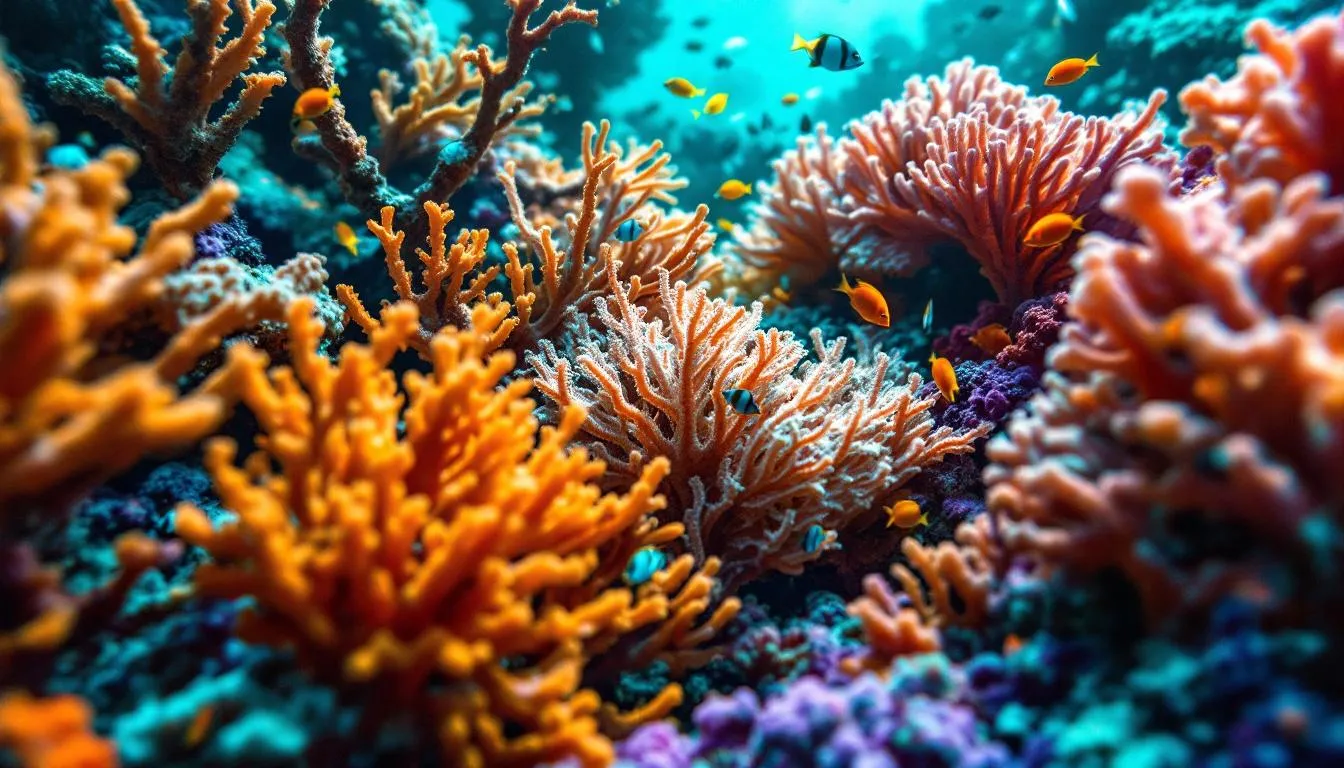
Table of Contents
What Is Coral Reef Ecology?
Coral reef ecology is the scientific study of coral reef ecosystems---the biological communities of organisms living on and around coral reefs, their interactions with each other, and their relationship with the physical environment. It examines how reef-building corals create massive underwater structures that support an estimated 25% of all marine species while covering less than 1% of the ocean floor.
The Animal Behind the Reef
Here’s something that surprises most people: coral isn’t a rock. It isn’t a plant. It’s an animal. Specifically, corals are colonies of tiny organisms called polyps, each typically just 1 to 3 millimeters in diameter. A single coral head you might see while snorkeling contains thousands---sometimes millions---of these individual animals working together.
Each polyp is essentially a small sac with a mouth surrounded by tentacles. At night, polyps extend their tentacles to capture plankton and tiny food particles drifting in the current. During the day, most retract into the calcium carbonate skeleton they’ve secreted---the hard structure we think of as “coral.”
But here’s what makes reef-building corals truly remarkable. Living inside the tissue of each polyp are microscopic algae called zooxanthellae (pronounced zo-zan-THEL-ee). These single-celled organisms photosynthesize sunlight and produce sugars that provide up to 90% of the coral’s energy needs. In return, the coral provides the algae with shelter and access to sunlight. This symbiotic relationship---one of the most important on Earth---is why coral reefs only grow in shallow, clear, sunlit waters.
The coral’s skeleton is made of aragonite, a form of calcium carbonate. Polyps extract calcium and carbonate ions from seawater and deposit them as crystal structures beneath their living tissue. Over decades and centuries, this process builds the massive reef frameworks we see today. The Great Barrier Reef---visible from space---was built polyp by polyp, millimeter by millimeter, over roughly 20,000 years.
How Reef Ecosystems Actually Work
A coral reef is far more than coral. It’s an entire city---a tightly interconnected web of producers, consumers, recyclers, and decomposers operating in nutrient-poor tropical waters.
The Paradox of Productivity
Coral reefs present one of ecology’s most famous puzzles, often called “Darwin’s Paradox.” Tropical ocean waters are nutrient-poor---basically oceanic deserts. Yet coral reefs are among the most productive ecosystems on the planet, rivaling tropical rainforests. How?
The answer is extraordinarily efficient nutrient recycling. Reefs waste almost nothing. Nutrients cycle so rapidly through organisms that very little escapes the system. Zooxanthellae photosynthesize and pass energy to corals. Coral mucus feeds bacteria. Bacteria feed filter-feeders. Detritivores consume waste. Dissolved nutrients are absorbed almost instantly.
Scientists estimate that coral reefs recycle nutrients between 10 and 100 times more efficiently than the surrounding open ocean. This tight cycling creates an oasis of productivity in otherwise barren waters.
The Food Web
Reef food webs are staggeringly complex. At the base, primary producers include zooxanthellae within coral tissue, algae growing on reef surfaces, seagrass beds in adjacent areas, and phytoplankton in the water column.
Herbivores---parrotfish, surgeonfish, sea urchins, and various invertebrates---graze on algae. This grazing is critically important. Without herbivores, algae would overgrow and smother the coral. Parrotfish deserve special mention: they bite chunks of coral, digest the algae, and excrete the calcium carbonate as sand. Much of the white sand on tropical beaches is literally parrotfish poop. A single large parrotfish can produce over 400 kilograms of sand per year.
Primary carnivores include small fish, crabs, shrimp, and worms that eat herbivores and zooplankton. Secondary carnivores---groupers, snappers, moray eels---eat the smaller predators. Apex predators like reef sharks and barracudas sit at the top.
But the food web isn’t a simple hierarchy. It’s a tangled network. Many species change diet as they grow. Cleaning stations---where small fish and shrimp remove parasites from larger fish---create symbiotic relationships that cross trophic levels. Parrotfish are herbivores that also inadvertently consume coral polyps. Clownfish and anemones engage in mutualism. The complexity is breathtaking.
Structural Complexity Creates Biodiversity
Reefs support extraordinary biodiversity largely because of their physical structure. A coral reef provides more spatial complexity---nooks, crannies, caves, overhangs, tunnels, and surfaces---per square meter than almost any other environment on Earth.
Different species occupy different niches within this structure. Tiny gobies hide in coral branches. Moray eels lurk in crevices. Lobsters occupy caves. Sponges encrust dead coral surfaces. Anemones colonize sand patches between coral heads. Each microhabitat supports different communities.
This is the same principle behind biodiversity in old-growth forests on land. Structural complexity creates habitat diversity, which supports species diversity. Remove the structure---flatten the reef---and you lose most of the species it supports, regardless of water quality.
The Major Reef Types
Not all coral reefs are the same. Charles Darwin himself classified reefs into three main types during his voyage on the HMS Beagle in the 1830s, and his classification still holds.
Fringing Reefs
Fringing reefs grow directly from the shoreline, with little or no separation between the reef and land. They’re the most common reef type worldwide and the youngest in geological terms. You’ll find them along coastlines throughout the tropics---the Caribbean, Southeast Asia, East Africa.
They start growing in shallow water near shore and extend outward as coral colonies expand. The inner edge, close to shore, is often a reef flat---a shallow area that may be exposed at low tide. The outer edge drops off more steeply into deeper water.
Barrier Reefs
Barrier reefs run roughly parallel to the coastline but are separated from it by a deep lagoon. The Great Barrier Reef off northeastern Australia---stretching 2,300 kilometers---is the most famous example. The reef systems of Belize and New Caledonia are other notable barrier reefs.
Barrier reefs are generally older and larger than fringing reefs. They develop as the shoreline gradually submerges (through sea level rise or land subsidence), and the reef keeps growing upward to stay in sunlit water.
Atolls
Atolls are ring-shaped reefs encircling a central lagoon with no island in the middle. They form when a volcanic island gradually sinks beneath the sea surface while the coral reef around it continues growing upward. Eventually, the island disappears entirely, leaving only the reef ring.
The Maldives, the Marshall Islands, and much of French Polynesia consist largely of atolls. Darwin correctly hypothesized this formation process in 1842, though it wasn’t confirmed until nuclear testing drill cores on Eniwetok Atoll in 1952 revealed volcanic rock beneath hundreds of meters of coral limestone.
The Global Distribution Question
Coral reefs aren’t found everywhere. They occupy a narrow band of the world’s oceans, bounded by specific environmental requirements.
Temperature: Reef-building corals need water between 23 and 29 degrees Celsius (73 to 84 degrees Fahrenheit). Below 18 degrees Celsius, most reef-building corals can’t survive. This restricts reefs to tropical and subtropical latitudes, roughly between 30 degrees north and south of the equator.
Light: Zooxanthellae need sunlight for photosynthesis, so reef-building corals are limited to depths where enough light penetrates---typically less than 70 meters, though most reef growth occurs above 25 meters.
Salinity: Corals need relatively stable salinity between 32 and 42 parts per thousand. Freshwater runoff from rivers creates inhospitable conditions, which is why coral reefs rarely develop near major river mouths.
Water clarity: Sediment blocks light and can smother coral polyps. Reefs thrive in clear water with low sediment loads.
These requirements explain global reef distribution patterns. The Coral Triangle---spanning Indonesia, the Philippines, Malaysia, Papua New Guinea, Solomon Islands, and Timor-Leste---contains the highest coral diversity on Earth, with over 600 species of reef-building corals. The Caribbean, by comparison, has about 65 species. Australia’s Great Barrier Reef has roughly 400.
Why Coral Reefs Matter (Beyond Being Beautiful)
Reefs aren’t just pretty underwater scenery. Their ecological and economic importance is enormous.
Economic Value
A 2020 study estimated the global economic value of coral reefs at roughly $2.7 trillion annually. This includes fisheries production (reef fisheries feed an estimated 500 million people worldwide), tourism revenue ($36 billion annually), coastal protection, and pharmaceutical research.
Reef-associated fisheries provide the primary protein source for many tropical coastal communities. In some Pacific Island nations, reef fish supply over 90% of dietary animal protein. The loss of these fisheries would create food crises affecting hundreds of millions.
Coastal Protection
Coral reefs are natural breakwaters. They absorb up to 97% of wave energy before it reaches shore, reducing coastal flooding, erosion, and storm damage. A 2018 study published in Nature Communications estimated that reef degradation increases flood risk for 100 million people globally.
The economic value of this coastal protection alone is estimated at $1.8 billion per year for the United States. Following natural-disaster events like hurricanes, coastlines protected by healthy reefs suffer dramatically less damage than unprotected areas.
Pharmaceutical Potential
Marine organisms on coral reefs produce chemical compounds unlike anything found on land---defenses against predators, UV protection, antimicrobial agents. These compounds are a largely untapped source of pharmaceutical potential.
AZT, an early HIV treatment, was derived from compounds found in a Caribbean reef sponge. Ara-C, a leukemia treatment, came from the same sponge. Ziconotide, a severe pain medication, comes from cone snail venom. Scientists estimate that fewer than 1% of reef organisms have been studied for pharmaceutical potential.
Biodiversity Reservoir
Coral reefs support approximately 800 species of hard coral, over 4,000 species of fish, and an estimated 1 to 9 million total species when you include invertebrates, microorganisms, and species yet to be described. Many reef species are found nowhere else---they’re endemic to specific reef systems.
This biodiversity has intrinsic value, but it also provides practical benefits. Genetic diversity is the raw material for anatomy and biological adaptation. Losing reef species means losing genetic information that took millions of years to evolve.
The Crisis: What’s Killing Coral Reefs
Here’s the hard truth. Coral reefs are in serious trouble. The Global Coral Reef Monitoring Network estimates that 14% of the world’s coral reefs were lost between 2009 and 2018. Some projections suggest that 70 to 90% of existing coral reefs could disappear by 2050 if current trends continue.
Ocean Warming
Rising ocean temperatures are the single greatest threat. When water temperature exceeds the coral’s thermal tolerance---even by just 1 to 2 degrees Celsius above the summer maximum---corals expel their zooxanthellae. Without these algae, the coral turns white (bleaching) and begins to starve. Short bleaching events are survivable. Extended or repeated events are often fatal.
The 2014-2017 global bleaching event---the longest and most widespread ever recorded---affected over 75% of the world’s reef-building corals. In some areas, like parts of the Great Barrier Reef, mortality exceeded 50%. Back-to-back bleaching events in 2016 and 2017 gave corals no time to recover.
Mass bleaching events that once occurred every 25 to 30 years now happen every 6 years on average. At current warming trajectories, they’ll become annual events at many reef locations by 2040.
Ocean Acidification
The ocean absorbs roughly 30% of atmospheric carbon dioxide. When CO2 dissolves in seawater, it forms carbonic acid, lowering the water’s pH. Since the industrial revolution, ocean pH has dropped by about 0.1 units---which sounds small but represents a 26% increase in acidity.
Lower pH makes it harder for corals to build their calcium carbonate skeletons. At pH levels projected for 2100 under high-emission scenarios, coral skeleton dissolution could exceed formation---reefs would literally start dissolving.
This isn’t just theory. Studies of naturally acidified reef areas (near volcanic CO2 vents in Papua New Guinea) show dramatic shifts from coral-dominated to algae-dominated communities as acidity increases.
Local Stressors
Global threats get the headlines, but local stressors cause enormous damage too.
Overfishing removes herbivorous fish that keep algae in check. Without parrotfish and surgeonfish, algae overgrow coral. Destructive fishing practices---dynamite fishing, cyanide fishing---directly destroy reef structure.
Coastal development increases sediment runoff that smothers corals and blocks light. Deforestation and poor agriculture practices upstream increase sediment loads in rivers that drain to reef areas.
Nutrient pollution from agricultural runoff, sewage, and stormwater triggers algal blooms that outcompete coral. Excess nitrogen and phosphorus fuel algae growth, fundamentally shifting the competitive balance on reefs.
Physical damage from anchoring, dredging, ship groundings, and careless tourism (touching, standing on, or collecting coral) causes direct harm that can take decades to recover.
Fighting Back: Conservation and Restoration
The situation is dire but not hopeless. Significant conservation efforts are underway worldwide.
Marine Protected Areas
Marine Protected Areas (MPAs) that restrict fishing, development, and extractive activities can allow reef recovery. Studies consistently show that well-managed no-take zones have more fish, more coral cover, and greater biodiversity than adjacent unprotected areas.
The effectiveness varies enormously, though. A poorly enforced MPA is just a line on a map. Effective MPAs require adequate funding, community support, and enforcement. Australia’s Great Barrier Reef Marine Park, established in 1975 and expanded in 2004 to protect 33% of the reef from extractive activities, is often cited as a model---though even it faces existential threats from climate change.
Coral Restoration
Active restoration efforts include coral gardening (growing coral fragments in underwater nurseries and transplanting them to degraded reefs), assisted gene flow (breeding heat-tolerant corals and introducing them to vulnerable areas), and substrate stabilization (providing hard surfaces for coral larvae to settle on).
The Coral Restoration Foundation in the Florida Keys has outplanted over 200,000 corals since its founding. Similar programs operate worldwide. But scale remains a challenge: restoration efforts to date have covered tiny fractions of total reef area.
Assisted Evolution
Some researchers are exploring whether corals can be made more heat-tolerant through selective breeding, microbiome manipulation, or even genetic modification. Experiments have shown that exposing corals to gradually increasing temperatures can increase their thermal tolerance. Cross-breeding corals from warmer and cooler regions can produce offspring with enhanced heat resistance.
This is controversial. Some scientists argue it’s necessary adaptation assistance. Others worry about unintended ecological consequences of releasing modified organisms.
Reducing Local Stressors
While climate change is a global problem requiring global solutions, reducing local stressors can increase reef resilience. Better agriculture practices reduce sediment and nutrient runoff. Improved sewage treatment reduces nutrient pollution. Sustainable fishing practices maintain herbivore populations. Mooring buoys prevent anchor damage.
Research suggests that reefs with fewer local stressors recover faster from bleaching events and are more resistant to disease. Managing what we can control buys time while the world addresses carbon emissions.
Deep-Water and Cold-Water Reefs
Most people picture sun-drenched tropical shallows when they think of coral reefs, but deep-water and cold-water coral ecosystems exist too---and they’re vast.
Cold-water corals (primarily Lophelia pertusa and Madrepora oculata) build reef structures in deep, dark, cold water---sometimes below 1,000 meters depth. They don’t have zooxanthellae and rely entirely on capturing food particles from currents. The largest known cold-water reef complex, the Rost Reef off Norway, covers approximately 100 square kilometers.
These ecosystems are even less understood than tropical reefs. Deep-sea trawling has already damaged many cold-water reefs, often before scientists even knew they existed. Their slow growth rates---sometimes less than 1 millimeter per year---mean recovery from damage takes centuries.
The Future of Coral Reefs
The next few decades will determine whether coral reefs survive in any meaningful form. Under the Paris Agreement’s target of limiting warming to 1.5 degrees Celsius above pre-industrial levels, projections suggest 70 to 90% of tropical reefs will decline. At 2 degrees of warming, the figure rises to 99%.
That’s a grim prognosis. But there are reasons for cautious optimism.
Some coral species and populations show natural heat tolerance. Reefs in the Persian Gulf and Red Sea already thrive at temperatures that would bleach corals elsewhere. These naturally heat-adapted corals could serve as seed populations for future reefs.
Genetic diversity within coral populations provides raw material for natural selection. As temperatures rise, heat-tolerant genotypes may increasingly survive and reproduce. Evolution is slow compared to climate change---but it’s not zero.
Human ingenuity matters too. Alternative energy adoption is accelerating. Carbon reduction technologies are advancing. Marine conservation awareness is growing. The science of reef ecology has never been more sophisticated, and we understand these systems better than ever before.
Whether that knowledge translates into action quickly enough is the open question. Coral reef ecology tells us what these ecosystems need to survive. The rest is up to us.
Key Takeaways
Coral reef ecology studies the most biodiverse marine ecosystems on Earth---structures built by tiny colonial animals called polyps, powered by symbiotic algae, and supporting roughly a quarter of all ocean species. Reefs provide food for 500 million people, protect coastlines from storms, and hold enormous pharmaceutical potential. They face existential threats from ocean warming, acidification, overfishing, and pollution. Conservation efforts including marine protected areas, coral restoration, and reducing local stressors can increase reef resilience, but the long-term survival of coral reefs depends fundamentally on limiting global temperature rise. Understanding reef ecology isn’t just academic---it’s essential for protecting ecosystems that human communities and marine biodiversity depend on.
Frequently Asked Questions
Are coral reefs animals, plants, or rocks?
Corals are animals—specifically, they're colonies of tiny invertebrates called polyps. However, most reef-building corals have symbiotic algae (zooxanthellae) living inside their tissues, which photosynthesize like plants. The reef structure itself is rock—calcium carbonate skeletons built by coral polyps over thousands of years.
How fast do coral reefs grow?
Individual coral colonies grow between 0.3 and 10 centimeters per year depending on the species. Branching corals grow fastest, while massive boulder corals grow slowest. Building an entire reef structure takes thousands to millions of years. The Great Barrier Reef began forming about 20,000 years ago.
What is coral bleaching and can corals recover from it?
Coral bleaching occurs when stressed corals expel their symbiotic algae, turning white. Common causes include elevated water temperatures, pollution, and extreme low tides. Corals can recover if the stress is short-lived and conditions return to normal within weeks. However, prolonged or repeated bleaching events often lead to coral death.
Why are coral reefs called the rainforests of the sea?
Coral reefs cover less than 1% of the ocean floor but support roughly 25% of all marine species—a concentration of biodiversity comparable to tropical rainforests on land. Both ecosystems feature complex structures that create numerous habitats, support detailed food webs, and house species found nowhere else.
Can artificial reefs replace natural ones?
Artificial reefs—made from sunken ships, concrete structures, or purpose-built materials—can provide habitat for marine life but cannot fully replace natural coral reefs. They lack the biological complexity, self-sustaining growth, and ecosystem services of natural reefs. They're best used as supplements to conservation efforts, not substitutes.
Further Reading
Cite this article
APA
WhatIs.site. (2026). What Is Coral Reef Ecology?. Retrieved May 27, 2026, from https://whatis.site/coral-reef-ecology MLA
"What Is Coral Reef Ecology?." WhatIs.site, March 6, 2026, https://whatis.site/coral-reef-ecology. Accessed May 27, 2026. Chicago
WhatIs.site. "What Is Coral Reef Ecology?." Last modified May 12, 2026. https://whatis.site/coral-reef-ecology. HTML
<a href="https://whatis.site/coral-reef-ecology">What Is Coral Reef Ecology?</a> — WhatIs.site Related Articles
What Is Anatomy?
Anatomy is the study of body structure in living organisms. Learn about gross and microscopic anatomy, organ systems, history, and why it matters in medicine.
scienceWhat Is Animal Behavior?
Animal behavior is the scientific study of how animals act, interact, and respond to their environment — covering instinct, learning, and communication.
scienceWhat Is Agriculture?
Agriculture is the practice of cultivating plants, raising animals, and processing natural resources to produce food, fiber, and fuel.
technologyWhat Is Alternative Energy?
Alternative energy comes from sources other than fossil fuels. Learn about solar, wind, geothermal, and other clean options reshaping how we power the world.
scienceWhat Is River Ecology?
River ecology is the scientific study of how living organisms interact with each other and with the physical and chemical conditions of flowing freshwater.