 WhatIs.site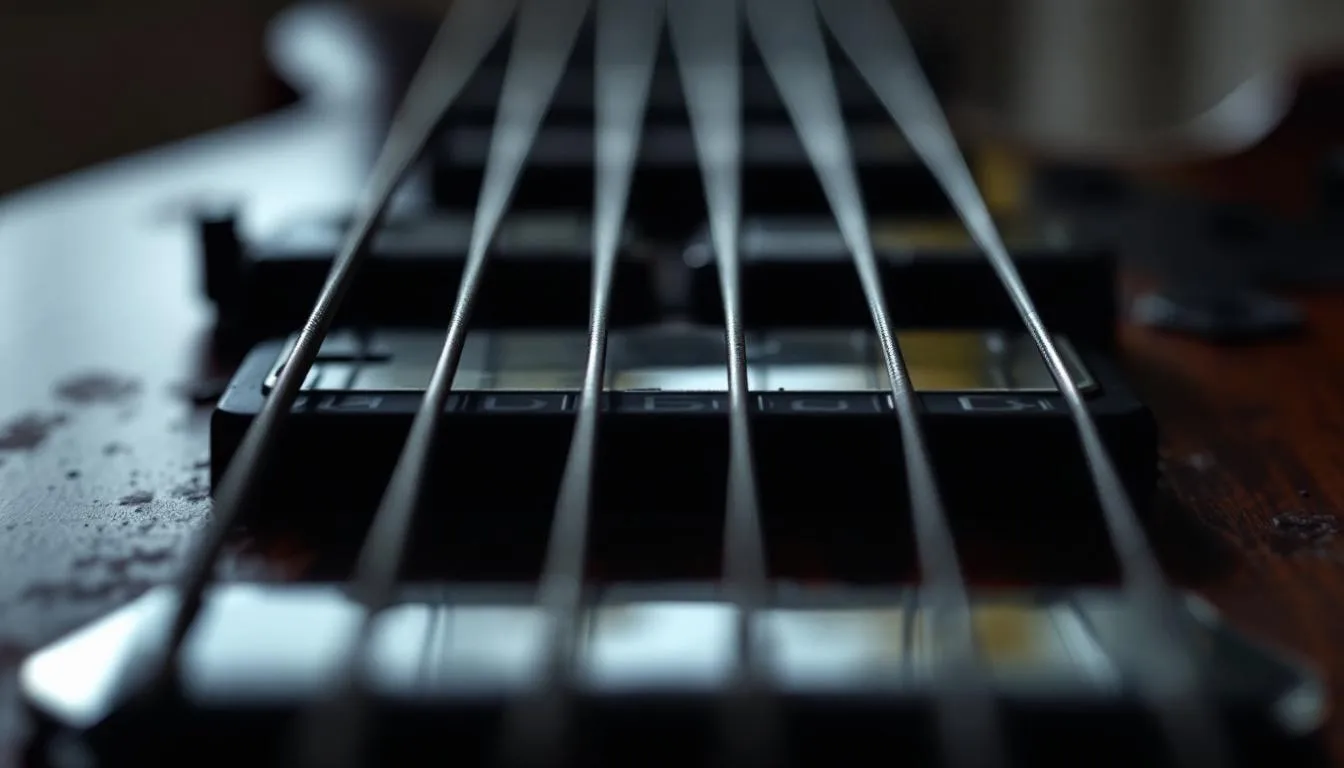
Table of Contents
What Is Bass Guitar?
The bass guitar is an electric (or occasionally acoustic) stringed instrument that produces the low-frequency tones forming the rhythmic and harmonic foundation of modern music. If the drums are the heartbeat, the bass is the pulse — connecting rhythm to harmony in virtually every genre from rock and jazz to funk, hip-hop, and electronic music.
Leo Fender’s Big Idea
Before the electric bass guitar, bands relied on the double bass (upright bass) for low-end support. The double bass is physically huge, difficult to transport, and nearly impossible to amplify adequately in loud settings. Jazz and country bassists hauled these instruments to gigs knowing they’d be barely audible over a full band.
Leo Fender changed everything in 1951 with the Precision Bass — the first commercially successful electric bass guitar. It was solid-body, fretted (unlike the fretless double bass, making it easier to play in tune), and could be amplified to match any stage volume. The name “Precision” referred to the frets, which gave players precise intonation without the ear training that fretless playing demands.
Fender followed up in 1960 with the Jazz Bass, which featured a slimmer neck and different pickup configuration for a brighter, more versatile tone. These two instruments — the P-Bass and J-Bass — remain the most iconic bass designs 60+ years later, and their basic concepts are copied by virtually every bass manufacturer.
What the Bass Does in Music
The bass occupies a unique role in any ensemble. It bridges the gap between the rhythmic instruments (drums, percussion) and the harmonic instruments (guitars, keyboards). A good bassist locks in with the drummer to create a “groove” — the underlying rhythmic feel that makes people nod their heads or move their feet — while simultaneously outlining the chord progression so other instruments know where they are harmonically.
Here’s what most people miss: you may not consciously notice the bass in a song, but you’d immediately notice if it disappeared. Remove the bass from any recording and the music feels thin, floating, groundless. The low frequencies provide physical weight that you feel as much as hear — that chest-vibrating rumble at a live concert is the bass and kick drum working together.
The physics behind this is straightforward. Bass frequencies (roughly 40-400 Hz) have long wavelengths that propagate through space and solid objects differently than higher frequencies. You feel bass in your body because low-frequency sound waves physically vibrate your chest cavity and internal organs. That’s not a metaphor — it’s acoustics.
Playing Techniques
Fingerstyle
The most common technique. The bassist plucks strings with the index and middle fingers of the right hand in alternation, producing a warm, round tone. James Jamerson (Motown’s legendary session bassist) played almost exclusively with his index finger, creating the sound on hundreds of hit records.
Pick (Plectrum)
Using a guitar pick produces a brighter, more aggressive attack. Punk, rock, and metal bassists often prefer picks for their cutting tone and consistent attack. Paul McCartney and Chris Squire are famous pick players.
Slap and Pop
Slap bass — striking the string with the thumb and snapping upper strings with the fingers — produces a percussive, funky sound pioneered by Larry Graham in the late 1960s and perfected by players like Flea (Red Hot Chili Peppers) and Victor Wooten. It’s the technique most non-musicians associate with “cool bass playing.”
Tapping
Made famous by Billy Sheehan and others, two-hand tapping uses both hands on the fretboard to hammer notes, enabling rapid runs and chordal playing that would be impossible with conventional technique.
Famous Bassists and Their Impact
A few players changed how everyone thought about the instrument:
James Jamerson — The invisible genius behind nearly every Motown hit from 1959 to 1972. His melodic, syncopated lines on songs like “What’s Going On” and “Ain’t No Mountain High Enough” proved that bass could be musically complex while remaining perfectly supportive.
Jaco Pastorius — Removed the frets from a Jazz Bass and produced sounds nobody had heard before. His work with Weather Report and his solo album (1976) showed the bass could be a virtuosic lead instrument. Considered by many the greatest bassist ever.
Paul McCartney — His melodic approach with the Beatles influenced generations. McCartney treated the bass as a counter-melody instrument rather than just rhythm support.
Bootsy Collins — Funk incarnate. His work with James Brown and Parliament-Funkadelic defined the slap-heavy, groove-driven funk bass style.
Gear Basics
A bass rig consists of the instrument, an amplifier, and often effects pedals. Bass amplifiers are significantly more powerful than guitar amps because reproducing low frequencies requires more wattage. A 100-watt guitar amp is loud; a 100-watt bass amp might struggle in a band setting. Most gigging bassists use 300-500 watts.
Strings come in various gauges and materials. Roundwound strings (the standard) produce a bright, zingy tone. Flatwound strings produce a warmer, thumpier sound favored in jazz, Motown, and reggae. String choice dramatically affects tone — more than most beginners realize.
The Underappreciation Problem
Bassists are the butt of more musician jokes than any other instrumentalist. “What do you call someone who hangs out with musicians? A bassist.” The stereotype of the bassist as a failed guitarist persists despite being largely nonsense.
The truth is that great bass playing requires excellent timing, harmonic knowledge, physical endurance (bass strings are thick and require more force than guitar strings), and the ego discipline to serve the song rather than show off. A flashy guitarist who plays too many notes is entertaining. A flashy bassist who plays too many notes is a problem — because the bass’s primary job is to make everyone else sound better.
That’s the paradox of bass guitar. When it’s done right, you barely notice it. When it’s done wrong — or absent — everything falls apart. The best bassists understand that power and restraint aren’t opposites. They’re the same thing.
Frequently Asked Questions
How many strings does a bass guitar have?
The standard bass guitar has four strings, tuned E-A-D-G (the same as the lowest four strings of a regular guitar, but one octave lower). Five-string basses add a low B string, and six-string basses add both a low B and high C. Four-string remains the most common configuration for most genres.
Is bass guitar easier than regular guitar?
Getting started on bass is often easier — simpler chord structures, one note at a time rather than chords, and wider string spacing. But mastering bass is equally challenging. Good bass playing requires precise timing, knowledge of harmony, and the ability to lock in with the drummer — skills that take years to develop.
What is the difference between bass guitar and double bass?
The electric bass guitar is a solid-body instrument played horizontally, fretted, and amplified electronically. The double bass (upright bass) is a large acoustic instrument played vertically, typically fretless, used in orchestras, jazz, and some folk music. Leo Fender designed the electric bass partly to replace the double bass with something more portable and easier to amplify.
Further Reading
Cite this article
APA
WhatIs.site. (2025). What Is Bass Guitar?. Retrieved May 27, 2026, from https://whatis.site/bass-guitar MLA
"What Is Bass Guitar?." WhatIs.site, July 15, 2025, https://whatis.site/bass-guitar. Accessed May 27, 2026. Chicago
WhatIs.site. "What Is Bass Guitar?." Last modified May 12, 2026. https://whatis.site/bass-guitar. HTML
<a href="https://whatis.site/bass-guitar">What Is Bass Guitar?</a> — WhatIs.site Related Articles
What Is Acoustics?
Acoustics is the science of sound: how it's produced, transmitted, and received. Learn about sound waves, architectural acoustics, noise control, and more.
everyday conceptsWhat Is Blues Music?
Blues is a music genre that originated in African American communities in the Mississippi Delta and broader Deep South during the late 19th century.
scienceWhat Is Physics?
Physics is the science of matter, energy, and the fundamental forces governing the universe. Learn how physics explains everything from atoms to galaxies.
technologyWhat Is Audio Engineering?
Audio engineering is the technical practice and applied science of recording, manipulating, mixing, and reproducing sound.
technologyWhat Is Sound Engineering?
Sound engineering is the technical craft of recording, mixing, and reproducing audio. Learn about microphones, signal flow, mixing consoles, and studio.