 WhatIs.site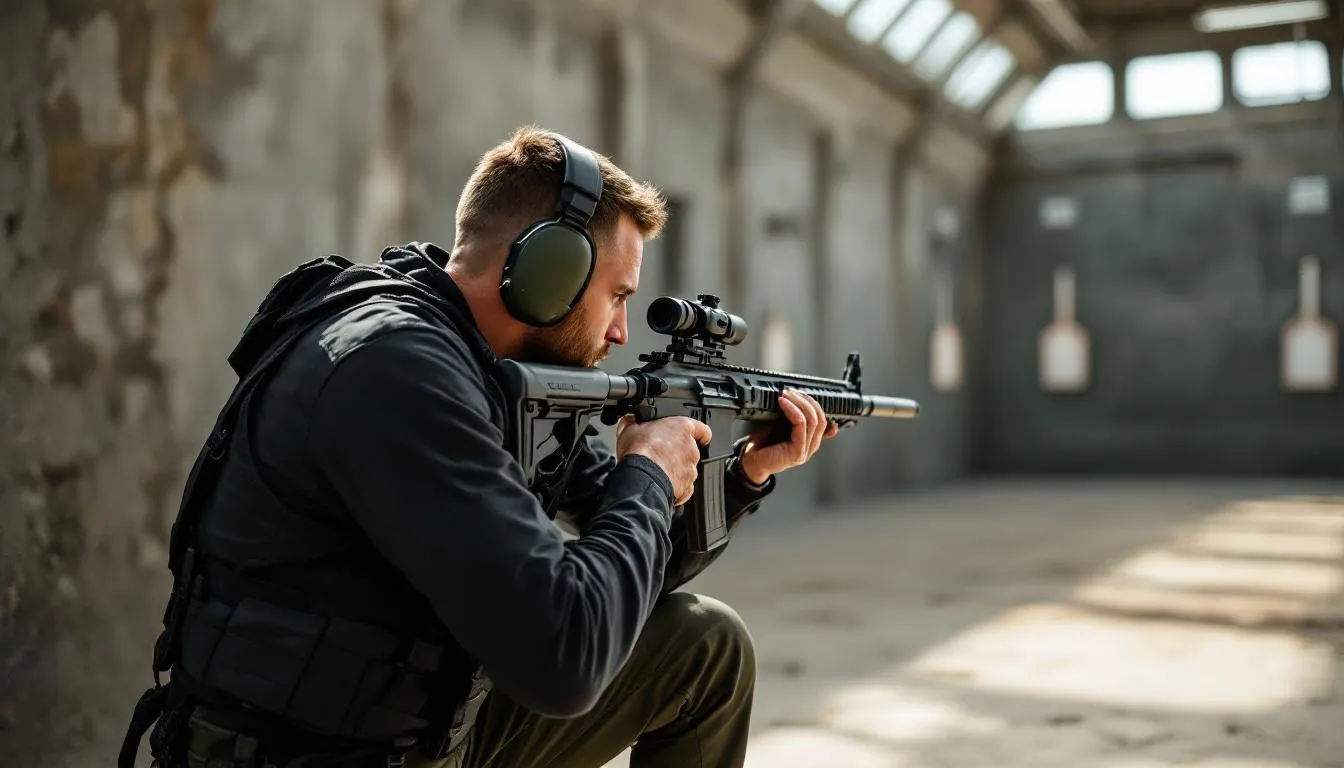
Table of Contents
What Is Shooting Sports?
Shooting sports are competitive and recreational activities where participants use firearms, air guns, or bows to hit targets with precision. They range from Olympic rifle and pistol events requiring almost supernatural steadiness to action-packed shotgun sports where targets fly through the air at 60 mph. What unites them is the pursuit of accuracy — putting a projectile exactly where you intend it, consistently, under pressure.
It’s one of the oldest competitive traditions. Archery competitions date back thousands of years. Firearm marksmanship contests appeared almost immediately after guns became reliable enough to aim. Today, shooting sports encompass dozens of distinct disciplines practiced by millions worldwide.
The Major Disciplines
Rifle shooting (smallbore and air rifle) is pure precision. In Olympic 10-meter air rifle, competitors fire at a target where the highest-scoring ring is 0.5mm in diameter — about the size of a period on this page. They fire 60 shots in 75 minutes, standing unsupported, controlling their breathing and heartbeat to minimize the barrel’s movement. Top scores differ by fractions of a millimeter.
Pistol shooting adds the challenge of a shorter sight radius and one-handed grip (in some events). The 25-meter rapid-fire pistol event requires five shots in four seconds — demanding both speed and accuracy. Air pistol at 10 meters is slower and equally demanding of precision.
Shotgun sports are more athletic and visually exciting. In trap, clay targets launch away from the shooter at varying angles. In skeet, targets cross in front of the shooter from two directions. Sporting clays simulates hunting situations with targets of different sizes, speeds, and trajectories across a natural course. Shotgun events require quick reflexes, tracking ability, and split-second timing.
Action shooting (IPSC/USPSA, 3-Gun) combines speed and accuracy in active scenarios. Competitors move through courses of fire, engaging targets from different positions — standing, kneeling, moving. Scored on both accuracy and time, these events are the most physically active shooting sports.
Long-range precision competition tests accuracy at extreme distances — 600 to 1,000+ yards. Wind reading becomes the critical skill at these ranges, where a 5 mph crosswind can push a bullet several feet off target. Precision rifle competitions have grown rapidly since 2010.
The Mental Game
What surprises most people about competitive shooting is how mental it is. Physical fitness helps — a lower resting heart rate means less barrel movement between beats — but the decisive factor is psychological control.
Elite shooters train their minds as rigorously as their technique. They practice visualization, develop pre-shot routines, and learn to manage the anxiety that comes with competition pressure. A single lapse in concentration — one moment of distraction — and a shot goes from a 10 to an 8. In events decided by fractions of points, that’s catastrophic.
Breathing control is fundamental. Shooters time their trigger pull to the natural respiratory pause — the brief moment between exhale and inhale when the body is stillest. Heart rate matters: the barrel moves with each heartbeat, and at 10 meters, even that tiny movement is visible on the target.
This mental dimension is why shooting sports attract a wider demographic than you might expect. Age is less of a factor than in most sports — Olympic shooters have medaled in their 50s. Physical disabilities that would exclude athletes from other sports don’t prevent competitive shooting. And the mental skills transfer broadly — focus, composure under pressure, and the ability to perform precisely when it matters.
Safety Culture
The shooting sports community takes safety extremely seriously, and the results show. Organized range shooting has one of the lowest injury rates of any recreational activity.
The four fundamental safety rules are drilled into every participant from day one: treat every firearm as if loaded, never point at anything you’re not willing to destroy, keep your finger off the trigger until ready to shoot, and be sure of your target and what’s beyond it. These rules are enforced strictly — violations typically result in immediate removal from the range.
Range officers supervise all organized shooting activities, managing the line and calling cease-fires as needed. Eye and ear protection are mandatory. Equipment is inspected regularly. The culture emphasizes that safety isn’t optional or situational — it’s absolute.
The Global Picture
Shooting sports enjoy wide participation globally. The International Shooting Sport Federation has 166 member nations. Germany, Switzerland, Scandinavia, and the United States have particularly strong shooting sport traditions — in Switzerland, an annual federal shooting festival has been held since 1824.
The sport’s Olympic presence gives it global legitimacy and helps separate competitive marksmanship from broader cultural debates about gun policy. Nations with very restrictive civilian firearms laws — like Japan, South Korea, and China — still produce elite Olympic shooters through government-run training programs.
Youth programs are a major pathway into the sport. The 4-H Shooting Sports program in the United States serves over 350,000 young people annually, emphasizing safety, responsibility, and personal development alongside marksmanship skills. Collegiate shooting programs exist at over 300 U.S. universities.
Getting Involved
Most shooting ranges offer introductory sessions — supervised opportunities to try different disciplines with provided equipment and instruction. This is the best way to start, because you get proper safety training and can discover which type of shooting interests you before investing in equipment.
Equipment costs vary dramatically. An entry-level air rifle for 10-meter competition runs $500-2,000. A competition shotgun for trap or skeet starts around $1,000-3,000. But many clubs have loaner equipment for beginners, and some disciplines (like air rifle) have very low ongoing costs — pellets cost pennies per shot.
The consistent message from experienced competitive shooters: it’s not about the gear. It’s about the disciplined, focused pursuit of hitting exactly what you’re aiming at, every single time. That pursuit — whether you’re shooting at paper targets 10 meters away or steel plates at a thousand yards — is what makes shooting sports compelling.
Frequently Asked Questions
Are shooting sports in the Olympics?
Yes. Shooting has been in the Olympics since the first modern Games in 1896. Current Olympic disciplines include rifle, pistol, and shotgun events. There are 15 shooting medal events at the Summer Olympics. The sport emphasizes precision, breath control, and mental composure — physical strength matters less than focus and fine motor control.
How safe are shooting sports?
Organized shooting sports have excellent safety records. The injury rate in competitive shooting is lower than in golf, tennis, or swimming. This is because safety protocols are strict and rigorously enforced — range rules, protective equipment, and constant supervision are standard. The National Shooting Sports Foundation reports that target shooting has a lower injury rate per participant than most popular recreational activities.
What age can you start competitive shooting?
Many shooting sports have youth programs starting at ages 8-12. Air rifle and .22 caliber rifle programs are common entry points, with age-appropriate equipment and training. USA Shooting's junior program accepts athletes from age 12. The 4-H Shooting Sports program serves over 350,000 youth annually and is one of the largest youth shooting programs in the United States.
Further Reading
Cite this article
APA
WhatIs.site. (2025). What Is Shooting Sports?. Retrieved May 27, 2026, from https://whatis.site/shooting-sports MLA
"What Is Shooting Sports?." WhatIs.site, July 15, 2025, https://whatis.site/shooting-sports. Accessed May 27, 2026. Chicago
WhatIs.site. "What Is Shooting Sports?." Last modified May 12, 2026. https://whatis.site/shooting-sports. HTML
<a href="https://whatis.site/shooting-sports">What Is Shooting Sports?</a> — WhatIs.site Related Articles
What Is Sports Coaching?
Sports coaching is the practice of guiding athletes to improve performance, develop skills, and achieve goals. Learn about methods, psychology, and careers.
sportsWhat Is Sports Officiating?
Sports officiating is the enforcement of rules during athletic competitions by referees, umpires, and judges. Learn about training, challenges, and careers.