 WhatIs.site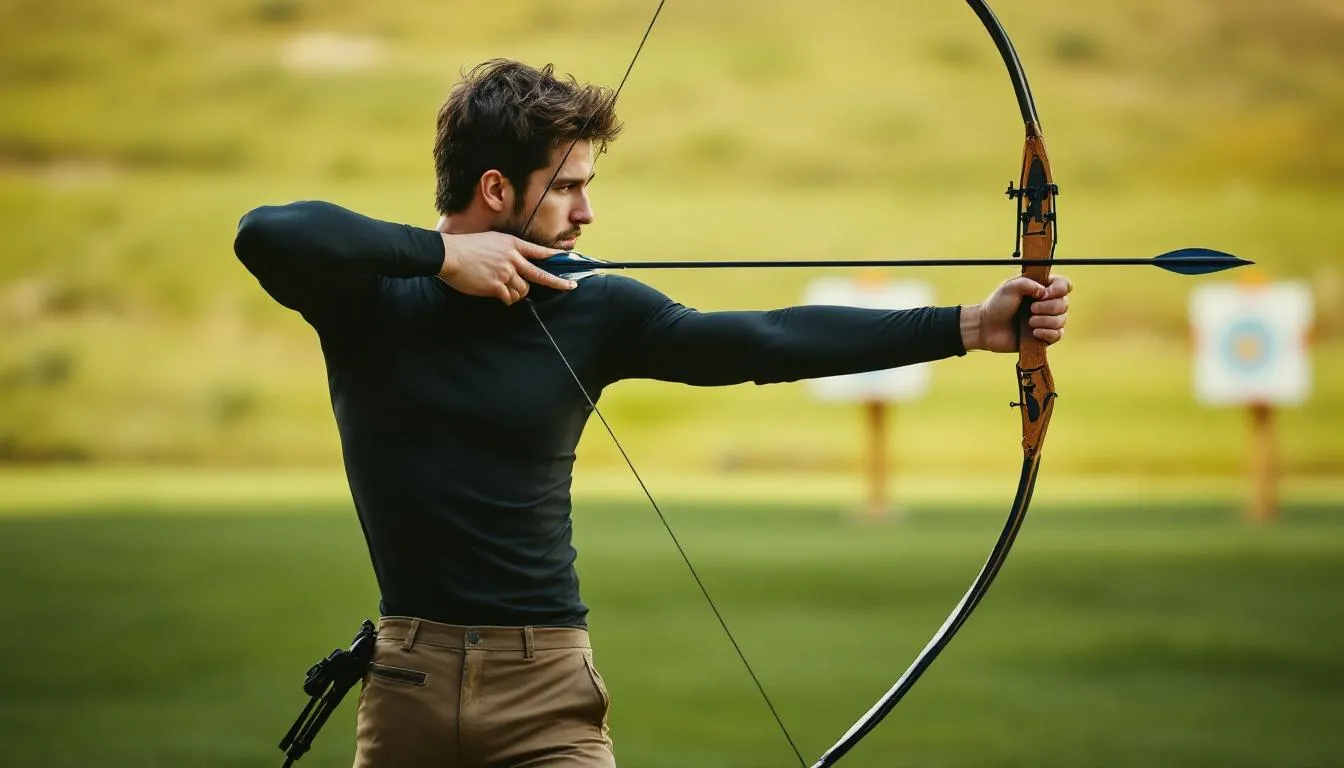
Table of Contents
What Is Archery?
Archery is the practice of using a bow to propel arrows toward a target. It’s one of humanity’s oldest technologies — used for hunting and warfare for tens of thousands of years — and now a precision sport practiced by millions of people worldwide, including at the Olympic Games.
70,000 Years of Aiming
The bow and arrow is one of the most significant inventions in human history. Stone arrowheads found in South Africa date to approximately 70,000 years ago. By the time civilizations emerged in Mesopotamia, Egypt, and China, archery was central to both hunting and military strategy.
The English longbow dominated medieval European battlefields. At the Battle of Agincourt in 1415, roughly 5,000 English longbowmen devastated a French army several times their size, launching volleys of arrows that could penetrate armor at 200 yards. Training an effective longbowman took years — so much time that English law required regular practice, and skeletal remains of medieval archers show distinctive bone deformations from decades of drawing heavy bows.
Mounted archery transformed warfare across the Asian steppes. The Mongols under Genghis Khan built the largest contiguous land empire in history partly through their extraordinary skill at shooting from horseback at full gallop.
Firearms eventually replaced bows on the battlefield, but archery survived as a sport. The first known archery competition was held in Finsbury, England, in 1583. By the 18th century, archery had become a fashionable pastime among the European aristocracy.
Modern Archery Equipment
Recurve Bows
The recurve is the only bow type permitted in Olympic competition. Its limbs curve away from the archer at the tips, which stores more energy than a straight limb and produces faster arrow speeds. Olympic recurve setups include stabilizers (long rods that dampen vibration), sights, and clickers (devices that signal consistent draw length).
A competitive recurve archer holds roughly 40-50 pounds of draw weight — meaning they’re pulling that much force with their fingers every single shot. Over a tournament spanning hundreds of arrows, the physical demand is real.
Compound Bows
Compound bows use a system of cables and pulleys (cams) that create “let-off” — the archer draws the full weight of the bow, but the cams reduce the holding weight at full draw by 65-85%. This means a bow with a 70-pound draw weight might only require holding 15 pounds at full draw, allowing the archer to aim longer and more steadily.
Compounds are the dominant choice for hunting and are used in many non-Olympic competitive formats. They’re also more mechanically complex, with more components that can go wrong or require tuning.
Traditional Bows
Longbows and traditional recurves — shot without sights, stabilizers, or mechanical aids — maintain a dedicated following. Traditional archery appeals to people who want the challenge of aiming instinctively, much like the archers of centuries past. It’s harder. The connection to history is part of the point.
Competitive Archery
Target Archery
The most common format. Archers shoot at circular targets from fixed distances — 70 meters outdoors for Olympic competition, 18 meters indoors. The target face has 10 concentric rings; hitting the innermost ring (the “X-ring”) scores 10 points. At 70 meters, that innermost ring is just 12.2 centimeters across. Hitting it consistently requires extraordinary precision, physical conditioning, and mental control.
Olympic archery uses a set system: archers shoot simultaneously in ranking rounds, then face off in head-to-head elimination matches. South Korea has dominated Olympic archery for decades, winning more gold medals than any other country by a wide margin.
Field Archery
Archers walk through outdoor courses, shooting at targets placed at varying distances and elevations — uphill, downhill, across ravines. It simulates hunting conditions and requires the ability to judge distance without rangefinders.
3D Archery
Similar to field archery, but targets are life-size foam animal replicas placed in natural settings. Scoring zones on the target correspond to vital areas. It’s the closest competitive format to actual bowhunting and is enormously popular in North America.
The Physics of the Shot
Every arrow flight involves a fascinating chain of physics principles. When the archer releases the string, stored potential energy converts to kinetic energy. The arrow actually bends around the bow (a phenomenon called “archer’s paradox”) before straightening in flight. Fletching — the feathers or plastic vanes on the back of the arrow — creates spin that stabilizes the arrow through the same gyroscopic principle that stabilizes a rifle bullet.
Arrow speed, weight, spine stiffness, and point weight all interact to determine trajectory and accuracy. Tuning a bow — matching the arrow’s characteristics to the bow’s power and the archer’s form — is a science unto itself. Small changes in arrow spine or nocking point height can mean the difference between tight groups and scattered shots.
Why People Love It
Archery’s appeal is unusual among sports. It’s simultaneously ancient and modern, physical and meditative. The act of drawing a bow, anchoring, aiming, and releasing requires you to quiet your mind and control your body in a way that’s genuinely calming. Many archers describe it as moving meditation — similar to what practitioners of yoga or martial arts experience.
It’s also remarkably accessible. People of almost any age and physical ability can participate. Adaptive archery programs serve athletes with disabilities, and the sport features prominently in the Paralympic Games. Equipment costs for beginners are modest — a decent starter recurve bow runs $100-200 — and many communities have archery clubs or ranges with rental equipment.
The resurgence of archery in popular culture — The Hunger Games, Brave, Marvel’s Hawkeye — drove participation spikes in the 2010s. Many of those new archers stuck with it, discovering what people have known for thousands of years: there’s something deeply satisfying about putting an arrow exactly where you wanted it to go.
Frequently Asked Questions
What are the different types of bows?
The main types are recurve bows (used in the Olympics, with limbs that curve away from the archer), compound bows (using a pulley system to reduce holding weight), longbows (traditional straight-limbed bows), and crossbows (mechanically held and triggered). Each has different characteristics for accuracy, power, and ease of use.
Is archery an Olympic sport?
Yes. Archery has been in the modern Olympics since 1900, was removed after 1920, and returned permanently in 1972. Olympic archery uses recurve bows exclusively. Archers shoot at targets 70 meters (230 feet) away, and the scoring rings on the target face are just 12.2 cm (4.8 inches) for the highest score of 10.
How far can an arrow travel?
A modern compound bow can launch an arrow over 300 yards, though effective hunting range is typically 30-60 yards. Competitive target archery ranges vary from 18 meters (indoor) to 90 meters (outdoor). Historical English longbows had an effective military range of about 200-250 yards.
Further Reading
Cite this article
APA
WhatIs.site. (2025). What Is Archery?. Retrieved May 27, 2026, from https://whatis.site/archery MLA
"What Is Archery?." WhatIs.site, July 15, 2025, https://whatis.site/archery. Accessed May 27, 2026. Chicago
WhatIs.site. "What Is Archery?." Last modified May 12, 2026. https://whatis.site/archery. HTML
<a href="https://whatis.site/archery">What Is Archery?</a> — WhatIs.site Related Articles
What Is Sports History?
Sports history is the study of how organized physical competition developed across human civilizations.
scienceWhat Is Sports Science?
Sports science applies biology, physics, and psychology to improve athletic performance, prevent injuries, and optimize training. Here's how it works.
scienceWhat Is Physics?
Physics is the science of matter, energy, and the fundamental forces governing the universe. Learn how physics explains everything from atoms to galaxies.
health amp wellnessWhat Is Fitness?
Fitness is your body's ability to perform physical tasks effectively. It covers cardiovascular endurance, strength, flexibility, and body composition.
scienceWhat Is Anatomy?
Anatomy is the study of body structure in living organisms. Learn about gross and microscopic anatomy, organ systems, history, and why it matters in medicine.