 WhatIs.site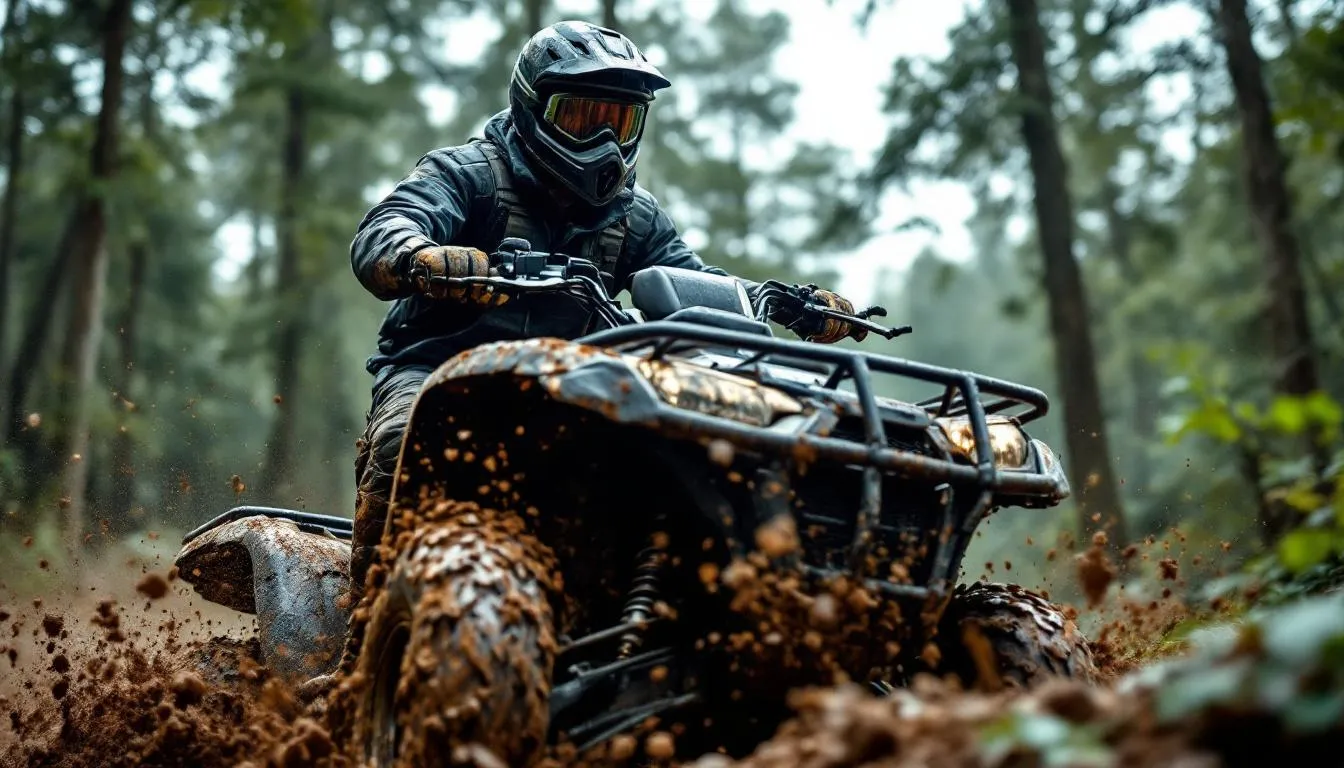
Table of Contents
What Is Off-roading?
Off-roading is the activity of driving motor vehicles on unpaved surfaces — dirt trails, rocky terrain, sand dunes, muddy paths, river crossings, and mountain switchbacks. It ranges from casual fire-road exploring in a stock SUV to extreme rock crawling in a heavily modified rig that barely resembles the vehicle it started as. For some people it’s weekend recreation. For others it’s a lifestyle.
The Appeal
There’s something satisfying about taking a vehicle where it wasn’t designed to go. Pavement is predictable. Off-road terrain forces you to read the ground, choose lines, manage traction, and solve problems in real time. Every obstacle — a boulder, a steep descent, a water crossing — is a puzzle with stakes.
The appeal goes beyond driving, though. Off-roading takes you to places most people never see. Remote canyons, mountain meadows, desert landscapes, old mining roads that haven’t seen traffic in years. The vehicle is the tool; the destination is the point.
Types of Off-roading
Trail riding is the most common form — driving maintained or unmaintained trails through forests, mountains, or deserts. Trails are often rated by difficulty (like ski runs) from easy to extreme. The Rubicon Trail in California, the Moab trails in Utah, and the Ouray trails in Colorado are legendary destinations.
Rock crawling involves navigating over large rocks and boulders at very low speeds. It demands precise wheel placement, extreme suspension articulation, and usually a heavily modified vehicle. Competitions like King of the Hammers combine rock crawling with high-speed desert racing.
Mud bogging means driving through deep mud pits, often competitively. Vehicles range from stock trucks to purpose-built monsters with enormous tires and high-horsepower engines. It’s messy, loud, and enormously popular in the southeastern United States.
Sand driving requires different techniques — lower tire pressure for flotation, maintaining momentum, and avoiding sudden stops. The dunes of Glamis (Imperial Sand Dunes in California) are the most famous U.S. sand driving destination.
Overlanding is long-distance off-road travel, typically self-supported with camping gear, water, food, and recovery equipment. Think multi-day or multi-week trips through remote backcountry. The Pan-American Highway, the Trans-Sahara routes, and Australia’s Outback tracks are classic overlanding journeys.
The Vehicles
The Jeep Wrangler is the iconic off-road vehicle for good reason — its solid axles, short wheelbase, and removable top make it incredibly capable on trails. It’s also the most commonly modified vehicle in the off-road world.
Toyota’s Land Cruiser and 4Runner have reputations for bulletproof reliability in extreme conditions. Aid organizations and overlanders worldwide rely on Toyota trucks because they simply don’t break.
The Ford Bronco’s revival (2021) brought another serious competitor to the market. The Land Rover Defender, Jeep Gladiator, and Chevrolet Colorado ZR2 are popular choices with different strengths.
For serious off-roaders, the stock vehicle is just a starting point. Common modifications include lift kits (for ground clearance), larger tires, winches, skid plates (to protect the undercarriage), locking differentials (to force both wheels on an axle to turn together), and upgraded suspension.
Essential Techniques
Tire pressure matters more than you’d think. Airing down — reducing tire pressure from highway levels (around 35 psi) to 15-20 psi for trails or even lower for sand — dramatically improves traction by increasing the tire’s contact patch with the ground.
Momentum is your friend, but control is better. In mud and sand, you need to keep moving. On rocks and steep grades, slow and steady wins. Knowing when to press on and when to stop takes experience.
Pick your line. Before driving through an obstacle, get out and walk it. Look at where your tires will go, identify potential problems, and plan your approach. The best off-roaders spend more time looking than driving.
Never go alone. Always off-road with at least one other vehicle. If you get stuck, broken, or injured in a remote area with no cell service, having a buddy vehicle can be the difference between an inconvenience and a serious emergency.
Environmental Responsibility
Off-roading and environmentalism have a complicated relationship. Vehicles can damage fragile ecosystems — crushing vegetation, causing erosion, disturbing wildlife, and creating unauthorized trails that scar the field for decades.
The responsible off-road community takes this seriously. The “Tread Lightly!” principles are the gold standard:
- Travel only on designated trails
- Respect the environment and the rights of others
- Educate yourself about the areas you visit
- Avoid sensitive areas (wetlands, archaeological sites, wildlife habitat)
- Do your part by leaving trails cleaner than you found them
Staying on marked trails is the single most important rule. One vehicle cutting a new path through a meadow or desert crust can create erosion damage that takes decades to heal. The Bureau of Land Management and Forest Service designate specific areas and trails for off-road use precisely to concentrate impact and protect the rest.
The Culture
Off-roading has a strong community culture. Jeep drivers wave at each other on the road (it’s called the “Jeep wave”). Trail runs often involve groups of vehicles running together, helping each other through obstacles, and camping at the trailhead.
Online forums and social media have expanded the community enormously. YouTube channels documenting trail runs and vehicle builds attract millions of viewers. Events like the Easter Jeep Safari in Moab, Utah, draw thousands of participants annually.
There’s also a DIY ethos. Many off-roaders build and modify their own vehicles, fabricating custom bumpers, installing lifts, and wiring electrical systems. The garage is as much part of the hobby as the trail.
Off-roading connects driving skill, mechanical knowledge, outdoor exploration, and problem-solving in a way that few other activities match. It’s not for everyone — it’s rough on vehicles, occasionally rough on you, and the learning curve involves getting stuck, probably more than once. But that’s part of the point. Getting stuck and getting unstuck is where the stories come from.
Frequently Asked Questions
Do I need a special vehicle for off-roading?
It depends on the terrain. Mild dirt roads and gravel tracks can be handled by most SUVs and crossovers with all-wheel drive. Serious off-roading — rock crawling, deep mud, steep grades — requires a vehicle with four-wheel drive, adequate ground clearance (8+ inches), skid plates, and appropriate tires. Popular choices include the Jeep Wrangler, Toyota 4Runner, Ford Bronco, and Land Rover Defender.
Is off-roading legal?
Off-roading is legal on designated trails and areas on public land managed by the Bureau of Land Management, U.S. Forest Service, and state agencies. Many areas require OHV (Off-Highway Vehicle) permits or stickers. Driving off-trail on public land is generally illegal and environmentally damaging. Private land requires the owner's permission.
What safety gear should off-roaders carry?
Essential gear includes a recovery kit (tow strap, shackles, winch if possible), a first aid kit, fire extinguisher, tire repair kit, air compressor, extra water and food, communication device (CB radio or satellite communicator), and a tool kit. You should always tell someone your planned route and expected return time before heading out.
Further Reading
Cite this article
APA
WhatIs.site. (2025). What Is Off-roading?. Retrieved May 27, 2026, from https://whatis.site/off-roading MLA
"What Is Off-roading?." WhatIs.site, July 15, 2025, https://whatis.site/off-roading. Accessed May 27, 2026. Chicago
WhatIs.site. "What Is Off-roading?." Last modified May 12, 2026. https://whatis.site/off-roading. HTML
<a href="https://whatis.site/off-roading">What Is Off-roading?</a> — WhatIs.site Related Articles
What Is Automotive Engineering?
Automotive engineering is the branch of engineering focused on designing, developing, and manufacturing vehicles. Learn about powertrains, safety, and EVs.
everyday conceptsWhat Is Outdoor Survival?
Outdoor survival is the skill of staying alive in wilderness situations using knowledge of shelter, water, fire, and food. Here's what you need to know.
sportsWhat Is Camping?
Camping is the recreational practice of staying overnight outdoors, typically in natural settings, using temporary shelter like tents, recreational vehicles.