 WhatIs.site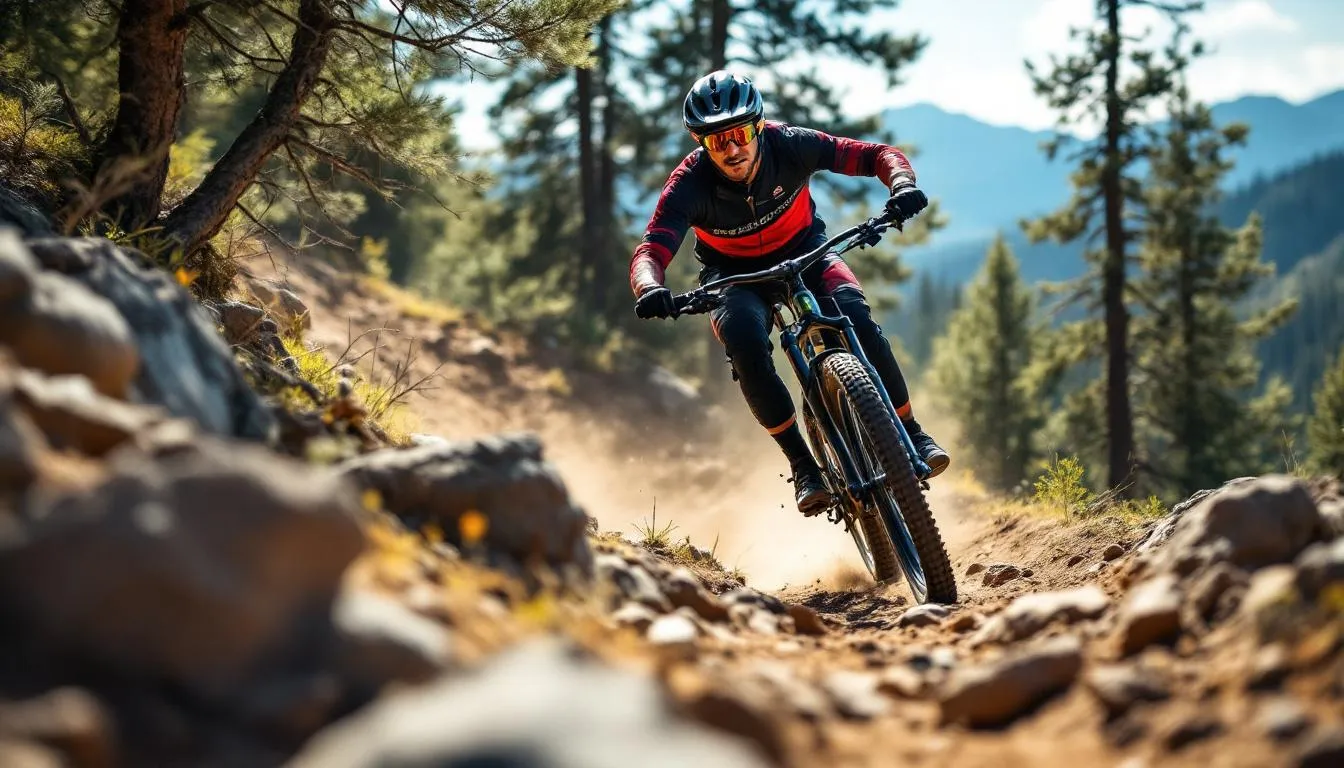
Table of Contents
What Is Mountain Biking?
Mountain biking is the sport of riding specially designed bicycles on off-road terrain — dirt trails, forest paths, mountain tracks, rock gardens, and purpose-built bike parks. It started in the 1970s when a group of Northern California cyclists began racing modified beach cruisers down the fire roads of Mount Tamalpais in Marin County. Within two decades, it became an Olympic sport.
Today, mountain biking is practiced by an estimated 40+ million people in the U.S. alone. It’s both a competitive sport (cross-country racing became Olympic in 1996) and a recreational activity that offers fitness, adventure, and an addictive combination of physical challenge and technical skill.
The Disciplines
Cross-country (XC) — endurance-focused racing over varied terrain with both climbing and descending. XC bikes are lightweight (20-25 lbs) with moderate suspension travel (100-120mm). This is the Olympic discipline.
Trail riding — the most popular recreational category. Trail bikes balance climbing efficiency with descending capability, typically with 120-150mm of suspension travel. Most recreational mountain bikers are trail riders.
Enduro/All-mountain — gravity-focused riding where descents are timed but climbs are not. Enduro bikes have 150-170mm of travel and can handle aggressive terrain while still being pedalable uphill.
Downhill (DH) — pure gravity racing on steep, technical courses. DH bikes have 200mm+ of travel, weigh 35+ lbs, and are designed exclusively for going down. Riders use chairlifts or shuttles to reach the top. World Cup downhill courses feature drops, rock gardens, and massive jumps at speeds exceeding 40 mph.
Freeride — big jumps, drops, and technical stunts. Overlaps with downhill but emphasizes style and creativity. Red Bull Rampage, held annually in Utah’s desert, is the sport’s most spectacular event.
Fat biking — riding bikes with 4-5 inch wide tires on snow, sand, and soft terrain. A growing winter activity in northern climates.
The Bikes
Modern mountain bikes are engineering marvels. Key components include:
Frame — aluminum or carbon fiber, designed for specific riding styles. Geometry has evolved dramatically — modern bikes are longer, lower, and slacker (more relaxed head tube angle) than bikes from even five years ago, improving stability at speed.
Suspension — front forks and rear shocks absorb impacts. Air springs are adjustable for rider weight. Damping controls how quickly the suspension compresses and rebounds. Quality suspension transforms rough terrain from punishing to manageable.
Dropper seatpost — a lever-activated post that lets riders lower their seat for descents and raise it for climbing. This single innovation has changed how people ride more than almost any other technology in recent years.
Disc brakes — hydraulic disc brakes provide consistent, powerful stopping in all conditions. They replaced rim brakes almost entirely and are essential for safe off-road riding.
Tubeless tires — run without inner tubes, allowing lower pressures for better grip and self-sealing small punctures. Standard on most quality mountain bikes today.
Trail Systems
Mountain biking depends on trail access. Major trail systems include:
- Moab, Utah — the iconic desert riding destination with slickrock, red rock, and stunning scenery
- Whistler Bike Park, BC — the world’s premier lift-accessed bike park
- Bentonville, Arkansas — an emerging hub with hundreds of miles of purpose-built trails
- Rotorua, New Zealand — world-class trails in a volcanic field
Organizations like IMBA (International Mountain Bicycling Association) work to build and maintain trails, advocate for trail access, and promote responsible riding. Trail maintenance is community-driven — volunteer trail building days are a core part of mountain bike culture.
The Culture
Mountain biking has a strong community ethic. Riders greet each other on trails. More experienced riders help beginners. Group rides are social events. Trail building brings people together for physical work that directly benefits the community.
The sport has become more inclusive in recent years, with growing participation among women (about 36% of mountain bikers are female, up from 23% a decade ago), people of color, and older adults. Organizations like NICA (National Interscholastic Cycling Association) have brought mountain biking to high school students, with leagues in nearly every U.S. state.
Getting Started
Rent or borrow a bike before buying. Many bike shops and bike parks offer rentals, letting you try the sport without a major investment. Take a skills clinic — proper braking, body position, and cornering technique make riding both safer and more fun. Start on beginner-rated trails (typically marked green) and progress gradually.
The learning curve is real but forgiving. You’ll fall. Everyone falls. The key is falling on terrain that’s appropriate for your skill level, wearing proper protection, and gradually building the skills that let you tackle more challenging trails with confidence.
Mountain biking rewards persistence with experiences you can’t get any other way — flowing through singletrack between trees, cresting a summit with a panoramic view, cleaning a technical feature you couldn’t ride last month. It’s hard to explain the appeal to someone who hasn’t tried it. It’s almost impossible to give it up once you have.
Frequently Asked Questions
What type of mountain bike should a beginner get?
A hardtail (front suspension only) trail bike with 120-130mm of travel is the best starting point. Hardtails are cheaper, lighter, and teach better riding technique than full-suspension bikes. Budget $800-1,500 for a capable entry-level hardtail. Avoid department store bikes — they're heavy, poorly assembled, and unsafe on real trails.
Is mountain biking dangerous?
It carries more injury risk than road cycling due to rough terrain, obstacles, and speed. Common injuries include scrapes, bruises, wrist fractures, and collarbone breaks. Wearing a proper helmet, gloves, and (for aggressive riding) body armor significantly reduces risk. Riding within your skill level is the most effective safety measure.
How fit do you need to be to mountain bike?
Any reasonable fitness level can enjoy beginner trails. Mountain biking is self-paced — you can stop and rest whenever you want. That said, the sport builds fitness rapidly. Climbing hills on a bike is an excellent cardiovascular workout, and technical riding develops balance, coordination, and core strength. Most riders find their fitness improves dramatically within a few months.
Further Reading
Cite this article
APA
WhatIs.site. (2025). What Is Mountain Biking?. Retrieved May 27, 2026, from https://whatis.site/mountain-biking MLA
"What Is Mountain Biking?." WhatIs.site, July 15, 2025, https://whatis.site/mountain-biking. Accessed May 27, 2026. Chicago
WhatIs.site. "What Is Mountain Biking?." Last modified May 12, 2026. https://whatis.site/mountain-biking. HTML
<a href="https://whatis.site/mountain-biking">What Is Mountain Biking?</a> — WhatIs.site Related Articles
What Is Cycling?
Cycling is riding a bicycle for transport, exercise, or sport. Learn about road cycling, mountain biking, racing, health benefits, and getting started.
health amp wellnessWhat Is Fitness?
Fitness is your body's ability to perform physical tasks effectively. It covers cardiovascular endurance, strength, flexibility, and body composition.
sportsWhat Is Mountaineering?
Mountaineering is the sport of climbing mountains using specialized skills and equipment. Learn about techniques, gear, famous peaks, and how to start.