 WhatIs.site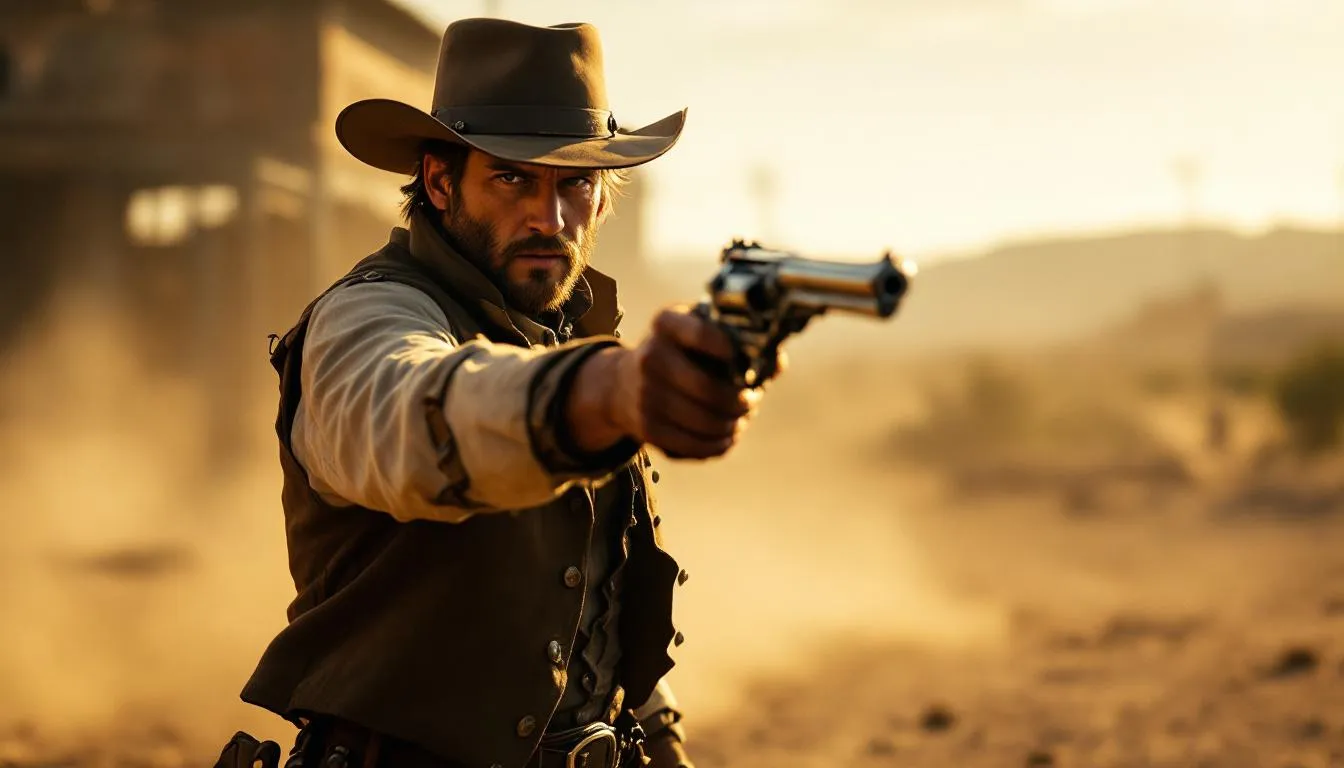
Table of Contents
What Is Historical Gunslinging?
Historical gunslinging refers to the real culture of armed confrontation, personal combat, and gun-related violence in the American frontier, primarily during the post-Civil War era from roughly 1865 to 1900. It’s one of the most mythologized periods in American history — and almost everything you think you know about it is wrong.
Separating Fact from Hollywood Fantasy
Let’s get this out of the way immediately: the classic Western gunfight — two men facing each other on a dusty street, hands hovering over holsters, waiting for the clock to strike noon — barely happened. It’s a movie invention. The “quick draw” duel as depicted in films is almost entirely fictional.
Real gunfights were ugly. They happened in saloons when drunk men got into arguments. They happened during ambushes. They happened when law enforcement tried to arrest someone who didn’t want to be arrested. They were close-range, chaotic, and over in seconds. Participants frequently missed their targets even at point-blank range because combat stress makes accurate shooting extraordinarily difficult. The adrenaline dump that comes with genuine mortal danger causes tunnel vision, loss of fine motor control, and auditory exclusion. Your hands shake. Your vision narrows. That romantic image of the cool, steady-handed gunslinger? Almost nobody was actually like that in a real fight.
The most famous “gunfight” in American history — the Gunfight at the O.K. Corral on October 26, 1881 — lasted about 30 seconds. Roughly 30 shots were fired. Three men died. It happened in a narrow lot beside a building, not on a wide-open street. The participants were at distances of about 6-10 feet. It was more like a chaotic brawl with guns than anything resembling a duel.
Why the West Was Armed
The post-Civil War frontier was armed for practical reasons. After 1865, hundreds of thousands of veterans — trained in firearms and comfortable with violence — moved westward. The federal government was selling western lands cheaply. Gold and silver strikes drew prospectors. The cattle industry boomed, creating long cattle drives from Texas to Kansas railheads.
In these environments, law enforcement was thin to nonexistent. Towns might have a sheriff and perhaps a deputy or two covering vast territories. Courts were distant. Response times were measured in days, not minutes. People carried guns because they genuinely needed protection — from hostile wildlife, from criminals, and sometimes from each other.
The firearms themselves matter. Before the Civil War, most handguns were single-shot or cap-and-ball revolvers that were slow and unreliable. The introduction of metallic cartridge revolvers — particularly the Colt Single Action Army (the “Peacemaker,” introduced in 1873) and the Smith & Wesson Model 3 — changed everything. These guns were reliable, relatively accurate, and fast to reload. A competent shooter could fire six aimed shots in a few seconds. The Winchester repeating rifle, which held multiple rounds, gave individuals serious firepower.
The Real Gunslingers
The famous gunslingers of the Old West were a mix of lawmen, outlaws, and men who were sometimes both — depending on the day.
Wild Bill Hickok (1837-1876) was probably the closest thing to a genuine “gunfighter” in the popular sense. He served as a Union scout during the Civil War, worked as a lawman in Kansas, and killed multiple men in documented encounters. His most famous gunfight — the 1865 shooting of Davis Tutt in Springfield, Missouri — is one of the few real incidents that somewhat resembles the Hollywood quick-draw duel. They faced each other across a public square at about 75 yards and fired. Hickok hit Tutt through the heart. But even this wasn’t a formal duel — it erupted from a dispute over a pocket watch.
Wyatt Earp (1848-1929) was a lawman, saloon owner, gambler, and occasional con artist whose legend grew far beyond his actual record. He’s famous for the O.K. Corral, but he spent most of his life as a businessman and only a few years in law enforcement. His brothers Virgil and Morgan were arguably more interesting historically. Wyatt’s post-O.K. Corral “vendetta ride” — hunting down men he believed murdered Morgan — was essentially vigilante justice.
Billy the Kid (1859-1881) was a cattle rustler and killer who died at 21. His legend claims 21 kills — one for each year of his life. Historians verify about 4. He was a young man caught up in the Lincoln County War — a violent business dispute between rival cattle ranching factions in New Mexico. His story is less about heroic gunslinging and more about being a teenager in the wrong place at the wrong time who happened to be good with a gun.
Doc Holliday (1851-1887) was a dentist turned gambler with tuberculosis who became famous primarily through his friendship with Wyatt Earp and his participation in the O.K. Corral. He was by most accounts a mean, difficult man — talented with cards and guns, but not someone you’d want to spend an evening with.
The Towns Where It Happened
The cattle towns of Kansas — Dodge City, Abilene, Wichita, Caldwell, and Ellsworth — were where cowboys met civilization after months on the trail. Drovers arrived with months of back pay, testosterone, and pent-up boredom. Saloons, gambling halls, and brothels catered to them enthusiastically. Violence was predictable.
But here’s the surprising truth: these towns were less violent than their reputations suggest. Dodge City, the supposed “wickedest city in America,” averaged about 1.5 homicides per year during its peak cattle years (1876-1885). The entire state of Kansas averaged fewer than 10 murders annually during this period. By comparison, modern American cities have far higher per capita homicide rates.
Many frontier towns actually had strict gun control. Dodge City, Tombstone, and others enacted ordinances requiring visitors to surrender their firearms to the sheriff upon entering town. The O.K. Corral gunfight was triggered partly by the Clantons’ refusal to disarm according to Tombstone’s weapons ordinance. The idea that everyone in the Old West walked around armed all the time is a myth.
Mining towns — Tombstone, Deadwood, Virginia City — were often more violent than cattle towns because of the combination of sudden wealth, alcohol, and the transient populations that mining attracted. But even these towns had courts, juries, and legal systems that functioned, however imperfectly.
The Code of the West
Despite the violence, the frontier had its own moral code — though it was inconsistent and self-serving.
Fair fights were respected. Shooting an unarmed man was considered murder. Shooting a man in the back was cowardly. These norms were violated constantly, of course, but they existed as ideals. When lawmen killed someone, they generally needed to demonstrate the shooting was justified — either self-defense or resistance to lawful arrest.
Frontier justice sometimes meant vigilante action. When official law enforcement was absent or corrupt, citizens occasionally formed committees to deal with horse thieves, cattle rustlers, and murderers. These committees hanged people — sometimes after a trial, sometimes without one. The moral legitimacy of vigilante justice was debated even at the time.
Honor culture drove much of the violence. Insults had to be answered. Backing down was worse than fighting. Men killed each other over card games, debts, romantic disputes, and perceived slights. The culture of personal honor — where your reputation was your most valuable asset — made de-escalation psychologically difficult. Walking away from a fight could mark you as a coward for life in a community where reputation meant everything.
The End of the Gunslinger Era
The gunslinger era ended not with a dramatic final shootout but with a slow tightening of civilization’s grip. Railroads connected isolated towns to the broader nation. Telegraph lines made it harder for criminals to disappear. Professional law enforcement organizations replaced lone sheriffs. Barbed wire fenced the open range, ending the great cattle drives.
By 1900, the frontier was effectively closed. The 1890 census had already declared there was no more continuous frontier line. Towns had grown into cities with police departments, courts, and jails. The Wild West, in any meaningful sense, was over.
What replaced it was the myth — which proved far more durable than the reality. Dime novels had already been romanticizing gunfighters during the actual period. Buffalo Bill’s Wild West show (starting in 1883) turned frontier violence into entertainment. Early Hollywood Westerns cemented the mythology. By the mid-20th century, the fictional Old West had completely overshadowed the real one.
Why the Myth Persists
The gunslinger myth endures because it tells Americans something they want to believe about themselves: that individual courage, self-reliance, and personal skill matter more than institutions. The lone gunman standing up to injustice is a powerful narrative — even when the historical record shows that most “gunslingers” were messy, complicated people operating in morally ambiguous situations.
Understanding the real history doesn’t ruin the story. Frankly, it makes it more interesting. The actual Old West — with its contradictions, its surprisingly effective gun control laws, its mix of violence and community building, and its cast of flawed, fascinating characters — is far more complex than any movie version.
Frequently Asked Questions
Were gunfights in the Old West really like the movies?
Almost never. Hollywood invented the classic "quick draw" duel where two gunmen face each other on an empty street and draw simultaneously. Real gunfights were messy, chaotic, and usually happened at close range — often in saloons, alleys, or during ambushes. Most lasted seconds, not minutes. Participants frequently missed, even at short distances, because adrenaline and fear wreck your aim. The romanticized showdown is almost entirely fictional.
How many people actually died in Old West gunfights?
Far fewer than popular culture suggests. The most violent cattle towns — Dodge City, Abilene, Wichita — averaged only about 1.5 homicides per year during their peak years. Tombstone, Arizona, one of the most "lawless" towns, recorded about 5 homicides per year. By comparison, modern American cities have far higher per capita murder rates. The Old West was dangerous, but not the constant bloodbath movies depict.
Who was the most deadly gunslinger in history?
The honest answer is we don't really know, because kill counts were wildly exaggerated even during the period. Wild Bill Hickok claimed dozens of kills but historians verify far fewer. Billy the Kid's famous "21 kills for 21 years" is complete fiction — he likely killed 4 people. John Wesley Hardin claimed 42 kills, but the real number was probably around 6-12. The deadliest gunfighters were likely people nobody wrote dime novels about.
Did women participate in Old West gunslinging?
Yes, though far less frequently than men. Calamity Jane (Martha Jane Canary) was a frontier scout who carried firearms and allegedly participated in conflicts, though many of her stories are exaggerated. Belle Starr was convicted of horse theft and associated with outlaw gangs. Pearl Hart committed one of the last recorded stagecoach robberies in 1899. Most frontier women carried guns for protection rather than criminal activity, and their stories are underrepresented in historical records.
Further Reading
Cite this article
APA
WhatIs.site. (2025). What Is Historical Gunslinging?. Retrieved May 27, 2026, from https://whatis.site/historical-gunslinging MLA
"What Is Historical Gunslinging?." WhatIs.site, July 15, 2025, https://whatis.site/historical-gunslinging. Accessed May 27, 2026. Chicago
WhatIs.site. "What Is Historical Gunslinging?." Last modified May 12, 2026. https://whatis.site/historical-gunslinging. HTML
<a href="https://whatis.site/historical-gunslinging">What Is Historical Gunslinging?</a> — WhatIs.site Related Articles
What Is Anthropology?
Anthropology is the study of humans—past and present—across cultures, biology, language, and societies. Learn its branches, methods, and why it matters.
scienceWhat Is Archaeology?
Archaeology is the study of human history through physical remains like artifacts, buildings, and bones. Learn about methods, famous discoveries, and careers.
financeWhat Is Capitalism?
Capitalism is an economic system where private individuals own the means of production and trade goods in free markets driven by supply, demand, and profit.
financeWhat Is Business Law?
Business law — also called commercial law or mercantile law — is the body of legal rules and principles governing commercial transactions.
historyWhat Is The Silk Road?
The ancient trade network connecting Asia, the Middle East, and Europe that reshaped civilization through commerce, culture, and ideas.