 WhatIs.site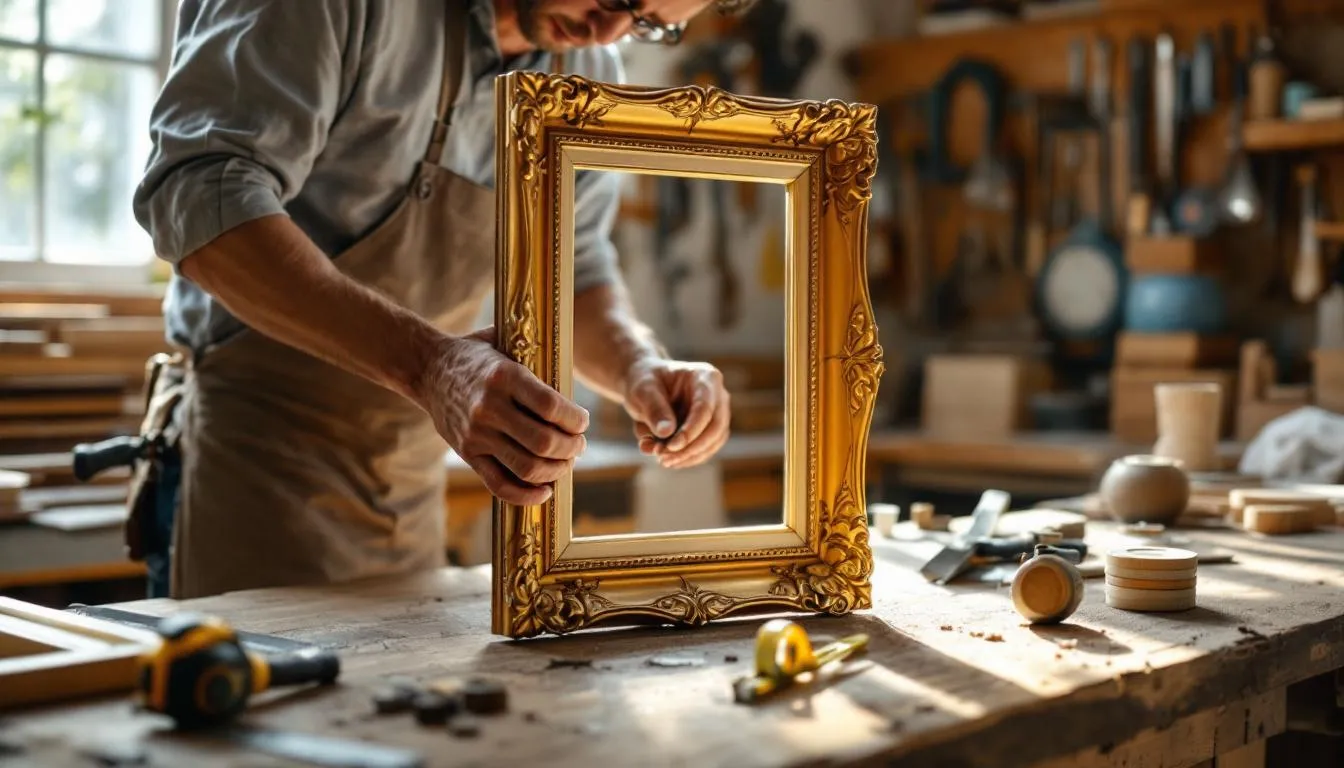
Table of Contents
What Is Frame Making?
Frame making is the craft of constructing frames to surround, display, and protect artwork, photographs, documents, and other flat objects. It sounds straightforward — build a rectangle, put glass in it, hang it on a wall. In practice, frame making involves woodworking precision, material science, design sensibility, and conservation knowledge.
A well-made frame doesn’t just hold a picture. It presents the artwork, protects it from environmental damage, and complements both the piece and the space it occupies.
More Than a Border
A frame does three jobs simultaneously.
Protection is the most practical function. A proper frame shields artwork from dust, moisture, UV light, insects, and physical damage. Conservation-grade framing — using acid-free materials, UV-filtering glazing, and archival mounting — can preserve a piece for centuries. Improper framing, conversely, can destroy artwork through acid migration, moisture trapping, or adhesive damage.
Presentation shapes how viewers perceive the artwork. A wide, ornate gold frame conveys traditional importance. A slim, black contemporary frame recedes and lets the art speak. A floating frame creates the illusion that the artwork hovers in space. Frame choice isn’t neutral — it’s a curatorial decision.
Structural support keeps everything together and provides a mounting system for walls, easels, or display cases. The frame must be strong enough to support the combined weight of glass, mat, backing, and artwork without warping or separating.
Materials and Construction
Wood is the traditional and most common frame material. Hardwoods (oak, walnut, maple, cherry) are used for high-quality frames. Softwoods (pine, basswood) serve as substrates for painted or gilded finishes. Mouldings (the shaped wood strips that form the frame) come in thousands of profiles — from simple flat strips to elaborately carved and finished designs.
Metal frames — aluminum, steel, or brass — offer clean, modern aesthetics. Sectional metal frames (Nielsen and similar brands) allow exact custom sizing by assembling pre-cut lengths with corner hardware.
Gilding — applying thin layers of gold leaf to a prepared surface — has been the premium frame finish for centuries. Traditional water gilding involves applying gesso, bole (colored clay), and 23-karat gold leaf, then burnishing to a mirror finish. Oil gilding is simpler but produces a matte, less luminous surface. Museum-quality gilded frames can take weeks to produce.
The miter joint — a 45-degree angle cut where frame members meet at corners — is the standard construction method. Precision is essential: a poorly cut miter leaves visible gaps. Joints are reinforced with glue, nails, staples, or V-nails (corrugated fasteners driven across the joint from behind).
Conservation Framing
For valuable or irreplaceable artwork, conservation framing is non-negotiable. The principles are:
Reversibility. Nothing should be done to the artwork that can’t be undone. No permanent adhesives, no trimming, no dry mounting. Artwork is attached with archival hinges (Japanese tissue and wheat starch paste) that can be removed without damage.
Acid-free materials. Standard mat board and backing contain acids that migrate into artwork, causing yellowing and brown spots (foxing). Conservation-grade materials are acid-free and lignin-free, preventing chemical damage.
UV protection. Light fades pigments and damages paper. UV-filtering glass or acrylic blocks 97-99% of ultraviolet light, dramatically slowing fading. Museum glass adds anti-reflective coating for virtually invisible protection.
Proper spacing. Artwork should never touch the glazing directly — moisture can condense on glass and damage the art. Mats or spacers maintain an air gap between the art surface and the glass.
The Design Process
Choosing a frame involves balancing multiple aesthetic and practical considerations.
Scale should relate the frame to both the artwork and the wall space. A massive frame on a small watercolor overwhelms it. A tiny frame on a large wall disappears.
Color and finish should complement the artwork without competing. A general rule: the frame should be darker than the lightest tone in the artwork and lighter than the darkest. But rules are made to be broken — sometimes a contrasting frame is exactly right.
Style typically matches the artwork’s era or aesthetic. Old Master paintings in carved, gilded frames. Modern abstracts in minimal profiles. Photographs in clean metal or wood. But mixing styles can work beautifully — a contemporary frame on a traditional artwork can make it feel fresh.
Matting provides visual breathing room between the frame and the artwork. Standard mat width is 2-3 inches, though this varies with artwork size and proportion. Double or triple matting adds depth and color accents.
Frame Making as a Career
Professional picture framing combines craftsmanship with customer service. Most custom framers learn through apprenticeship — working in a frame shop under experienced framers. The PPFA (Professional Picture Framers Association) offers the Certified Picture Framer (CPF) designation, which requires passing an exam covering design, materials, and conservation.
The custom framing industry generates several billion dollars annually in the U.S. Independent frame shops compete with big-box stores (Michaels, Hobby Lobby) that offer custom framing services at lower prices but often with less expertise.
Fine art frame making — creating hand-carved, gilded frames for museum collections and galleries — is a specialized niche requiring years of training in woodcarving, gilding, and historical frame styles.
Why It Matters
A frame is the last creative decision before an artwork meets its audience. The wrong frame diminishes a masterpiece. The right frame elevates even modest artwork. Frame making occupies that interesting space where craft, design, and conservation intersect — protecting art while presenting it, invisible when done well, painfully obvious when done poorly.
Frequently Asked Questions
Why is custom framing so expensive?
Custom framing involves skilled labor, quality materials, and individual attention. Conservation-grade materials (acid-free mats, UV-protective glass, archival tape) cost significantly more than standard alternatives. The moulding itself can range from $5 to $50+ per foot depending on material and finish. A custom framer spends 1-3 hours per frame measuring, cutting, assembling, and finishing. The combination of materials and labor drives prices.
What is conservation framing?
Conservation (or archival) framing uses materials and techniques that protect artwork from damage over time. This includes acid-free mats and backing, UV-filtering glass or acrylic, archival mounting methods (no permanent adhesives), and proper spacing between the art and glazing. Conservation framing prevents yellowing, fading, foxing, and other deterioration that standard framing allows.
Can you frame art yourself?
Yes. Basic framing requires a mat cutter, glass cutter, frame hardware, and precision measuring tools. Ready-made frames from craft stores work for standard sizes. However, cutting perfect 45-degree miter joints for custom frames requires a miter saw and practice. For valuable or sentimental artwork, professional framing ensures archival protection.
Further Reading
Cite this article
APA
WhatIs.site. (2025). What Is Frame Making?. Retrieved May 27, 2026, from https://whatis.site/frame-making MLA
"What Is Frame Making?." WhatIs.site, July 15, 2025, https://whatis.site/frame-making. Accessed May 27, 2026. Chicago
WhatIs.site. "What Is Frame Making?." Last modified May 12, 2026. https://whatis.site/frame-making. HTML
<a href="https://whatis.site/frame-making">What Is Frame Making?</a> — WhatIs.site Related Articles
What Is Fine Art?
Fine art refers to creative works made primarily for aesthetic value, including painting, sculpture, and drawing. Learn its history and modern debates.
arts amp cultureWhat Is Furniture Making?
Furniture making is the craft of building functional objects from wood and other materials. Learn about joinery, tools, wood types, and getting started.
everyday conceptsWhat Is Woodworking?
Woodworking is the craft of building objects from wood using hand and power tools. Learn about joinery, essential tools, wood types, and beginner project ideas.