 WhatIs.site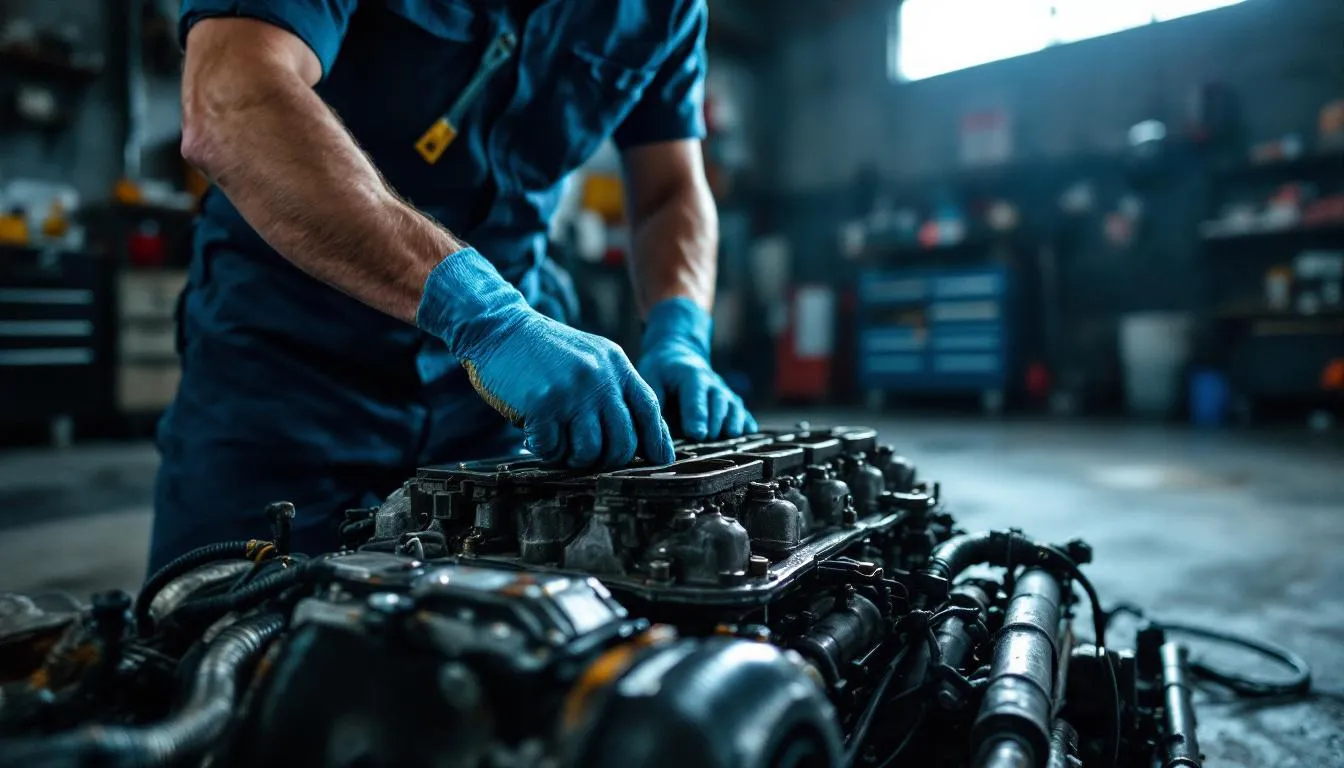
Table of Contents
What Is Engine Repair?
Engine repair is the process of diagnosing, disassembling, fixing, and reassembling internal combustion engines to restore them to proper working condition. It covers everything from replacing a $15 oxygen sensor to a complete engine rebuild costing thousands of dollars, and it remains one of the most common and consequential services in automotive engineering.
What Actually Happens Inside an Engine
Before you can understand engine repair, you need a basic picture of what an engine does — because the failures that require repair are almost always failures of one of these systems.
An internal combustion engine converts chemical energy (fuel) into mechanical energy (rotation) through a four-stroke cycle:
- Intake: The piston moves down, drawing in a fuel-air mixture through the intake valve
- Compression: The piston moves up, compressing the mixture to roughly 1/10th its original volume
- Power: A spark plug ignites the compressed mixture, and the expanding gases force the piston down with enormous force
- Exhaust: The piston moves back up, pushing burned gases out through the exhaust valve
This cycle repeats 1,000-6,000+ times per minute in each cylinder. A four-cylinder engine running at 3,000 RPM performs 6,000 combustion events per minute. The temperatures inside the combustion chamber exceed 2,500 degrees Celsius during the power stroke. The pressures reach 50-70 bar. This all happens inside an aluminum or cast-iron block that weighs maybe 100 kg and costs a few thousand dollars.
When you think about it that way, it’s kind of remarkable that engines last as long as they do. But wear, heat, contamination, and material fatigue eventually cause failures. That’s where engine repair comes in.
Diagnostics: Finding the Problem
Modern engine repair starts with diagnostics — figuring out what’s actually wrong before tearing anything apart.
OBD-II: The Engine’s Black Box
Every car sold in the US since 1996 has an On-Board Diagnostics II (OBD-II) system — a computer that continuously monitors engine operation and stores diagnostic trouble codes (DTCs) when something goes wrong. When your “check engine” light comes on, the OBD-II system has detected a problem and stored a code identifying it.
A mechanic connects a scan tool to the OBD-II port (usually under the dashboard) and reads these codes. The code itself doesn’t tell you what’s broken — it tells you what the computer detected as abnormal. Code P0300, for example, indicates random/multiple cylinder misfires, but the cause could be worn spark plugs, failing ignition coils, vacuum leaks, low fuel pressure, or a dozen other things. Diagnosis means narrowing from the code to the actual failed component.
Professional scan tools go far beyond reading codes. They display live sensor data — fuel trim values, oxygen sensor readings, coolant temperature, ignition timing — that a skilled technician interprets to pinpoint problems. Watching the short-term and long-term fuel trims, for instance, can reveal whether an engine is running rich or lean and on which bank, pointing toward specific causes.
Physical Inspection and Testing
Not everything shows up electronically. A compression test — cranking the engine with a pressure gauge screwed into each spark plug hole — reveals whether each cylinder is sealing properly. Low compression in one cylinder suggests worn piston rings, a blown head gasket, or a burned valve. The pattern of compression readings across cylinders helps narrow the diagnosis.
A leak-down test goes further: compressed air is pumped into each cylinder at top dead center, and the rate of leakage is measured. Listening for where the air escapes (through the intake, exhaust, crankcase, or coolant system) tells you exactly what’s leaking.
Oil analysis — sending a sample of engine oil to a laboratory — can detect wear metals (iron from cylinders, aluminum from pistons, copper from bearings) that indicate which internal components are wearing abnormally. Some fleet operators analyze oil regularly to predict failures before they happen.
The Most Common Engine Problems
Head Gasket Failure
The head gasket sits between the engine block and the cylinder head, sealing combustion gases, coolant passages, and oil passages. When it fails, these systems can mix — combustion gases enter the cooling system, coolant enters the combustion chambers, or oil and coolant mix.
Symptoms include overheating, white exhaust smoke (coolant burning in cylinders), milky oil (coolant contamination), bubbles in the coolant reservoir (combustion gases in the cooling system), and unexplained coolant loss.
Head gasket replacement is labor-intensive — the entire top half of the engine must be disassembled. The cylinder head is removed, inspected, and usually machined flat (resurfaced) to ensure a proper seal with the new gasket. Total cost is typically $1,000-$2,500 for most four-cylinder engines, higher for V6 and V8 configurations where two heads must be removed.
Timing Belt/Chain Failure
The timing belt or chain synchronizes the crankshaft (which moves pistons) with the camshaft (which opens and closes valves). If the timing belt breaks, valves stop moving while pistons continue — and in “interference” engines (most modern designs), the pistons hit the open valves, bending them and potentially causing catastrophic internal damage.
This is why timing belt replacement is a scheduled maintenance item, typically at 60,000-100,000 miles. Skip this maintenance and you’re gambling with an engine failure that could cost ten times the price of the belt replacement.
Timing chains generally last longer than belts but can stretch over time, causing timing drift. A stretched chain produces a distinctive rattling noise on startup and can trigger misfire codes as valve timing drifts from specifications.
Worn Piston Rings and Cylinder Walls
Over hundreds of thousands of miles, piston rings wear thin and cylinder walls develop scoring. This reduces the seal between the piston and cylinder, allowing combustion gases to blow past (blow-by) and oil to enter the combustion chamber.
Symptoms include excessive oil consumption, blue-gray exhaust smoke (burning oil), and reduced compression. The repair — reboring the cylinders and fitting oversized pistons, or replacing cylinder sleeves — requires a complete engine teardown and is typically done as part of a full engine rebuild.
Bearing Failure
The crankshaft and connecting rods ride on thin-walled bearings — precision-machined shells of soft metal (usually a copper-lead or aluminum alloy) that provide a smooth, lubricated running surface. These bearings depend entirely on a thin film of pressurized oil to prevent metal-to-metal contact.
When oil pressure drops (low oil level, failed oil pump, blocked oil passage) or oil quality deteriorates (overdue oil changes, contamination), bearings wear rapidly and can fail catastrophically. A “thrown rod” — when a connecting rod bearing fails completely and the rod breaks free — often punches through the engine block, destroying the engine beyond repair.
This is why regular oil changes are the single most important engine maintenance item. The oil protects bearings that, if they fail, can destroy an engine worth thousands of dollars. A $50 oil change protects a $5,000 engine.
Overheating Damage
Engines operate at 90-105 degrees Celsius by design — carefully controlled by the cooling system. When cooling fails (leaking radiator, failed water pump, stuck thermostat, blown head gasket), temperatures climb rapidly.
Overheating can warp cylinder heads, blow head gaskets, score cylinders, seize pistons, and crack the engine block itself. Warped heads can sometimes be machined flat and reused. A cracked block is usually terminal — the engine needs replacement.
The moment your temperature gauge enters the red zone, you should stop driving immediately. Every additional minute of overheating exponentially increases damage. Pulling over and shutting off a mildly overheating engine might mean a $200 thermostat replacement. Driving another 10 minutes could mean a $5,000 engine replacement.
Engine Rebuild vs. Replacement
When internal engine damage is extensive, two options exist: rebuild or replace.
Engine Rebuild
A rebuild involves disassembling the engine completely, inspecting every component, machining or replacing worn parts, and reassembling with new gaskets, seals, bearings, and rings. The block is bored to correct cylinder wear. The crankshaft is ground to specification. The cylinder head is reconditioned with new valve guides, seats, and springs.
A properly rebuilt engine should perform like new and last as long as the original. Cost typically runs $2,500-$7,000 depending on the engine type and the extent of damage.
Engine Replacement
Sometimes replacing the entire engine is more practical than rebuilding — particularly when the block itself is damaged (cracked, severely warped, or corroded) or when a suitable remanufactured or used engine is available at competitive cost.
Options include:
- New crate engine from the manufacturer — most expensive but comes with full warranty
- Remanufactured engine — completely disassembled, machined, and rebuilt to original specifications by a specialized facility. Often the best value for high-quality repair.
- Used engine — pulled from a salvage vehicle. Cheapest option but carries risk — you’re buying unknown wear history. Mileage and condition reports help but can’t guarantee longevity.
The choice depends on the vehicle’s value, the owner’s plans for keeping it, and the availability and cost of replacement options.
Modern Engine Complexity
Electronic Engine Management
Modern engines are controlled by an engine control unit (ECU) — a dedicated computer that manages fuel injection, ignition timing, variable valve timing, turbocharger boost, emissions controls, and dozens of other parameters. The ECU receives data from 30+ sensors and makes decisions thousands of times per second.
This electronic complexity makes modern engines more efficient, more powerful, and cleaner than their predecessors — but also more expensive to diagnose and repair when electronic components fail. A failing mass airflow sensor, for instance, causes symptoms (rough idle, poor fuel economy, reduced power) that mimic several mechanical problems. Without proper diagnostic equipment and training, misdiagnosis is easy and expensive.
Turbocharging and Direct Injection
Most modern engines use turbocharging (forced air induction) and gasoline direct injection (GDI) to extract more power from smaller displacements. A turbocharged 2.0-liter four-cylinder can produce as much power as a naturally aspirated 3.5-liter V6 while using less fuel.
But these technologies introduce new failure modes. Turbochargers operate at extreme temperatures and rotational speeds (up to 250,000 RPM) and can fail from oil starvation, foreign object damage, or bearing wear. Direct injection engines are prone to carbon buildup on intake valves — a problem that didn’t exist with port injection, where fuel washing over the valves kept them clean.
Variable Valve Timing
Systems like Honda’s VTEC, Toyota’s VVT-i, and BMW’s VANOS adjust valve timing based on engine speed and load. They improve efficiency and power across the RPM range but add mechanical complexity. Failed VVT solenoids, stretched timing chains, and worn phaser gears are increasingly common repair items, often announced by rattling noises and reduced performance.
The Technician’s Skill Set
Engine repair has evolved from a purely mechanical trade to one requiring significant technical education.
ASE Certification
The National Institute for Automotive Service Excellence (ASE) certifies technicians through standardized testing. ASE certification in Engine Repair (A1) requires at least two years of relevant work experience plus passing a thorough examination. Master technicians hold certifications in all eight ASE areas.
Continuing Education
Vehicle technology changes rapidly. A technician trained on 2015-era vehicles encounters unfamiliar systems on 2025 models — new engine architectures, different diagnostic protocols, and updated repair procedures. Manufacturer-specific training programs, industry seminars, and online courses keep technicians current.
The shift toward electric vehicles adds urgency. Technicians increasingly need knowledge of high-voltage electrical systems, battery management, and electric motor service alongside traditional engine repair skills. Some forward-thinking shops are training in both domains during the transition period.
Tools and Equipment
A professional engine repair facility typically invests $50,000-$200,000+ in tools and equipment:
- Professional scan tools and software subscriptions ($5,000-$15,000)
- Engine hoists and stands ($1,000-$5,000)
- Precision measuring instruments (micrometers, bore gauges, dial indicators)
- Specialty tools for specific vehicle makes and models
- Press equipment for bearing and bushing installation
- Machine shop equipment for cylinder head work
Individual technicians often own $20,000-$50,000 in personal hand tools — a significant investment that reflects the profession’s tool-intensive nature.
Preventive Maintenance: Avoiding Repair
The best engine repair is the one you never need. Most engine failures are preventable with consistent maintenance:
Oil changes at manufacturer-recommended intervals (typically every 5,000-10,000 miles with synthetic oil) — the single most important maintenance item. Fresh oil protects bearings, reduces friction, removes contaminants, and keeps seals conditioned.
Coolant service every 30,000-50,000 miles maintains corrosion protection and prevents cooling system failures that lead to overheating.
Timing belt replacement at the manufacturer’s specified interval (typically 60,000-100,000 miles) prevents catastrophic belt failure.
Air and fuel filter replacement ensures clean air and fuel reach the engine. A clogged air filter reduces efficiency and can allow dirt ingestion.
Spark plug replacement at recommended intervals (30,000-100,000 miles depending on type) maintains proper ignition and prevents misfires.
The cost of all scheduled maintenance over an engine’s lifetime is typically a few thousand dollars — a fraction of the cost of the major repairs that maintenance prevents.
The EV Transition and Engine Repair’s Future
Electric vehicles have dramatically fewer moving parts than internal combustion engines — an EV powertrain has roughly 20 moving parts versus 2,000+ in a conventional drivetrain. No oil to change, no timing belts, no spark plugs, no exhaust system. Battery, motor, and power electronics require different skills than traditional engine work.
But the transition will take decades. The US has about 290 million registered vehicles, and even with aggressive EV adoption, internal combustion vehicles will dominate the fleet through the 2030s and beyond. The average vehicle age is 12.6 years and rising. Engine repair skills will be needed for a very long time — but the profession is unmistakably evolving toward an electrified future.
Smart technicians and shop owners are preparing for both worlds — maintaining expertise in ICE repair while developing capabilities in alternative energy vehicle service. The ones who straddle this transition successfully will be the most valuable automotive professionals of the next two decades.
Key Takeaways
Engine repair is the diagnosis and correction of mechanical, electronic, and thermal failures in internal combustion engines — a field requiring both traditional mechanical skill and modern diagnostic expertise. Common repairs include head gasket replacement, timing component service, bearing repair, and overheating damage remediation. Modern engines’ electronic complexity demands sophisticated diagnostic tools and continuous learning. While the long-term future belongs to electric vehicles, internal combustion engine repair will remain an essential, high-demand profession for decades as the massive existing vehicle fleet ages and requires service.
Frequently Asked Questions
How much does an engine repair typically cost?
Costs vary enormously depending on the problem. Minor repairs like replacing a thermostat or spark plugs might cost $100-$400. A head gasket replacement runs $1,000-$2,500. A full engine rebuild can cost $2,500-$7,000+. A complete engine replacement ranges from $4,000-$10,000+ including labor. Getting a detailed diagnosis before committing to repair is always worthwhile.
How do I know if my engine needs repair?
Common warning signs include the check engine light illuminating, unusual noises (knocking, ticking, grinding), reduced power or acceleration, rough idling, excessive exhaust smoke, overheating, oil leaks, and increased fuel consumption. Any of these warrants professional diagnosis — early attention to small problems prevents expensive failures.
Is it worth repairing an engine or should I replace it?
This depends on the vehicle's age, mileage, overall condition, and the specific problem. As a rough guideline, if the repair cost exceeds 50-75% of the vehicle's value, replacement or a different vehicle may make more sense. However, a well-maintained vehicle with a known history is often worth investing in, even for significant repairs.
How long does an engine repair take?
Minor repairs like sensor or spark plug replacement take 1-4 hours. A timing belt replacement takes 4-8 hours. Head gasket repair takes 1-3 days. A full engine rebuild can take 1-3 weeks. Availability of parts, shop workload, and the complexity of accessing components in the specific vehicle all affect timelines.
Will electric vehicles make engine repair obsolete?
For gasoline and diesel engines, eventually yes — but not for decades. As of 2024, over 95% of vehicles on the road still have internal combustion engines, and the average vehicle age in the US is 12.6 years. Mechanics specializing in ICE repair will be needed well into the 2040s, though the profession is gradually shifting toward electric vehicle service.
Further Reading
Cite this article
APA
WhatIs.site. (2026). What Is Engine Repair?. Retrieved May 27, 2026, from https://whatis.site/engine-repair MLA
"What Is Engine Repair?." WhatIs.site, March 6, 2026, https://whatis.site/engine-repair. Accessed May 27, 2026. Chicago
WhatIs.site. "What Is Engine Repair?." Last modified May 12, 2026. https://whatis.site/engine-repair. HTML
<a href="https://whatis.site/engine-repair">What Is Engine Repair?</a> — WhatIs.site Related Articles
What Is Automotive Engineering?
Automotive engineering is the branch of engineering focused on designing, developing, and manufacturing vehicles. Learn about powertrains, safety, and EVs.
technologyWhat Is Automotive Design?
Automotive design is the process of creating a vehicle's visual identity, form, and user experience. Learn about sketching, clay modeling, and car styling.
technologyWhat Is Air Conditioning?
Air conditioning removes heat and humidity from indoor air using refrigeration cycles. Learn how AC works, its history, types, efficiency ratings, and costs.
scienceWhat Is Acoustics?
Acoustics is the science of sound: how it's produced, transmitted, and received. Learn about sound waves, architectural acoustics, noise control, and more.
technologyWhat Is Alternative Energy?
Alternative energy comes from sources other than fossil fuels. Learn about solar, wind, geothermal, and other clean options reshaping how we power the world.