 WhatIs.site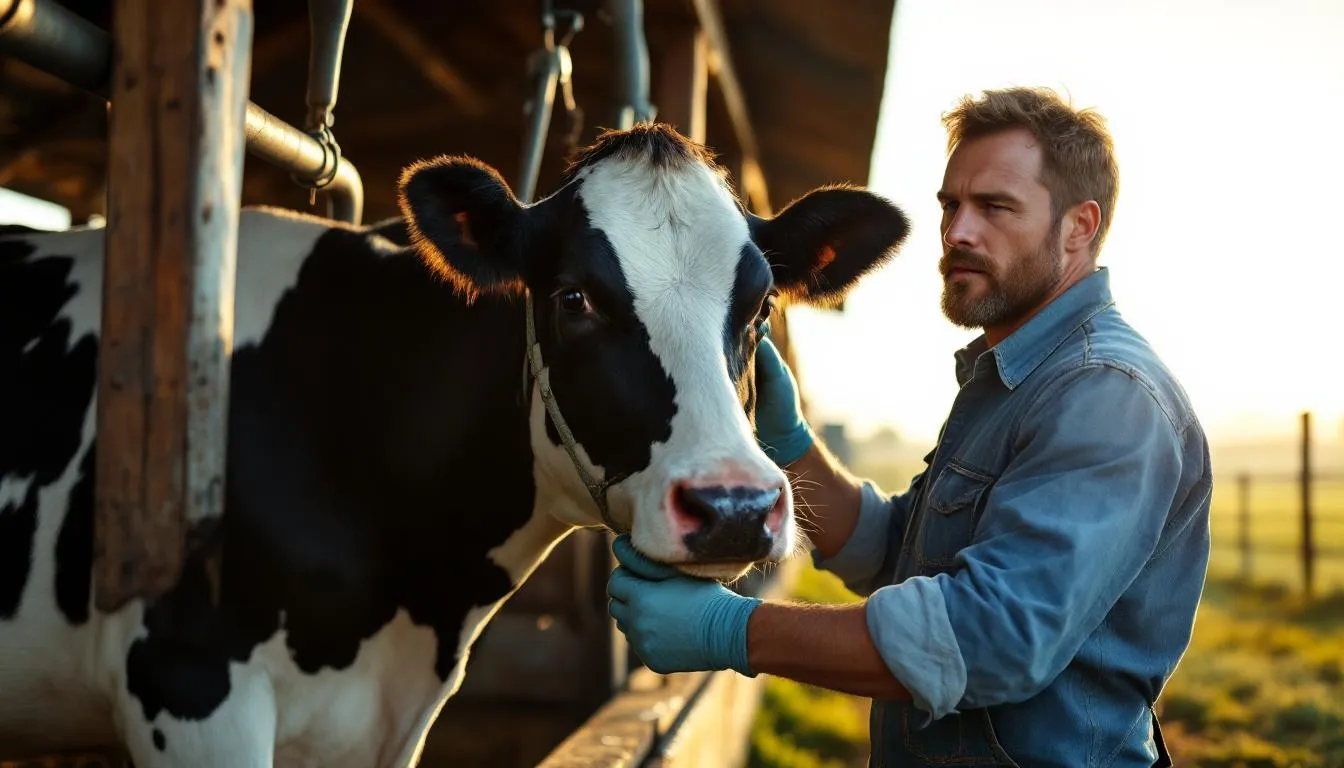
Table of Contents
What Is Dairy Farming?
Dairy farming is the branch of agriculture dedicated to raising cattle primarily for milk production. The milk is either sold as fluid milk or processed into cheese, butter, yogurt, ice cream, and other dairy products. It’s one of the world’s oldest agricultural practices — humans have been milking domesticated animals for at least 8,000 years — and it remains a massive global industry producing roughly 930 million metric tons of milk annually.
How a Dairy Farm Works
The daily rhythm of a dairy farm revolves around milking — typically twice or three times every 24 hours, seven days a week, 365 days a year. Cows don’t take holidays.
Modern milking happens in a milking parlor, where multiple cows are milked simultaneously. Workers (or robotic systems) attach vacuum-powered teat cups to each cow’s udder, and milk flows through sealed stainless steel pipelines to a refrigerated bulk tank. The process takes about 5-8 minutes per cow.
Between milkings, cows eat. A lot. A lactating dairy cow consumes roughly 100 pounds of feed daily — a mix of hay, silage (fermented corn or grass), grain, protein supplements, and minerals. Feed represents the single largest cost in dairy farming, accounting for 50-60% of total expenses.
Cows begin producing milk after giving birth to a calf. They’re typically bred again about 60-90 days after calving, so they’re simultaneously pregnant and producing milk for most of their lactation cycle. A standard lactation lasts about 305 days, followed by a 60-day “dry period” before the next calf arrives.
The Breeds
Holstein (the iconic black-and-white cow) dominates commercial dairy worldwide, representing over 90% of U.S. dairy cows. Holsteins produce the most milk — averaging 23,000+ pounds per year — but with relatively lower butterfat content (3.6%).
Jersey cows are smaller, produce less total volume, but their milk has higher butterfat (4.7%) and protein content, making it ideal for cheese making and butter production. Jersey milk commands a premium in many markets.
Brown Swiss, Guernsey, and Ayrshire are other recognized dairy breeds, each with specific production characteristics. Some farmers keep mixed herds to balance volume with component quality.
Scale and Consolidation
The dairy industry has undergone dramatic consolidation. In 1970, the United States had roughly 650,000 dairy farms. By 2023, that number had dropped below 30,000. But total milk production increased — fewer, larger farms produce more milk than the hundreds of thousands of small operations they replaced.
The average U.S. dairy farm now milks about 300 cows. But averages are misleading — the industry is split between smaller family operations (50-200 cows) and large concentrated animal feeding operations (CAFOs) with 1,000-10,000+ cows. The largest dairies in the western U.S. milk over 30,000 cows on a single operation.
This consolidation has economic logic — larger operations achieve lower per-unit costs through mechanization, bulk purchasing, and operational efficiency. But it has costs too: environmental impacts from concentrated waste, loss of rural community fabric, and animal welfare concerns.
From Farm to Fridge
Raw milk from the farm goes through several processing steps before reaching consumers.
Pasteurization heats milk to kill harmful bacteria — typically 161°F (72°C) for 15 seconds (HTST method) or 280°F (138°C) for 2 seconds (ultra-high temperature/UHT). Louis Pasteur developed the process in the 1860s, and it dramatically reduced milk-borne illness.
Homogenization forces milk through tiny openings at high pressure, breaking fat globules into uniform size so cream doesn’t separate and rise to the top. Before homogenization, you’d shake the bottle — kids growing up in the mid-20th century remember the cream layer.
Standardization adjusts fat content to specific percentages — whole milk (3.25% fat), 2%, 1%, or skim (less than 0.5%). The removed cream goes to butter, ice cream, and other products.
The Environmental Debate
Dairy farming faces significant environmental scrutiny. Cattle produce methane — a potent greenhouse gas — through enteric fermentation (digestion). A single dairy cow produces roughly 220 pounds of methane per year. The dairy sector accounts for approximately 3% of global greenhouse gas emissions.
Manure management, water usage (it takes roughly 144 gallons of water to produce one gallon of milk), and land use for feed production add to the environmental footprint.
The industry is responding. Methane digesters capture cow manure emissions and convert them to energy. Feed additives (like the seaweed supplement 3-NOP) can reduce enteric methane by 30-80%. Improved genetics increase per-cow efficiency, meaning fewer cows produce the same amount of milk.
Plant-based and lab-cultured milk alternatives have captured roughly 15% of the “milk” market, though fluid milk still dominates. Whether these alternatives are environmentally superior depends on which specific products and production methods are compared — almond milk, for instance, has its own water-intensive footprint.
The Human Element
Dairy farming is uniquely demanding work. Cows must be milked on a rigid schedule, meaning farmers work holidays, weekends, and through illness. Many dairy farmers work 60-80 hours per week. The financial stress of volatile milk prices, combined with physical exhaustion, has contributed to mental health challenges — studies show farmers experience depression and anxiety at rates significantly above the general population.
Despite these challenges, many dairy families remain deeply committed to the work. The connection to land, animals, and food production carries meaning that transcends economics. As one Wisconsin dairy farmer put it: “Nobody does this for the money. You do it because it’s what you know, and it’s who you are.”
That combination of hardship and devotion defines dairy farming perhaps more than any statistic about milk production ever could.
Frequently Asked Questions
How much milk does a cow produce daily?
A modern dairy cow produces an average of 7 to 8 gallons (about 28 to 32 liters) of milk per day. Top-producing Holsteins can exceed 12 gallons daily. Annual production averages roughly 23,000 pounds (10,400 kg) per cow in the U.S. — more than triple the output of dairy cows in the 1950s, due to genetic selection, nutrition improvements, and management advances.
How are dairy cows milked?
Most commercial dairies use automated milking systems. Cows enter a milking parlor (or an automated robotic milker) where vacuum-powered teat cups attach to the udder and extract milk in 5-8 minutes. Milk flows through sealed pipes to refrigerated storage tanks. Cows are typically milked 2-3 times daily. Robotic milkers allow cows to be milked on their own schedule.
Is dairy farming profitable?
Profitability varies enormously by size, location, and milk prices. Milk prices fluctuate significantly — the U.S. average has ranged from under 15 dollars to over 25 dollars per hundredweight in recent years. Small farms (under 100 cows) often struggle with thin or negative margins. Larger operations benefit from economies of scale. Many dairy farmers supplement income through direct sales, agritourism, or crop farming.
Further Reading
Cite this article
APA
WhatIs.site. (2025). What Is Dairy Farming?. Retrieved May 27, 2026, from https://whatis.site/dairy-farming MLA
"What Is Dairy Farming?." WhatIs.site, July 15, 2025, https://whatis.site/dairy-farming. Accessed May 27, 2026. Chicago
WhatIs.site. "What Is Dairy Farming?." Last modified May 12, 2026. https://whatis.site/dairy-farming. HTML
<a href="https://whatis.site/dairy-farming">What Is Dairy Farming?</a> — WhatIs.site Related Articles
What Is Farming?
Farming is the practice of growing crops and raising livestock for food and materials. Learn about modern agriculture, methods, and global challenges.
scienceWhat Is Agriculture?
Agriculture is the practice of cultivating plants, raising animals, and processing natural resources to produce food, fiber, and fuel.
everyday conceptsWhat Is Cheese Making?
Cheese making is the process of transforming milk into cheese through acidification, coagulation, curd processing, and aging to develop flavor and texture.
everyday conceptsWhat Is Organic Farming?
Organic farming is an agricultural approach that produces food and fiber without synthetic pesticides, synthetic fertilizers.