 WhatIs.site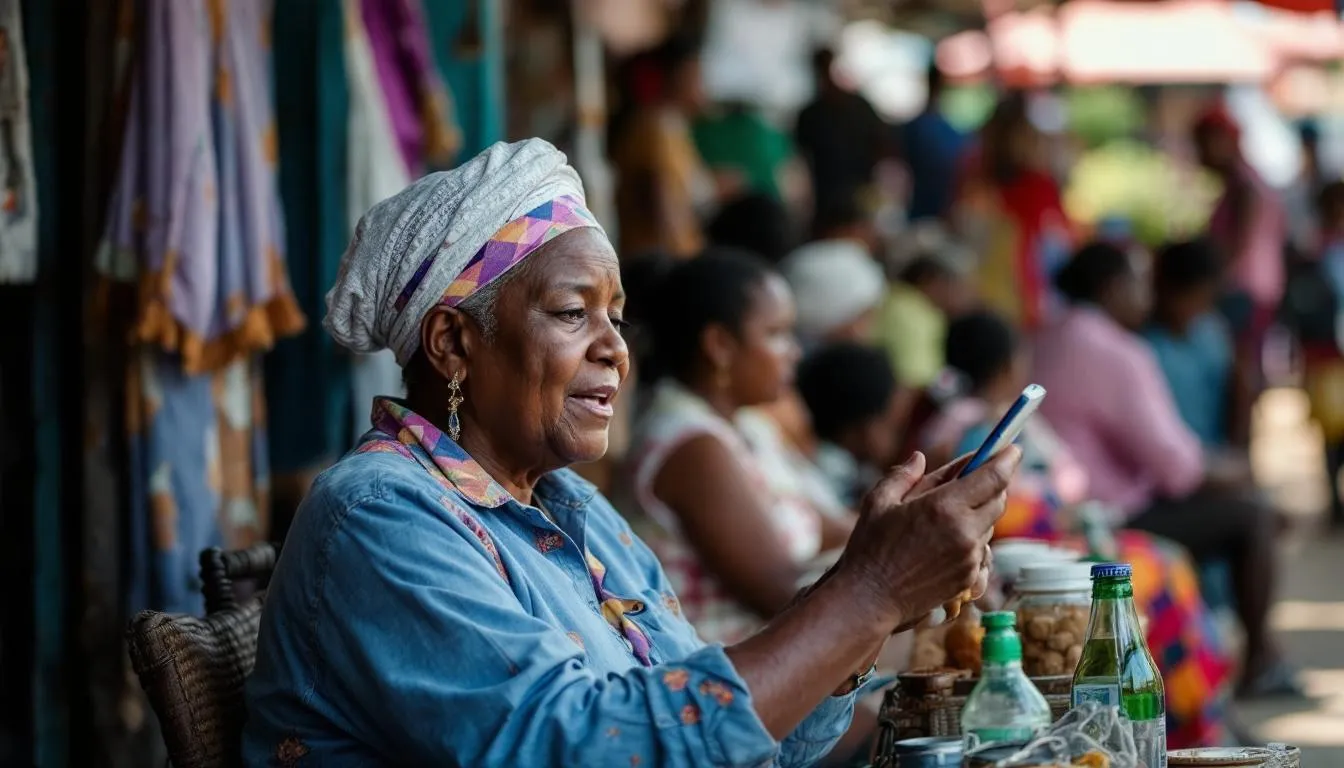
Table of Contents
What Is Creole Languages?
Creole languages are natural human languages that developed from contact situations — typically when speakers of mutually unintelligible languages were brought together by colonialism, slavery, or trade and needed to communicate. Far from being “simplified” or “broken” versions of European languages, Creoles are fully developed linguistic systems with their own grammar, vocabulary, and expressive power.
How Creoles Form
The typical story goes something like this. European colonial powers brought together people from diverse linguistic backgrounds — through the slave trade, plantation systems, or trade networks. These people had no common language but needed to communicate to survive.
First, a pidgin develops. A pidgin is a simplified contact language with limited vocabulary and basic grammar, used for specific purposes like trade or work coordination. Nobody speaks a pidgin as their first language.
Then something remarkable happens. When children grow up hearing a pidgin as their primary linguistic input, they don’t just learn the pidgin — they transform it. They add grammatical complexity, expand the vocabulary, develop tense and aspect systems, and create a language capable of expressing anything a human needs to express. This nativized pidgin is a Creole.
This process has occurred independently dozens of times across the globe, producing Creoles based on English, French, Portuguese, Spanish, Dutch, and Arabic, among other languages. The fact that the process repeats so consistently has fascinated linguists and raised profound questions about how language works in the human brain.
Major Creole Languages
Haitian Creole (Kreyol ayisyen) is the most widely spoken Creole, with approximately 12 million speakers. It’s based primarily on French but with significant contributions from West African languages, particularly in grammar and phonology. Haitian Creole is one of Haiti’s two official languages (alongside French) and is the first language of virtually all Haitians.
Tok Pisin is one of Papua New Guinea’s official languages, spoken by about 4 million people. It’s English-based but heavily influenced by local Melanesian languages. “Tok Pisin” itself means “talk pidgin,” though it has long since evolved into a full Creole.
Jamaican Patois (or Jamaican Creole) is spoken by roughly 3 million people. It’s English-based with strong West African influences and has a vibrant literary and musical tradition — it’s the language of reggae and dancehall.
Louisiana Creole developed among enslaved Africans and their descendants in colonial Louisiana. It’s French-based and still spoken by several thousand people, though it’s considered endangered. It’s distinct from Cajun French, though the two have influenced each other.
Cape Verdean Creole (Kabuverdianu) is Portuguese-based and spoken by about 1 million people in Cape Verde and the diaspora. Each island has its own dialect, and the language has a rich tradition of oral poetry and music.
The Linguistic Debate
Creoles have generated intense academic debate since the mid-20th century.
The bioprogram hypothesis, proposed by Derek Bickerton in the 1980s, argued that Creole formation reveals innate linguistic structures in the human brain. Bickerton noticed that Creoles worldwide share certain grammatical features — consistent patterns in how they handle tense, modality, and aspect — regardless of their source languages. He suggested children creating Creoles were drawing on a universal biological blueprint for language.
The substrate hypothesis emphasizes the influence of the speakers’ native languages (the “substrate”). Many features of Caribbean Creoles, for example, parallel structures found in West African languages — serial verb constructions, topic-comment sentence structure, and specific tense-aspect systems. The Creole isn’t just simplified European language; it’s a fusion where African grammar meets European vocabulary.
The superstrate hypothesis emphasizes the influence of the colonial language (the “superstrate”), arguing that Creoles result from imperfect learning of the dominant language under conditions of limited exposure.
Most contemporary linguists accept that all three factors — universal cognitive tendencies, substrate influence, and superstrate input — contribute to Creole formation. The relative weight of each factor varies by specific Creole and remains debated.
Social Status and Stigma
Despite being full languages by every linguistic measure, Creoles have historically been stigmatized. Colonial and post-colonial societies often treated them as inferior — “bad French,” “broken English,” unfit for education, government, or serious literature.
This stigma has real consequences. In many Creole-speaking communities, the European language dominates official contexts (government, education, media) while the Creole is relegated to informal settings. Children who speak a Creole at home are often educated in a European language they barely know, creating significant barriers to learning.
Efforts to change this are ongoing. Haiti made Haitian Creole an official language in 1987. Papua New Guinea uses Tok Pisin in parliament. Seychelles uses Seychellois Creole in schools. These decisions acknowledge a linguistic reality that colonial-era attitudes tried to deny: people learn and think best in their first language.
Creole Literature and Culture
Creole languages have vibrant cultural traditions. Haitian Creole has a growing literary tradition, with novels, poetry, and drama. Jamaican Patois is the language of Bob Marley, Louise Bennett-Coverley’s poetry, and a rich oral tradition.
Music is often the most visible expression of Creole culture — zouk (Antillean Creole), sega (Mauritian Creole), calypso and soca (various Caribbean Creoles), and reggae (Jamaican) all use Creole languages as their primary medium.
The digitalization of Creole languages — through social media, messaging apps, and online publishing — is expanding their written use in ways that weren’t possible a generation ago. Creole speakers who might have written in French or English now text, post, and blog in their Creole, normalizing written use and creating new language practices.
What Creoles Teach Us
Creole languages offer a unique window into how human language works. They developed recently enough that we can study their formation, and they formed under extreme social conditions that stripped away the usual gradual processes of language change.
The fact that children consistently create full, complex languages from pidgin input suggests something powerful about human linguistic capacity. Language, it seems, is not just learned — it’s partly constructed by the developing mind. Creoles are living evidence of that construction in action.
Frequently Asked Questions
What is the difference between a pidgin and a Creole?
A pidgin is a simplified contact language that develops when people who share no common language need to communicate, typically for trade. It has limited vocabulary and no native speakers. A Creole develops when a pidgin becomes the first language of a community's children, who naturally expand its grammar, vocabulary, and expressive capacity into a full language. Creoles are complete languages; pidgins are not.
How many Creole languages exist?
Linguists have identified roughly 100 Creole languages worldwide. The largest by number of speakers include Haitian Creole (about 12 million speakers), Tok Pisin (4 million, Papua New Guinea), Nigerian Pidgin English (used by 75+ million as a second language), and various French-based Creoles in the Caribbean, Indian Ocean, and Louisiana.
Are Creole languages just 'broken' versions of European languages?
Absolutely not. This is a persistent and harmful misconception. Creole languages are complete, rule-governed linguistic systems with their own grammar, phonology, and vocabulary. They follow consistent internal rules just like any other language. Calling a Creole 'broken French' or 'broken English' is linguistically inaccurate and socially damaging — it devalues the language and its speakers.
Further Reading
Cite this article
APA
WhatIs.site. (2025). What Is Creole Languages?. Retrieved May 27, 2026, from https://whatis.site/creole-languages MLA
"What Is Creole Languages?." WhatIs.site, July 15, 2025, https://whatis.site/creole-languages. Accessed May 27, 2026. Chicago
WhatIs.site. "What Is Creole Languages?." Last modified May 12, 2026. https://whatis.site/creole-languages. HTML
<a href="https://whatis.site/creole-languages">What Is Creole Languages?</a> — WhatIs.site Related Articles
What Is English Language?
English is a global language spoken by over 1.5 billion people. Explore its history, structure, dialects, quirks, and why it became the world's lingua franca.
everyday conceptsWhat Is French History?
French history is the story of one of Europe's most influential nations — a country that has experienced more dramatic political upheaval than almost any.
scienceWhat Is Anthropology?
Anthropology is the study of humans—past and present—across cultures, biology, language, and societies. Learn its branches, methods, and why it matters.
languageWhat Is Sociolinguistics?
Sociolinguistics studies how language varies with social factors like class, gender, ethnicity, and region. Learn how society shapes the way we speak.
everyday conceptsWhat Is Perfume Making?
Perfume making — or perfumery — is the art and science of creating fragrances by blending aromatic compounds derived from natural sources (flowers, woods.