 WhatIs.site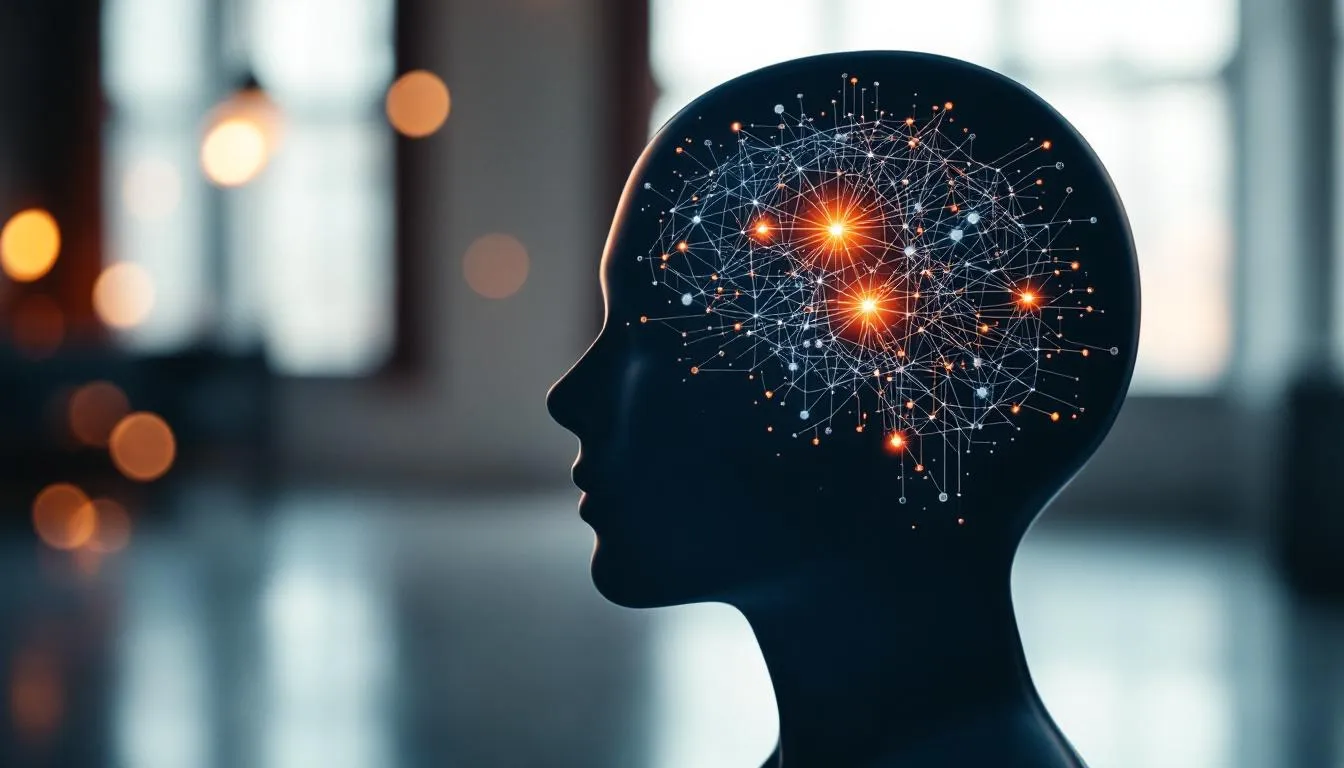
Table of Contents
Thinking, Fast and Slow — Daniel Kahneman
Cognitive bias is the systematic pattern in which your brain deviates from rational judgment. It’s how your mind takes mental shortcuts that can lead you astray—sometimes helpfully, often problematically. Think of it as your brain’s built-in glitches, hardwired into the way you process information and make decisions.
Why Your Brain Takes Shortcuts
Your brain processes roughly 11 million pieces of information per second. But your conscious mind can handle only about 40 to 50 pieces per second. That gap creates a massive problem—you need to function, but you’re drowning in data.
So your brain developed a solution: heuristics. These are mental shortcuts—quick, automatic rules of thumb that help you decide what to pay attention to and what to ignore. Most of the time, they work beautifully. They’ve helped humans survive for thousands of years.
The problem is that heuristics sometimes fail. When they fail systematically—when the same type of error happens again and again—you get a cognitive bias.
Here’s an example: imagine you hear about a plane crash on the news. That vivid, memorable image makes you overestimate how dangerous flying is. Your brain is using the “availability heuristic”—if something comes to mind easily, it must be common. But plane crashes are precisely the kind of rare, dramatic event that gets media coverage. Your shortcut misled you.
The Cost of Systematic Thinking Errors
The stakes of cognitive bias aren’t trivial. They affect which person you hire, which doctor’s advice you trust, which stocks you buy, how much you spend, and how you treat people different from you.
In the workplace, confirmation bias—your tendency to seek information that confirms what you already believe—means managers often hire people similar to themselves. This reduces diversity and perpetuates echo chambers. In medicine, anchoring bias causes doctors to rely too heavily on the first information they receive about a patient, sometimes missing more relevant diagnostic details. In investing, the sunk cost fallacy makes people throw good money after bad, refusing to abandon losing positions.
On a personal level, biases affect your relationships. You might remember only the times your partner forgot something (selective recall), leading you to think they’re more forgetful than they are. You might interpret your best friend’s short text message as being annoyed (projection bias) when they’re actually just busy.
Common Cognitive Biases You Actually Encounter
Confirmation Bias might be the most pervasive. You notice information that supports your existing beliefs and ignore contradictory information. A person convinced that expensive wine is better will taste hints of sophistication in a $100 bottle they’d dismiss in a $10 bottle. Same wine, different context, different perception.
Anchoring Bias makes you rely too heavily on the first number you see. If a retailer shows you the original price ($200) crossed out next to the sale price ($80), you perceive the deal as extraordinary—even though you might never have considered $200 a fair price. That first number anchored your judgment.
Availability Bias weights recent, memorable, or emotionally striking events more heavily. After seeing social media posts about people getting injured in car accidents, you might think traffic is more dangerous than it actually is. The vivid examples are available in your memory, making them feel more common.
In-group Bias makes you favor people who belong to your group and view their behavior more positively. Your favorite team’s rough tackle is “competitive play,” while the opposing team’s identical move is “dirty.” Same action, different group membership, wildly different judgment.
Dunning-Kruger Effect causes people with low knowledge to overestimate their expertise, while experts sometimes underestimate theirs. You watch one YouTube video about car repair and think you’re qualified to do it yourself. Meanwhile, the actual mechanic second-guesses themselves constantly because they know how much they still don’t know.
Hindsight Bias makes past events seem more predictable than they were. After something happens, you believe you “knew it all along.” This is why people think economic crashes or political outcomes were obvious—but they weren’t obvious before they occurred.
Negativity Bias weighs negative experiences more heavily than positive ones. One bad meal at a restaurant gets more weight in your memory than five good meals. One critical comment in an otherwise positive performance review sticks with you.
Status Quo Bias makes you favor keeping things as they are. You stay in unsatisfying jobs or relationships longer than you should because change feels risky, even when staying poses its own risks.
How Bias Connects to Decision-Making
Every choice you make flows through the filter of cognitive bias. Think about the last major decision you made—buying a house, accepting a job, ending a relationship. Now consider how many of these biases influenced that choice.
When you’re considering a house, anchoring bias affected your initial price expectations. Confirmation bias made you notice flaws in competing houses while overlooking them in your preferred one. Recency bias might have weighted your neighbor’s recent flood story too heavily. Status quo bias might have kept you in your current home despite wanting something different.
This isn’t to say you made the wrong choice—you might not have. But recognizing that these invisible forces shaped your decision-making process is the first step toward making better decisions.
The Connection to Behavioral-Economics
Behavioral economists have spent decades studying how cognitive biases affect financial choices. Traditional economic theory assumes people make perfectly rational decisions in their own self-interest. Research in behavioral economics proves this assumption is nonsense.
People hold losing stocks too long (sunk cost fallacy and loss aversion), buy insurance against unlikely events (availability bias), spend more freely with credit cards than cash (mental accounting), and overweight recent performance when selecting investment funds (recency bias). Markets themselves become biased—stock prices rise excessively after good news (overconfidence) and fall excessively after bad news (pessimism bias).
The predictability of these irrational patterns means they can be studied, measured, and sometimes exploited. It also means you can anticipate them in yourself.
The Role in Psychology Research
Cognitive bias research has transformed psychology and spawned entire fields. Daniel Kahneman and Amos Tversky’s work on how people judge probability under uncertainty opened researchers’ eyes to systematic errors in human thought. Their discoveries contradicted everything economists believed about human rationality.
This research revealed that your mind operates through two systems. System 1 is fast, automatic, and emotional—it’s your gut feeling. System 2 is slow, deliberate, and logical—it’s your careful thinking. Most of your decisions come from System 1, which is efficient but prone to bias. Engaging System 2 requires effort, so you reserve it for important decisions.
Understanding these systems helps you recognize when you’re falling prey to bias. System 1 decides you don’t like someone after a five-minute conversation; System 2 might recognize you were meeting them on a day when you were in a bad mood.
Marketing and Persuasion Through Bias
If you’ve ever wondered why companies design things the way they do, cognitive bias is often the answer. Marketers study your biases and build them into advertising, pricing, and product design.
Anchoring is everywhere—the “original price” crossed out in stores, the expensive product positioned first on a menu (making everything else seem reasonable by comparison), the high starting bid in negotiations. Scarcity appeals exploit your fear of missing out. Social proof—showing that other people bought something—triggers conformity bias.
Free trials exploit loss aversion. The brain’s pain from losing something is roughly twice as strong as the pleasure from gaining it. Once you’re using a product, quitting it feels like a loss, so you’re more likely to continue.
Knowing these tactics doesn’t make you immune, but it should make you more skeptical when something is positioned to trigger your quick decision-making system. If you feel rushed, limited options are available, or everyone else is doing something, that’s a signal to engage your deliberate thinking.
Bias and the Sunk Cost Fallacy
The sunk cost fallacy deserves special attention because it’s so costly and so pervasive.
You spent $500 on concert tickets. The night arrives, and you’re sick. Every rational cell in your brain knows that $500 is gone—it doesn’t matter if you go to the concert. The only real choice is between “stay home and rest” (good outcome) or “go to the concert while sick” (bad outcome). The $500 can’t influence that choice rationally.
But emotionally, you go. Because $500 is “too much to waste.”
You invested $50,000 in a stock. It’s declined to $30,000. A rigorous analysis suggests it’ll decline further, while other investment opportunities look promising. But you hold on, waiting for the stock to “get back to where it was.” You’re throwing good money after bad because of the sunk cost fallacy.
You’ve been in a relationship for five years. It’s unhappy. You stay because of all the time already invested, rather than because the relationship makes you happy. Ironically, staying costs you years that could have been happy with someone else.
The sunk cost fallacy exists because evolution built you to avoid waste. Biologically, wasting resources was dangerous. That instinct served you well for millennia. In a modern economy where you’re making financial and emotional investments constantly, the same instinct leads you astray.
Recognizing Bias in Others (and Yourself)
Here’s the uncomfortable truth: you’re worse at recognizing bias in yourself than in others. Psychologists call this the “bias blind spot.” You can easily see when your friend is being irrational, but your own irrationality feels like clear thinking.
This is partly why self-awareness matters. When you catch yourself thinking “everyone else is biased, but I think clearly,” you’re probably experiencing bias blind spot. The moment you assume you’re biased is the moment you have a chance to counteract it.
Some practical recognition strategies: Notice when you’re seeking information that confirms what you already believe. Notice when you’re rationalizing a decision you’ve already made emotionally. Notice when you’re judging others’ actions more harshly than you’d judge your own identical actions. Notice when you’re extrapolating one example into a pattern.
Can You Overcome Cognitive Bias?
The short answer: not completely. Biases exist because of how your brain is physically structured. You can’t rewire yourself out of them.
But you can reduce their influence. The most effective strategies:
Slow down. When you have time, engaging System 2 thinking reduces bias. Take the time to write out pros and cons before major decisions. Sleep on it.
Seek disconfirming evidence. Actively look for information that contradicts your current belief. This is uncomfortable, which is why you don’t do it naturally.
Use checklists. Doctors who use checklists make fewer errors than those who rely on memory and intuition. Investors who follow a process make better decisions than those who “trust their gut.”
Consider the opposite. When making a decision, explicitly ask “what if I’m wrong?” What would that look like? What evidence would prove me wrong?
Diversify your information sources. If you only read news from sources that confirm your political views, you’re locked in a confirmation bias bubble. Expose yourself to quality sources that challenge your assumptions.
Recognize your motivation. Sometimes you’re biased because the biased conclusion is emotionally or financially rewarding. You want to believe that stock is going up, so you’re susceptible to optimism bias. Recognizing that motivation is the first step to questioning it.
Use outside perspectives. Ask someone who doesn’t share your assumptions to critique your thinking. Their blindspots are different than yours.
Create friction. Make impulsive decisions harder. If you’re prone to impulse purchases, delete your saved payment methods. If you’re prone to staying in bad situations, set a specific date to reevaluate.
Why Understanding Bias Matters for Critical-Thinking
Learning about cognitive bias isn’t academic—it’s practical. Every conversation you have, every article you read, every decision you make is filtered through biases you didn’t choose and might not recognize.
Critical thinking requires understanding that your first instinct isn’t always your best instinct. It requires recognizing that your perspective, no matter how clear it feels, is shaped by the order you heard information, the recent events you can recall, and your group membership.
A person with genuine critical thinking skills isn’t someone who believes they never fall prey to bias. It’s someone who assumes they do, anticipates common errors, and builds systems to catch themselves. It’s intellectual humility combined with strategic skepticism.
The Bigger Picture
Cognitive biases aren’t flaws that evolution forgot to fix. They’re features of a system that evolved to make quick, good-enough decisions under extreme resource constraints. Your brain chose speed and efficiency over perfect accuracy—and that was the right call for survival.
The problem is that you’re now using a brain shaped for the African savanna to make decisions in a global, interconnected, high-stakes world. The same shortcuts that kept your ancestors alive now lead them to buy things they don’t need, hold grudges longer than beneficial, and make poor investments.
Understanding this gap—between the environment your brain evolved for and the environment you actually live in—changes how you relate to your own thinking. You’re not irrational. You’re using rational tools built for a different world.
That awareness, combined with deliberate strategies to reduce bias, gives you something your brain alone can’t provide: the ability to think more clearly about the things that matter most.
Frequently Asked Questions
What's the difference between cognitive bias and prejudice?
Cognitive bias is any systematic error in how we think or judge, while prejudice is a specific negative attitude toward a group. All prejudices involve bias, but not all biases are prejudices.
Can we eliminate cognitive bias completely?
No—biases are built into how our brains work. What we can do is recognize them, slow down our thinking, and use strategies to reduce their impact on important decisions.
Are some people less biased than others?
Everyone experiences cognitive biases, regardless of intelligence or education. However, awareness and deliberate thinking processes help reduce their influence.
How do companies use knowledge of cognitive bias?
Marketing, product design, and user experience teams deliberately apply bias research to influence consumer behavior—which is why understanding your own biases matters.
Is thinking faster or slower better for avoiding bias?
Slower, deliberate thinking helps reduce bias, but it's mentally exhausting. The key is knowing when to slow down (major decisions) versus when fast thinking is fine (routine choices).
Further Reading
Cite this article
APA
WhatIs.site. (2026). What Is Cognitive Bias?. Retrieved May 27, 2026, from https://whatis.site/cognitive-bias MLA
"What Is Cognitive Bias?." WhatIs.site, March 6, 2026, https://whatis.site/cognitive-bias. Accessed May 27, 2026. Chicago
WhatIs.site. "What Is Cognitive Bias?." Last modified May 12, 2026. https://whatis.site/cognitive-bias. HTML
<a href="https://whatis.site/cognitive-bias">What Is Cognitive Bias?</a> — WhatIs.site Related Articles
What Is Machine Learning? How Computers Learn Without Being Programmed
Machine learning enables computers to learn patterns from data and make decisions without explicit programming. Explore how it works and why it matters.
everyday conceptsWhat Is Critical Thinking?
Critical thinking is the disciplined process of analyzing information and reasoning clearly. Learn about key skills, common fallacies, and how to improve.
everyday conceptsWhat Is Behavioral Economics?
Behavioral economics studies how psychological factors and cognitive biases influence economic decisions, challenging the assumption of purely rational actors.
scienceWhat Is Scientific Writing?
Scientific writing communicates research findings with precision and clarity. Learn its structure, conventions, style rules, and how to write effective papers.
philosophyWhat Is Stichomancy?
Stichomancy is the practice of seeking guidance by opening a book to a random page and reading the passage found there. Learn its history, methods, and legacy.