 WhatIs.site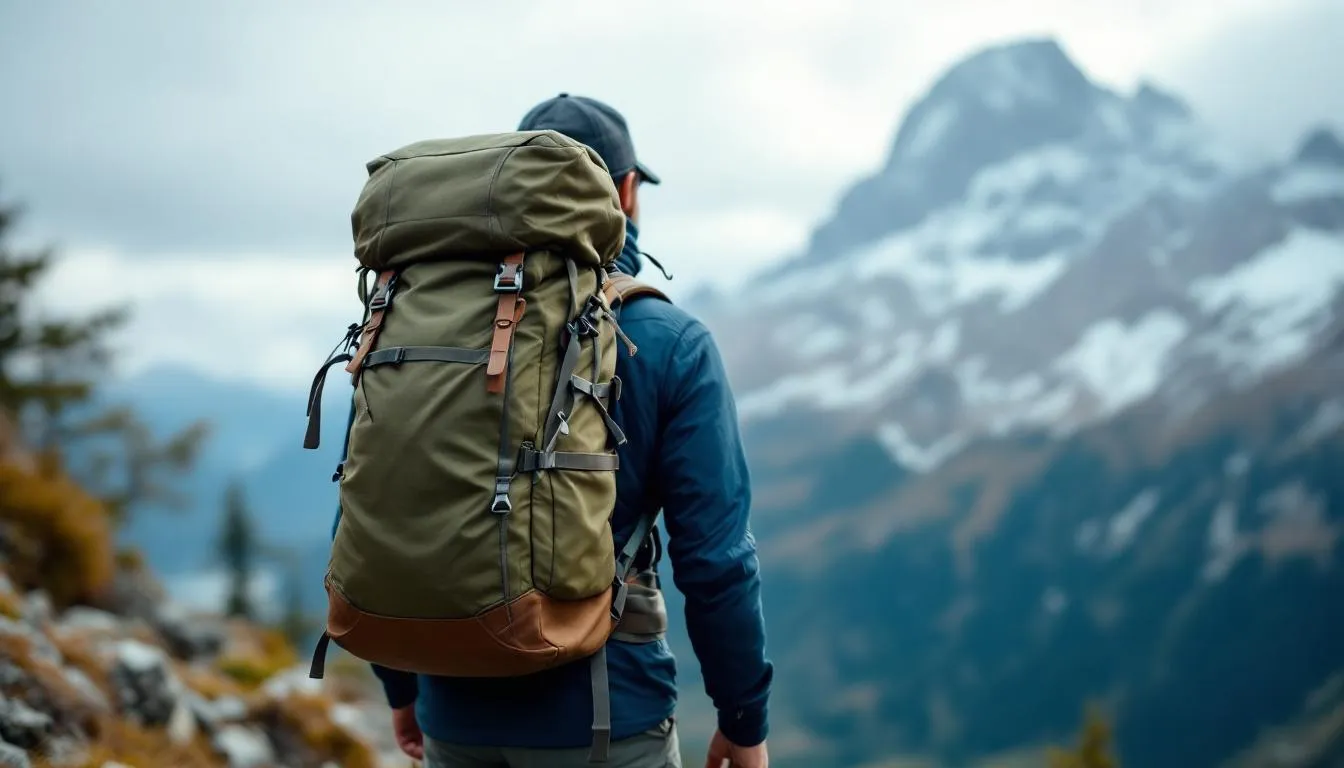
Table of Contents
What Is Backpacking?
Backpacking has two related meanings: wilderness backpacking, where you hike into backcountry areas carrying everything you need to camp overnight, and travel backpacking, where you explore regions or countries independently with your belongings on your back. Both share a philosophy of self-sufficiency, simplicity, and direct engagement with the world.
Wilderness Backpacking
The Appeal
You leave the trailhead with everything you need — shelter, food, water treatment, clothing — strapped to your back. For the next few days, your world shrinks to the trail, the weather, and the field. No cell signal. No schedule beyond sunrise and sunset. Just walking.
That radical simplicity is the whole point. Wilderness backpacking strips away the noise of daily life and forces you into direct contact with nature. You sleep on the ground, cook on a tiny stove, drink water you filtered from a stream. It’s uncomfortable in ways that are surprisingly refreshing.
The United States has an extraordinary trail system for backpacking. The Appalachian Trail (2,190 miles from Georgia to Maine), the Pacific Crest Trail (2,650 miles from Mexico to Canada), and the Continental Divide Trail (3,100 miles along the Rocky Mountains) form the “Triple Crown” of American long-distance hiking. Thru-hiking — completing an entire trail in a single continuous journey — has become a bucket-list goal for thousands of adventurers annually.
Gear Basics
Your pack is your home, and weight matters enormously. A loaded backpack for a multi-day trip typically weighs 25-35 pounds, though ultralight enthusiasts can get below 15 pounds.
The Big Three — backpack, shelter, and sleeping system — account for most of the weight. Choosing lightweight versions of these items makes the biggest difference. A 2-pound tent versus a 5-pound tent means 3 fewer pounds grinding into your shoulders for every step of every day.
Water treatment is non-negotiable in the backcountry. Giardia, Cryptosporidium, and other waterborne pathogens live in even the clearest-looking mountain streams. Pump filters, squeeze filters, UV purifiers, and chemical treatments all work — each with different tradeoffs of speed, weight, and reliability.
Food for backpacking needs to be lightweight, calorie-dense, and non-perishable. Dehydrated meals, nuts, dried fruit, energy bars, and instant oatmeal are staples. On long trips, you’ll crave salt, fat, and sugar with an intensity that only burning 3,000-5,000 calories per day can produce.
Leave No Trace
Responsible backcountry travel follows Leave No Trace principles: plan ahead, travel on durable surfaces, dispose of waste properly, leave what you find, minimize campfire impact, respect wildlife, and be considerate of other visitors. These aren’t just suggestions — in popular wilderness areas, they’re the difference between preserving ecosystems and loving them to death.
Travel Backpacking
A Different Kind of Adventure
Travel backpacking — throwing a pack on your back and exploring a country or region independently — became a cultural phenomenon in the 1960s and 1970s when the “hippie trail” from Europe to South Asia established routes that budget travelers still follow.
The appeal is freedom. No resort schedules, no tour bus itineraries, no obligation to be anywhere at any particular time. You show up in a city, find a hostel, and figure it out. You eat where locals eat. You take buses instead of taxis. You meet other travelers and change your plans based on their recommendations.
Southeast Asia, Central America, South America, and parts of Europe are the most popular backpacking destinations. Southeast Asia in particular — Thailand, Vietnam, Cambodia, Laos, Indonesia — offers a combination of low costs, developed traveler infrastructure, and extraordinary cultural diversity that’s hard to match anywhere else.
The Budget Reality
Travel backpacking is budget travel by definition, but “budget” means different things in different places. In Southeast Asia, you can travel comfortably on $20-30 per day including accommodation, food, and transport. In Western Europe, even a frugal backpacker will spend $50-80 per day. Japan, Australia, and Scandinavia are more expensive still.
Hostels — shared dormitory accommodations — are the backbone of budget travel, with beds typically costing $10-30 per night. Beyond the price, hostels function as social hubs where solo travelers meet people, share information, and form impromptu travel groups. The social dimension is as important as the savings.
What You Actually Learn
The education you get from travel backpacking is different from anything a classroom provides. You learn to communicate without a shared language. You discover that your assumptions about how the world works are culturally specific, not universal. You eat food that challenges you, sleep in places that surprise you, and develop a tolerance for uncertainty that stays with you long after you’re home.
Research in psychology suggests that international travel — particularly independent travel requiring adaptation to unfamiliar environments — increases cognitive flexibility, creativity, and openness to new experiences. The effect is stronger when travelers engage deeply with local cultures rather than staying in tourist bubbles.
The Overlap
Wilderness and travel backpacking share more than a piece of luggage. Both involve carrying what you need and leaving the rest behind. Both require problem-solving, adaptability, and a willingness to be uncomfortable. Both reward curiosity and punish rigidity.
And both have communities that can be wonderfully welcoming. Trail culture — sharing water sources, campsite recommendations, and stories around a camp stove — mirrors the hostel culture of travel backpacking, where strangers become friends over shared meals and shared routes.
Is It for You?
If the idea of sleeping in a tent on a mountainside sounds terrible, wilderness backpacking might not be your thing. If sharing a hostel dorm with seven strangers sounds awful, travel backpacking might not be either. And that’s fine.
But if any part of you is drawn to the idea of seeing how little you actually need, of moving through the world under your own power, of waking up somewhere you’ve never been — it’s worth trying. Start small. A one-night backpacking trip on a well-marked trail. A week in a country you’ve always been curious about. The learning curve is real, the discomforts are real, and the rewards are worth every blister.
Frequently Asked Questions
What is the difference between backpacking and hiking?
Hiking typically refers to day walks on trails, returning to a vehicle or accommodation at the end. Backpacking involves carrying overnight gear — tent, sleeping bag, food, water treatment — and spending one or more nights in the backcountry. The term also describes independent, budget-focused international travel with a backpack as luggage.
How much does a backpacking trip cost?
For wilderness backpacking, initial gear investment runs $500-2,000 for quality equipment, but trips themselves cost very little beyond food and permits. For travel backpacking, daily budgets vary enormously by region: $15-25/day in Southeast Asia, $30-50/day in Eastern Europe, $50-100/day in Western Europe or Japan.
What are the essential items for backpacking?
For wilderness backpacking, the essentials include a backpack (50-70 liters), tent or shelter, sleeping bag and pad, water filter or purification, stove and fuel, food, navigation tools, first aid kit, headlamp, and appropriate clothing layers. For travel backpacking, a smaller pack (40-50 liters), quick-dry clothing, a padlock, copies of documents, and a money belt are key.
Further Reading
Cite this article
APA
WhatIs.site. (2025). What Is Backpacking?. Retrieved May 27, 2026, from https://whatis.site/backpacking MLA
"What Is Backpacking?." WhatIs.site, July 15, 2025, https://whatis.site/backpacking. Accessed May 27, 2026. Chicago
WhatIs.site. "What Is Backpacking?." Last modified May 12, 2026. https://whatis.site/backpacking. HTML
<a href="https://whatis.site/backpacking">What Is Backpacking?</a> — WhatIs.site Related Articles
What Is Fitness?
Fitness is your body's ability to perform physical tasks effectively. It covers cardiovascular endurance, strength, flexibility, and body composition.
scienceWhat Is Ecology?
Ecology is the branch of biology that studies the relationships between living organisms and their physical environment, examining how individuals.
scienceWhat Is Geography?
Geography is the scientific study of places, spaces, and the relationships between people and their environments.
scienceWhat Is Anthropology?
Anthropology is the study of humans—past and present—across cultures, biology, language, and societies. Learn its branches, methods, and why it matters.
health amp wellnessWhat Is Survival Skills?
Survival skills are techniques for staying alive in emergencies or wilderness settings. Learn about shelter, water, fire, navigation, and preparedness.