 WhatIs.site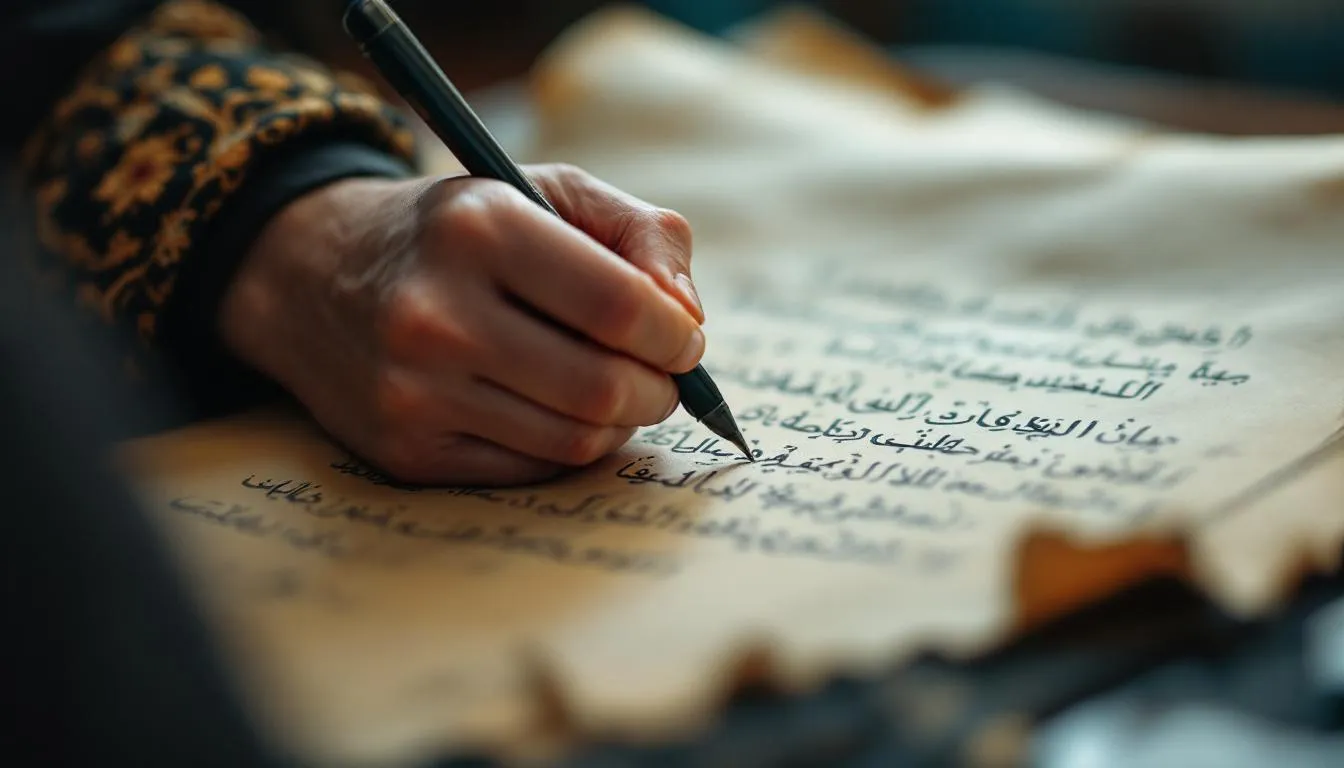
Table of Contents
What Is Arabic Language?
Arabic is a Semitic language — part of the same family as Hebrew and Aramaic — spoken by over 400 million people across the Middle East and North Africa. Written in a flowing right-to-left script, it’s the liturgical language of Islam’s 1.8 billion adherents and one of the six official languages of the United Nations.
Origins and Evolution
Arabic belongs to the Central Semitic branch of the Afro-Asiatic language family. Its earliest recorded inscriptions date to roughly the 1st century CE, found in the deserts of present-day Jordan and Syria. Old Arabic gradually developed into Classical Arabic, which was standardized through the Quran in the 7th century and the subsequent explosion of Islamic scholarship.
Here’s what makes Arabic’s history unusual: the Quran effectively froze the literary language. Because Muslims regard the Quran as the literal word of God, its language became the gold standard for formal Arabic. Fourteen centuries later, a modern Arabic speaker can still read the Quran’s 7th-century text — not easily, perhaps, but far more readily than an English speaker can read Beowulf.
The Arab conquests of the 7th and 8th centuries spread Arabic from the Arabian Peninsula across North Africa, into Spain, and east through Persia to Central Asia. Along the way, Arabic absorbed vocabulary from Persian, Greek, and other languages, while also donating thousands of words to languages it contacted. English words like “algebra,” “algorithm,” “cotton,” “magazine,” and “zero” all come from Arabic.
The Script
Arabic script is an alphabet of 28 letters, all consonants. It reads right to left, and most letters change shape depending on their position in a word (beginning, middle, end, or isolated). Short vowels aren’t written in most everyday text — readers infer them from context. The Quran and children’s books include vowel markings (called diacritics) for clarity.
The script’s visual beauty has made calligraphy one of the highest art forms in Islamic culture. Since traditional Islamic art avoids figurative representation, calligraphic decoration of mosques, manuscripts, and everyday objects became extraordinarily refined. There are multiple calligraphic styles — Naskh, Thuluth, Diwani, Nastaliq — each with its own aesthetic character.
Learning to read Arabic script takes most students a few weeks of practice. The cursive nature of the script — letters connect within words — makes it feel like learning to read handwriting rather than print.
Diglossia: Two Languages in One
Arabic has a feature that linguists call diglossia — a situation where the formal and spoken versions of a language are substantially different. This is more extreme in Arabic than in almost any other major language.
Modern Standard Arabic (MSA) — called fusha — is the formal variety. It’s used in news broadcasts, newspapers, academic writing, political speeches, and inter-Arab communication. It’s taught in schools across the Arab world and is relatively uniform from Morocco to Iraq.
Colloquial Arabic — the dialects people actually speak at home, in markets, and with friends — varies enormously by region. Egyptian Arabic, Levantine Arabic (Syria, Lebanon, Jordan, Palestine), Gulf Arabic, Iraqi Arabic, and Maghrebi Arabic (North Africa) are the major dialect groups, with significant internal variation within each.
The practical implication? An Egyptian and a Moroccan speaking their respective dialects might struggle to understand each other. But both can communicate in MSA. This creates a peculiar situation where the language everyone learns in school isn’t the language anyone speaks at home.
Egyptian Arabic has become the most widely understood dialect, largely because of Egypt’s dominant entertainment industry — films, music, and television shows broadcast across the Arab world for decades.
Arabic’s Gift to World Knowledge
During Europe’s medieval period, Arabic-speaking scholars preserved and extended Greek philosophical and scientific works. The mathematics the modern world uses — including the numeral system (ironically called “Arabic numerals,” though they originated in India) — was transmitted to Europe through Arabic-language scholarship.
Key contributions include al-Khwarizmi’s foundational work on algebra (the word itself comes from his book title), Ibn Sina’s Canon of Medicine (the standard medical text in European universities for 500 years), and al-Haytham’s Book of Optics, which established the scientific method for studying light. Arabic was the international language of science and philosophy for roughly 500 years.
Learning Arabic Today
Arabic’s complexity discourages some potential learners, but the rewards are substantial. The U.S. government classifies Arabic as a critical-needs language, and demand for Arabic speakers in diplomacy, intelligence, business, and journalism consistently exceeds supply.
Learners face a strategic choice: study MSA first (useful for reading and formal contexts but not street conversation) or dive into a dialect (immediately practical but limited to one region). Many programs now teach both simultaneously, which is demanding but effective.
The sounds present the biggest challenge for English speakers. Arabic includes pharyngeal consonants (produced deep in the throat), emphatic consonants (produced with the tongue pressed against the roof of the mouth), and the uvular stop qaf — none of which exist in English. Getting these sounds right requires genuine ear training and physical practice.
But the structure has its own elegance. Arabic words are built on three-letter root systems. The root k-t-b relates to writing: kitab (book), katib (writer), maktaba (library), maktub (written). Once you understand this pattern, vocabulary acquisition accelerates significantly because you can often deduce meaning from roots you already know.
Arabic in the Digital Age
Arabic is the fourth most used language on the internet, and social media has created new forms of written Arabic. Young Arabic speakers frequently write dialect (not MSA) using a mix of Arabic script and Latin letters with numbers substituting for Arabic sounds that don’t exist in the Latin alphabet (3 = ع, 7 = ح, for example). This system, called “Arabizi” or “Arabish,” drives purists crazy but reflects the practical reality of digital communication.
Tech companies have invested heavily in Arabic natural language processing, but the language’s complexity — right-to-left rendering, connected letters, absent short vowels, and dialectal variation — makes it significantly harder to process computationally than European languages.
Arabic isn’t just a language. It’s a doorway to understanding one of the world’s great civilizations, a literary tradition spanning 1,400 years, and a living culture of 400 million people. The script is gorgeous. The grammar is fiendishly logical. And the coffee you’ll drink while studying it — qahwa, another Arabic loanword — is excellent.
Frequently Asked Questions
How many people speak Arabic?
Arabic is spoken by over 400 million people as a first language, making it the fifth most spoken language in the world. It is an official language in 26 countries and one of the six official languages of the United Nations. Including second-language speakers, the total reaches roughly 500 million.
Is Arabic hard to learn for English speakers?
The U.S. Foreign Service Institute classifies Arabic as a Category IV language — the most difficult category for English speakers, requiring approximately 2,200 class hours to achieve proficiency. The main challenges include a new script, right-to-left reading, sounds that don't exist in English, and significant differences between formal and spoken Arabic.
What is the difference between Modern Standard Arabic and dialects?
Modern Standard Arabic (MSA) is the formal, standardized version used in media, education, and official documents across the Arab world. Regional dialects — Egyptian, Levantine, Gulf, Maghrebi, and others — are what people actually speak in daily life. These dialects can differ from each other so much that speakers from different regions may struggle to understand one another.
Further Reading
Cite this article
APA
WhatIs.site. (2025). What Is Arabic Language?. Retrieved May 27, 2026, from https://whatis.site/arabic-language MLA
"What Is Arabic Language?." WhatIs.site, July 15, 2025, https://whatis.site/arabic-language. Accessed May 27, 2026. Chicago
WhatIs.site. "What Is Arabic Language?." Last modified May 12, 2026. https://whatis.site/arabic-language. HTML
<a href="https://whatis.site/arabic-language">What Is Arabic Language?</a> — WhatIs.site Related Articles
What Is Linguistics?
Linguistics is the scientific study of language. Learn about phonetics, syntax, semantics, and how linguists decode the systems behind human communication.
arts amp cultureWhat Is Calligraphy?
Calligraphy is the art of forming beautiful, harmonious, and expressive letters using specialized writing instruments — pens, brushes, or other tools.
philosophyWhat Is Philosophy of Education?
Philosophy of education examines fundamental questions about learning, teaching, and what schools should do. Explore the ideas shaping how we educate.
philosophyWhat Is World Religions?
World religions is the study of major belief systems including Christianity, Islam, Hinduism, Buddhism, and Judaism, their histories, practices, and teachings.
scienceWhat Is Anthropology?
Anthropology is the study of humans—past and present—across cultures, biology, language, and societies. Learn its branches, methods, and why it matters.