 WhatIs.site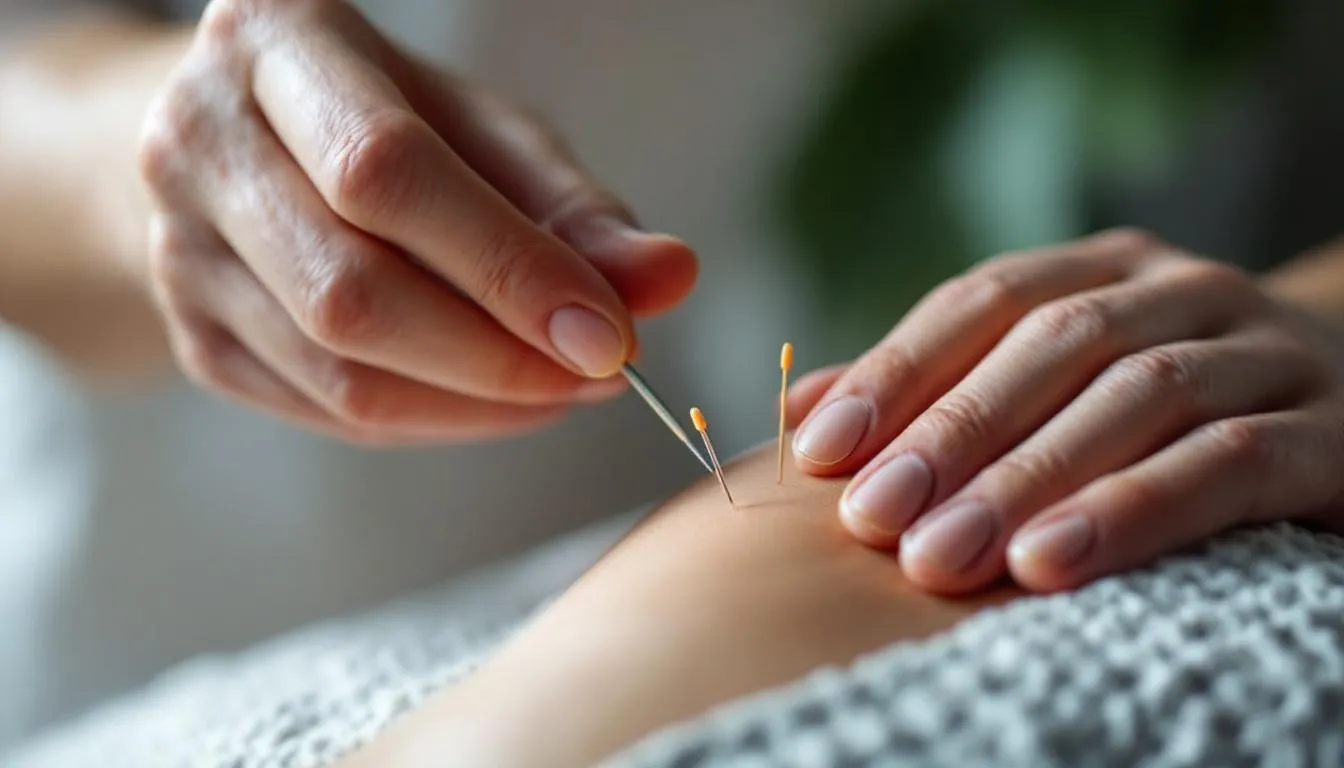
Table of Contents
What Is Acupuncture?
Acupuncture is a medical practice originating in ancient China that involves inserting thin, sterile needles into specific points on the body to treat pain, manage symptoms, and promote healing. It’s one of the oldest continuously practiced medical interventions in the world, with written records dating back over 2,000 years.
Today, acupuncture sits in an unusual position — practiced in hospitals alongside MRI machines and chemotherapy, yet based on a theoretical framework that predates the discovery of cells, nerves, and bacteria. Over 10 million acupuncture treatments are administered annually in the United States alone, and the practice is licensed in all 50 states.
Origins and History
The earliest systematic text on acupuncture is the Huangdi Neijing (Yellow Emperor’s Classic of Internal Medicine), compiled between the 2nd century BCE and 2nd century CE. But the practice almost certainly predates the text. Archaeological evidence suggests that sharpened stones and bones were used for therapeutic piercing thousands of years earlier.
The Huangdi Neijing laid out the theoretical framework that still defines traditional acupuncture: the body contains vital energy (qi) flowing through channels called meridians. Disease occurs when qi is blocked, deficient, or imbalanced. Inserting needles at specific points along the meridians restores proper flow.
Over the centuries, Chinese physicians refined the system — mapping additional points, developing new needle techniques, and integrating acupuncture with herbal medicine, diet therapy, and movement practices like tai chi. By the Ming Dynasty (1368-1644), the acupuncture point map included 365 points on 14 major meridians.
Acupuncture Comes West
Acupuncture’s Western introduction happened gradually, but one moment stands out. In 1971, New York Times reporter James Reston accompanied President Nixon’s advance team to China and developed appendicitis. After surgery at a Chinese hospital, doctors used acupuncture to manage his postoperative pain. Reston wrote about the experience in the Times, and American curiosity exploded.
The NIH held its first consensus conference on acupuncture in 1997, concluding that acupuncture was effective for postoperative nausea and could be useful as an adjunct for several other conditions. That institutional endorsement opened the door to insurance coverage, hospital integration, and serious research funding.
How Acupuncture Works (Two Perspectives)
The Traditional Explanation
In Traditional Chinese Medicine (TCM), acupuncture works by manipulating qi flow. The 12 primary meridians correspond to organ systems — Lung, Large Intestine, Stomach, Spleen, Heart, Small Intestine, Bladder, Kidney, Pericardium, Triple Burner, Gallbladder, and Liver. (These don’t map precisely to Western anatomical organs — the TCM “Kidney,” for instance, encompasses functions that Western medicine distributes across several systems.)
Each acupoint has specific therapeutic indications. Stomach 36 (Zusanli), located below the knee, is used for digestive issues, fatigue, and immune support. Large Intestine 4 (Hegu), between the thumb and index finger, treats headaches and facial pain. The practitioner selects points based on the patient’s pattern diagnosis — a TCM assessment that considers symptoms, pulse quality, tongue appearance, and constitutional factors.
The Biomedical Explanation
Western researchers have proposed several mechanisms that might explain acupuncture’s effects without invoking qi:
Neurotransmitter modulation. Needle insertion triggers the release of endorphins, serotonin, and norepinephrine — chemicals that reduce pain and improve mood. Functional MRI studies show that acupuncture at specific points activates corresponding brain regions involved in pain processing.
Local tissue effects. Needle insertion causes micro-trauma that triggers local immune responses, increases blood flow, and releases anti-inflammatory compounds. The connective tissue (fascia) surrounding the needle may transmit mechanical signals to distant cells.
Gate control theory. Needle stimulation activates large nerve fibers (A-beta fibers) that can “close the gate” to pain signals carried by smaller fibers (A-delta and C fibers), reducing pain perception.
Autonomic nervous system regulation. Acupuncture appears to shift the balance between the sympathetic (“fight or flight”) and parasympathetic (“rest and digest”) nervous systems, which could explain its effects on stress, blood pressure, and digestive function.
Placebo and contextual effects. The ritual of acupuncture — the clinical environment, practitioner attention, expectations of relief, and the physical sensation of needling — activates the brain’s own pain-modulating systems. This isn’t “fake” healing; neuroscience has shown that placebo responses involve measurable neurochemical changes.
What the Research Actually Shows
Acupuncture research is voluminous — over 30,000 published studies — but interpreting it requires some nuance.
Strong Evidence
Chronic pain is acupuncture’s strongest suit. A landmark 2012 meta-analysis published in Archives of Internal Medicine (now JAMA Internal Medicine) pooled data from nearly 18,000 patients across 29 high-quality randomized controlled trials. The conclusion: acupuncture was superior to both sham acupuncture and no-acupuncture controls for back pain, neck pain, osteoarthritis, and chronic headache. The effect was modest but statistically significant and clinically meaningful.
A 2017 update confirmed these findings and showed that acupuncture’s effects persisted over 12 months — it wasn’t just a temporary placebo response.
Chemotherapy-induced nausea. Multiple randomized trials and systematic reviews support acupuncture’s effectiveness for reducing nausea and vomiting during chemotherapy. The American Society of Clinical Oncology includes acupuncture in its antiemetic guidelines.
Migraine prevention. A 2016 Cochrane review found that acupuncture reduced migraine frequency as effectively as preventive medications, with fewer side effects.
Moderate Evidence
For conditions like insomnia, anxiety, menstrual pain, and temporomandibular joint (TMJ) disorders, evidence exists but is less definitive. Studies tend to be smaller and of variable quality.
The Sham Acupuncture Problem
Here’s the genuinely tricky part. Many acupuncture trials compare “real” acupuncture (needles at traditional points) to “sham” acupuncture (needles at non-traditional points, or non-penetrating placebo needles). The results are awkward for both advocates and skeptics:
Real acupuncture often outperforms no treatment by a significant margin. But it only modestly outperforms sham acupuncture — sometimes the difference is statistically insignificant.
What does this mean? Skeptics say it proves acupuncture is “just” placebo — the specific point locations don’t matter. Advocates counter that any needle insertion has real physiological effects, making sham acupuncture an active treatment rather than a true placebo. If sticking needles anywhere in the body triggers endorphin release and immune responses, then comparing two active treatments and finding similar results doesn’t prove either is ineffective.
This debate remains unresolved. It’s one of the most interesting methodological challenges in medical research.
Acupuncture Around the World
Acupuncture didn’t stay Chinese, and it didn’t stay a single technique. Different countries shaped it into recognizably different practices, which is part of why studies don’t always seem to be measuring the same thing.
Japan developed its own style somewhere around the 17th century, favoring much thinner needles, shallower insertion, and a gentler touch — partly thanks to Waichi Sugiyama, a blind practitioner who popularized the guide tube that nearly every acupuncturist still uses to insert needles today. Korean hand acupuncture (Koryo Sooji Chim), developed in the 1970s by Tae-Woo Yoo, maps the whole body onto the hand alone. France produced auricular (ear) acupuncture in the 1950s through physician Paul Nogier, who noticed a pattern of treatment scars on patients’ ears and worked out a system from it.
There’s also a strain called “medical acupuncture” or Western acupuncture, which drops the qi-and-meridian theory entirely and treats needling as a way to stimulate nerves and muscle trigger points. A practitioner working from that model and one working from classical Traditional Chinese Medicine might needle the same patient very differently — and both might call it acupuncture.
The World Health Organization has taken the practice seriously enough to publish reviews of its evidence, and in 2019 the WHO added Traditional Chinese Medicine diagnoses to its International Classification of Diseases (ICD-11). That move drew sharp criticism from researchers who argued it lent scientific legitimacy to concepts like qi that don’t hold up under biology. The disagreement captures acupuncture’s whole awkward status: widely used, partly evidence-backed, and theoretically contested all at once.
What Happens During a Session
A first acupuncture visit typically lasts 60-90 minutes. The practitioner takes a detailed health history, examines your tongue (color, coating, shape), and checks your pulse at both wrists — in TCM, practitioners distinguish between multiple pulse qualities at different positions, each reflecting the state of specific organ systems.
Based on this assessment, the practitioner develops a treatment plan and selects acupoints. You’ll lie on a padded table, and the practitioner inserts needles — typically 5 to 20 per session — at the selected points. The needles are extremely thin (0.12 to 0.35 mm in diameter), sterile, and single-use.
Insertion usually feels like a slight pinch or nothing at all. Once placed, you might feel a dull ache, tingling, warmth, or heaviness around the needle — practitioners call this “de qi” and consider it a sign that the treatment is working.
The needles stay in place for 15-30 minutes while you rest. Many people fall asleep during this time. The practitioner may periodically manipulate the needles — twisting, lifting, or applying electrical stimulation (electroacupuncture).
After removal, most people feel relaxed and slightly drowsy. Some notice immediate symptom improvement; others need several sessions before experiencing changes.
Safety and Risks
Acupuncture is remarkably safe when performed by a trained, licensed practitioner using sterile needles. A systematic review of over 1 million acupuncture treatments found that serious adverse events occurred in fewer than 0.05% of cases.
Common minor side effects include:
- Mild soreness or bruising at needle sites
- Temporary lightheadedness
- Occasional drowsiness
Serious complications are rare but include:
- Infection (virtually eliminated by single-use sterile needles)
- Organ injury, particularly pneumothorax (collapsed lung) from needles placed too deeply near the chest — extremely rare with trained practitioners
- Nerve damage (very rare)
Acupuncture should be avoided or used cautiously in people with bleeding disorders, those taking blood thinners, and pregnant women (certain points are contraindicated during pregnancy).
Licensing and Training
In the U.S., acupuncturists typically complete a 3-4 year master’s degree program (Master of Acupuncture or Master of Traditional Chinese Medicine) that includes over 2,000 hours of training, including supervised clinical practice. They must pass a national board examination administered by NCCAOM (National Certification Commission for Acupuncture and Oriental Medicine).
Medical doctors (MDs and DOs) can also practice acupuncture, usually after completing a shorter training program (200-300 hours). Some chiropractors and physical therapists use “dry needling” — a technique that inserts needles at trigger points rather than traditional acupoints — with varying levels of training by state.
This creates a sometimes confusing field. A licensed acupuncturist (L.Ac.) has thousands of hours of training in the complete TCM system. A physician practicing acupuncture may have deep medical knowledge but limited acupuncture-specific training. And a practitioner performing “dry needling” may have trained for only a few weekends. The credentials matter.
Cost and Accessibility
Individual acupuncture sessions typically cost $75-$150 in the U.S., with initial consultations sometimes running higher. Community acupuncture clinics — where multiple patients are treated in a shared room — offer reduced rates, often $20-$50 per session.
Insurance coverage has expanded significantly. Medicare covers acupuncture for chronic low back pain (up to 12 sessions over 90 days). Many private insurers cover acupuncture for pain conditions, though coverage varies widely by plan. The Veterans Administration offers acupuncture at many facilities.
Variations and Related Practices
Several related techniques share acupuncture’s theoretical roots:
- Acupressure: Finger pressure on acupoints instead of needles.
- Electroacupuncture: Mild electrical current applied through inserted needles.
- Moxibustion: Burning dried mugwort herb near acupoints to add warming stimulation.
- Cupping: Placing glass or silicone cups on the skin to create suction. (Michael Phelps made this famous at the 2016 Olympics, showing up with circular bruises across his shoulders.)
- Auricular acupuncture: Needling points specifically on the ear, based on the idea that the ear contains a map of the entire body.
Making Your Own Decision
So should you try acupuncture? Here’s a practical framework:
Consider it if: You have chronic pain that hasn’t responded well to other treatments, you experience frequent migraines or headaches, you’re dealing with chemotherapy-related nausea, or you’re looking for a drug-free approach to pain management.
Be cautious if: Someone promises it will cure a serious disease, a practitioner advises you to stop prescribed medications, or the practitioner isn’t properly licensed.
Skip it if: You have a severe needle phobia (try acupressure instead), you have a bleeding disorder, or you’re looking for a single-session miracle cure — acupuncture typically requires a course of treatment.
The honest answer is that acupuncture probably does something real for certain conditions — particularly pain and nausea — but the mechanism is debated, the magnitude of effect is moderate, and the traditional theoretical framework doesn’t align with modern biology. That’s an uncomfortable middle ground, and different people will weigh those factors differently.
What’s clear is that millions of people find it helpful, the risks are minimal, and the research — while imperfect — supports its use for specific, well-defined conditions. That might be enough.
Frequently Asked Questions
Does acupuncture hurt?
Most people describe the sensation as a mild prick or tingling when needles are inserted, not sharp pain. Acupuncture needles are extremely thin — about the width of a human hair — and much thinner than hypodermic needles. Some people feel nothing at all during insertion.
What conditions does acupuncture treat?
The strongest evidence supports acupuncture for chronic pain (back pain, neck pain, knee osteoarthritis), headaches and migraines, and chemotherapy-induced nausea. It's also studied for insomnia, anxiety, and menstrual pain, though evidence varies.
How many sessions of acupuncture do you need?
This varies by condition and practitioner. Acute issues might respond in 1-3 sessions. Chronic pain typically requires 6-12 weekly sessions before evaluating results. Some people continue maintenance sessions every few weeks after initial improvement.
Is acupuncture covered by insurance?
Increasingly, yes. Many private insurance plans in the U.S. cover acupuncture for specific conditions, particularly chronic pain. Medicare began covering acupuncture for chronic low back pain in 2020. Check your specific plan for coverage details.
Is acupuncture just a placebo?
The placebo question is complex. Large trials show acupuncture outperforms no-treatment controls but often performs only modestly better than sham acupuncture. Some researchers argue the needle insertion itself has real physiological effects even at non-traditional points, making the sham comparison problematic.
Further Reading
Cite this article
APA
WhatIs.site. (2025). What Is Acupuncture?. Retrieved May 27, 2026, from https://whatis.site/acupuncture MLA
"What Is Acupuncture?." WhatIs.site, July 15, 2025, https://whatis.site/acupuncture. Accessed May 27, 2026. Chicago
WhatIs.site. "What Is Acupuncture?." Last modified May 12, 2026. https://whatis.site/acupuncture. HTML
<a href="https://whatis.site/acupuncture">What Is Acupuncture?</a> — WhatIs.site Related Articles
What Is Anatomy?
Anatomy is the study of body structure in living organisms. Learn about gross and microscopic anatomy, organ systems, history, and why it matters in medicine.
scienceWhat Is Health Science?
Health science studies how the human body works, how diseases develop, and how medical knowledge is applied to prevent illness and improve well-being.
scienceWhat Is Psychology?
Psychology is the scientific study of mind and behavior. Learn about its major branches, research methods, history, and how it shapes everyday life. Discover...
scienceWhat Is Biology?
Biology is the scientific study of living organisms and life processes. Learn about cells, genetics, evolution, ecosystems, and the major branches of biology.
scienceWhat Is Neuroscience?
Neuroscience is the study of the nervous system, from brain cells and circuits to cognition, behavior, and consciousness. Here is how the field works.