 WhatIs.site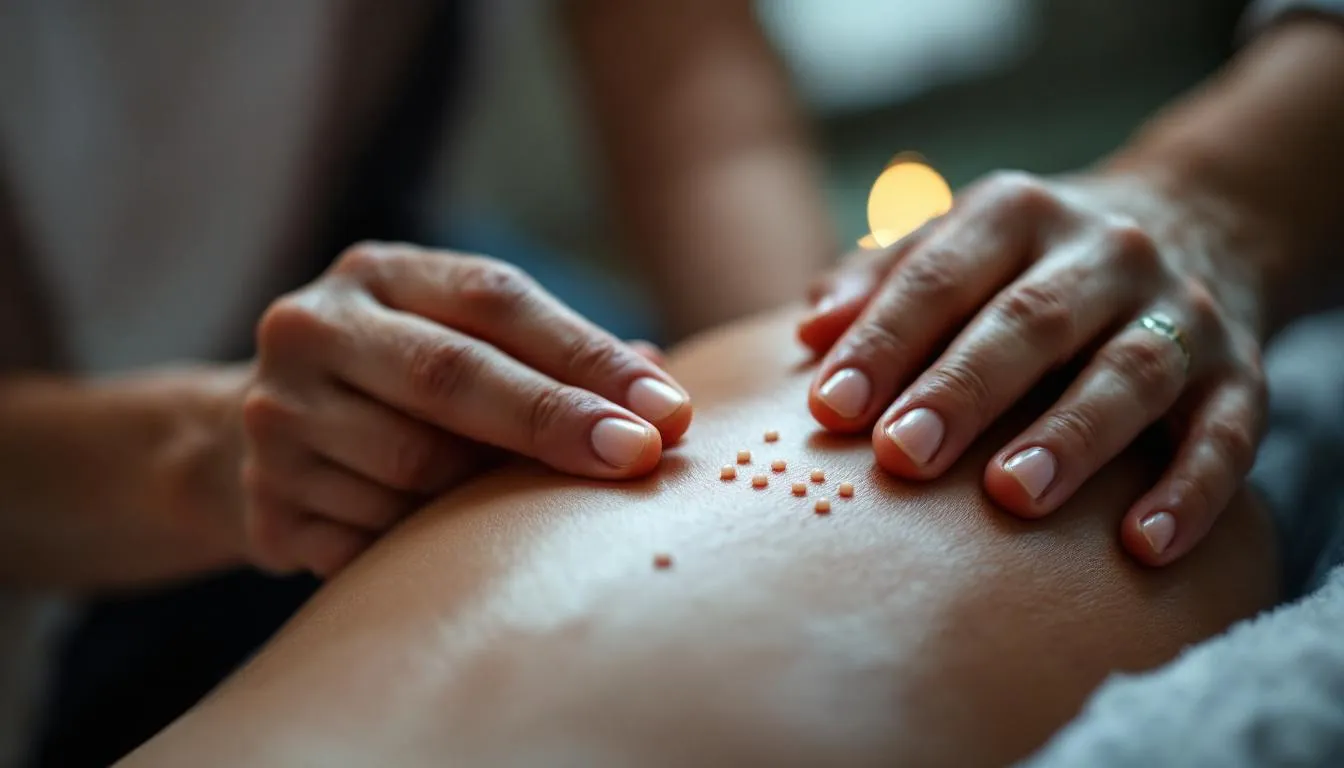
Table of Contents
What Is Acupressure?
Acupressure is a traditional healing technique rooted in Chinese medicine that involves applying physical pressure — usually with fingers, thumbs, or specialized tools — to specific points on the body believed to correspond to energy pathways. It’s essentially acupuncture without the needles.
The practice dates back at least 2,000 years and operates on the same theoretical framework as acupuncture: the idea that vital energy (called “qi” or “chi”) flows through pathways in the body called meridians, and that applying pressure to specific points along these meridians can restore balance and relieve symptoms.
The Theory Behind Acupressure
Traditional Chinese Medicine (TCM) rests on a fundamentally different model of the body than Western medicine. In TCM, health depends on the balanced flow of qi through 12 primary meridians — invisible channels that connect organs, tissues, and bodily functions. When qi flows freely, you’re healthy. When it’s blocked or imbalanced, symptoms appear.
Each meridian is associated with a specific organ system and contains multiple acupoints — there are over 360 classical acupoints mapped across the body. Acupressure practitioners press on specific points to release blockages, redirect energy flow, and trigger the body’s self-healing responses.
Here’s where you need to be honest with yourself about what the science says: qi and meridians have never been identified through anatomy or physiology. No one has found a physical structure corresponding to a meridian. No instrument has measured qi. The theoretical framework is not scientifically validated.
But — and this is important — that doesn’t necessarily mean the technique doesn’t work. The mechanism might be different from what traditional theory claims. Pressing on specific body points clearly does something — the question is what, and whether it matches TCM’s explanation.
What Modern Science Says
Research on acupressure has produced a mixed but not entirely dismissive picture.
Where the Evidence Is Strongest
Nausea relief is acupressure’s best-supported application. The P6 point (Neiguan), located on the inner wrist about three finger-widths below the wrist crease, has been studied extensively for nausea. A 2015 Cochrane review found that stimulation of P6 reduced postoperative nausea and vomiting compared to sham treatment. Commercial “sea bands” — elastic wristbands with a plastic button that presses on P6 — are sold specifically for motion sickness and morning sickness.
Pain management also shows promise. A 2019 meta-analysis published in Pain Management Nursing found that acupressure significantly reduced pain intensity across multiple conditions, including menstrual pain, lower back pain, and labor pain. Effect sizes were moderate — not miraculous, but meaningful.
Anxiety and stress reduction. Multiple small studies show that acupressure sessions reduce cortisol levels and self-reported anxiety. A 2020 systematic review in the Journal of Clinical Nursing concluded that acupressure had “significant effects on anxiety reduction in various clinical populations.”
Where the Evidence Is Weak or Absent
Claims that acupressure can treat serious diseases — cancer, heart disease, diabetes — are not supported by credible evidence. Anyone suggesting acupressure as a substitute for conventional medical treatment for these conditions is being irresponsible.
The quality of acupressure research is a problem across the board. Many studies are small, lack proper blinding, use inconsistent protocols, and are published in journals with less rigorous peer review. The placebo effect is extremely difficult to control for — if someone is pressing on your body for 30 minutes, you know you’re receiving treatment.
Possible Mechanisms (Beyond Qi)
Several scientifically plausible mechanisms might explain acupressure’s effects, even without invoking qi:
- Gate control theory of pain: Pressure stimulation may activate large nerve fibers that “close the gate” to pain signals traveling to the brain.
- Endorphin release: Sustained pressure on certain points may trigger the release of endorphins — the body’s natural painkillers.
- Autonomic nervous system regulation: Pressure may activate the parasympathetic nervous system (the “rest and digest” response), reducing heart rate, blood pressure, and stress hormones.
- Fascial connections: Some researchers have noted that many acupoints correspond to locations where connective tissue (fascia) converges, potentially creating mechanical connections between pressure points and distant body regions.
- Placebo and relaxation effects: Simply lying still while someone applies gentle pressure for 20-30 minutes induces relaxation. This alone has measurable health benefits.
Common Acupressure Points
You don’t need a practitioner to try basic acupressure. Here are some commonly used points:
LI4 (Hegu) — The “Everything” Point
Located in the fleshy area between your thumb and index finger. Probably the most frequently cited acupressure point. Traditionally used for headaches, toothaches, sinus congestion, and general pain. Press firmly with the opposite thumb for 1-3 minutes.
Important: Avoid this point during pregnancy — it’s traditionally believed to stimulate uterine contractions.
P6 (Neiguan) — The Nausea Point
On the inner forearm, about three finger-widths below the wrist crease, between the two tendons. The best-researched acupressure point, primarily for nausea relief. This is the point targeted by anti-nausea wristbands.
GB20 (Fengchi) — The Headache Point
At the base of the skull, in the hollows on either side of the spine where the neck muscles attach. Used for headaches, neck tension, and eye strain. Apply pressure with both thumbs simultaneously, directing force slightly upward.
LV3 (Taichong) — The Stress Point
On the top of the foot, in the depression between the big toe and second toe, about two finger-widths back from the web. Used for stress, anxiety, irritability, and insomnia. Press firmly for 1-2 minutes.
SP6 (Sanyinjiao) — The Hormonal Balance Point
On the inner leg, about four finger-widths above the ankle bone. Used for menstrual issues, digestive problems, and insomnia. Strictly avoid during pregnancy — this point is associated with labor induction in TCM.
How a Professional Acupressure Session Works
A typical session lasts 30-60 minutes. You remain fully clothed and lie on a massage table or padded floor mat. The practitioner assesses your condition through questions, pulse reading (a TCM diagnostic technique), and sometimes tongue examination.
Treatment involves sustained pressure on selected acupoints, held for 30 seconds to several minutes each. The pressure ranges from gentle to quite firm — it shouldn’t be painful, but you’ll feel it. Practitioners may also use rhythmic pressing, circular motions, or stretching.
Common styles include:
- Shiatsu: A Japanese adaptation that uses palm and thumb pressure along meridians. It’s the form most Westerners encounter.
- Tui Na: A Chinese technique that combines acupressure with massage, stretching, and joint manipulation.
- Jin Shin Jyutsu: A gentler Japanese approach using light touch on specific point combinations.
After a session, many people report feeling relaxed, slightly drowsy, and occasionally lightheaded. Some experience temporary soreness at pressure points.
Acupressure vs. Other Bodywork
How does acupressure compare to other hands-on therapies?
Massage therapy focuses on manipulating muscles and soft tissue to reduce tension, improve circulation, and promote relaxation. Acupressure targets specific points based on meridian theory. In practice, the two overlap considerably — many massage therapists incorporate acupressure points, and many acupressure sessions feel like targeted massage.
Reflexology applies pressure specifically to the feet (and sometimes hands and ears), based on the idea that different foot zones correspond to different organs. The theoretical framework is different from acupressure, though both involve pressure-based treatment.
Trigger point therapy targets tight, painful knots in muscles (myofascial trigger points). Interestingly, studies have found significant overlap between classical acupoints and myofascial trigger points — suggesting that different traditions may have independently identified the same physiologically significant locations.
Who Uses Acupressure and Why
Acupressure has gained mainstream acceptance in some medical settings. Several hospitals and cancer centers offer acupressure alongside conventional treatment — not as a replacement, but as a complementary approach for symptom management.
The National Institutes of Health’s National Center for Complementary and Integrative Health (NCCIH) classifies acupressure as a form of complementary medicine and funds ongoing research into its effectiveness.
Common reasons people seek acupressure:
- Chronic pain that hasn’t responded well to other treatments
- Nausea from chemotherapy, pregnancy, or motion sickness
- Headaches and migraines
- Stress and anxiety management
- Sleep problems
- Menstrual discomfort
Where Acupressure Came From
Acupressure is older than acupuncture, at least in its crudest form. Long before anyone made thin needles, people pressed on sore spots with their fingers and noticed it helped. The systematized version grew up alongside the rest of Traditional Chinese Medicine, with the foundational text — the Huangdi Neijing, or Yellow Emperor’s Classic of Internal Medicine — compiled roughly 2,000 years ago. That book laid out the meridian map and the point locations that practitioners still reference today.
From China the ideas spread across East Asia and mutated as they traveled. Japan developed anma massage, which later evolved into shiatsu — the finger-pressure style most Westerners now picture when they hear “acupressure.” The technique reached Europe and North America in waves, most prominently during the 1970s surge of interest in Chinese medicine that followed President Nixon’s 1972 visit to China, when American journalists witnessed acupuncture used during surgery and brought the story home.
What’s striking is how little the core map has changed. The point a modern practitioner presses for nausea is the same Neiguan described in classical texts. Whether or not you accept the underlying theory, that continuity is genuinely unusual for any health practice.
Trying It at Home Safely
You can experiment with basic acupressure on yourself with almost no risk, provided you follow a few sensible rules.
Start with clean hands and trimmed nails — you’re pressing, not scratching. Use the pad of your thumb or finger, find the point, and apply steady, firm pressure. It should feel like a deep ache or a “good hurt,” never a sharp pain. Hold each point for one to three minutes, breathing slowly. You can press steadily or use small circular motions. Two or three sessions a day is plenty for something like a tension headache or motion sickness.
A few things to skip. Don’t press directly on broken skin, fresh bruises, varicose veins, swollen joints, or anything inflamed. If you’re pregnant, avoid LI4 and SP6 entirely, since both are traditionally linked to triggering contractions — the evidence that they actually induce labor is thin, but there’s no reason to take the chance. And if you have a clotting disorder or take blood thinners, go gentle, because firm sustained pressure can bruise.
The bigger caution is about expectations, not safety. Acupressure is reasonable for everyday complaints — a queasy stomach, a stress headache, trouble winding down at night. It is not a treatment for chest pain, sudden severe headaches, numbness, or any symptom that could signal something serious. Those need a doctor, not a wristband. Think of self-acupressure the way you’d think of a hot bath or a meditation break: a low-cost comfort measure that sometimes helps and rarely hurts, sitting comfortably alongside conventional care rather than in place of it.
Finding a Qualified Practitioner
If you’d rather see someone than poke at your own wrist, the tricky part is that acupressure isn’t licensed the way acupuncture is in most places. Anyone can call themselves an acupressure practitioner. That makes credentials worth checking.
In the United States, many of the better-trained practitioners are licensed acupuncturists (L.Ac.) who also offer hands-on point work, or are certified in a specific style like shiatsu through an accredited program. Massage therapists with additional acupressure or Traditional Chinese Medicine training are another reasonable route. Ask what they trained in, how long, and whether they hold any state license at all. A practitioner who promises to cure a named disease, pushes expensive multi-session packages up front, or discourages you from seeing your regular doctor is a red flag — those behaviors signal a sales pitch, not careful care.
The cost is usually similar to a massage: somewhere around $60 to $120 for a 60-minute session in most US cities, often more in major metros. Insurance rarely covers it, though some integrative-medicine clinics attached to hospitals fold it into broader treatment plans.
The Bottom Line
Acupressure occupies an interesting middle ground between traditional folk medicine and evidence-based therapy. The traditional theoretical framework (qi, meridians) lacks scientific validation, but the practice itself produces measurable effects in certain conditions — particularly nausea, pain, and anxiety.
The safest way to think about it: acupressure is a low-risk, potentially helpful complementary technique. It’s unlikely to harm you (assuming you avoid contraindicated points during pregnancy and don’t press on injuries). It may help with specific symptoms. But it shouldn’t replace medical treatment for serious conditions, and anyone who tells you it can cure cancer or diabetes is selling something you shouldn’t buy.
If you’re curious, try pressing on your P6 point next time you feel nauseous. It might work. It might not. But at worst, you’ve spent three minutes pressing on your own wrist — and there are certainly worse ways to spend three minutes.
Frequently Asked Questions
Does acupressure actually work?
Evidence is mixed. Several studies show acupressure can reduce nausea (especially from chemotherapy or pregnancy), ease certain types of pain, and reduce anxiety. However, many studies are small or methodologically limited, and more rigorous research is needed.
What is the difference between acupressure and acupuncture?
Both target the same body points based on traditional Chinese medicine theory. Acupuncture uses thin needles inserted into the skin, while acupressure uses finger, thumb, or device pressure on the surface. Acupressure is non-invasive and can be self-administered.
Can you do acupressure on yourself?
Yes. Many acupressure techniques are designed for self-treatment. Common self-acupressure points include LI4 (between thumb and index finger) for headaches, P6 (inner wrist) for nausea, and GB20 (base of skull) for tension. Apply firm pressure for 1-3 minutes.
Is acupressure safe?
Acupressure is generally considered safe when performed correctly. It should be avoided over wounds, bruises, varicose veins, or areas of inflammation. Pregnant women should avoid certain points (like SP6 near the ankle) that are traditionally believed to stimulate labor.
Further Reading
Cite this article
APA
WhatIs.site. (2025). What Is Acupressure?. Retrieved May 27, 2026, from https://whatis.site/acupressure MLA
"What Is Acupressure?." WhatIs.site, July 15, 2025, https://whatis.site/acupressure. Accessed May 27, 2026. Chicago
WhatIs.site. "What Is Acupressure?." Last modified May 12, 2026. https://whatis.site/acupressure. HTML
<a href="https://whatis.site/acupressure">What Is Acupressure?</a> — WhatIs.site Related Articles
What Is Anatomy?
Anatomy is the study of body structure in living organisms. Learn about gross and microscopic anatomy, organ systems, history, and why it matters in medicine.
scienceWhat Is Health Science?
Health science studies how the human body works, how diseases develop, and how medical knowledge is applied to prevent illness and improve well-being.
scienceWhat Is Psychology?
Psychology is the scientific study of mind and behavior. Learn about its major branches, research methods, history, and how it shapes everyday life. Discover...
scienceWhat Is Biology?
Biology is the scientific study of living organisms and life processes. Learn about cells, genetics, evolution, ecosystems, and the major branches of biology.
health amp wellnessWhat Is Hypnotherapy?
Hypnotherapy uses guided hypnosis to address habits, anxiety, pain, and more. Learn how it works, what the evidence says, and what to expect in a session.