 WhatIs.site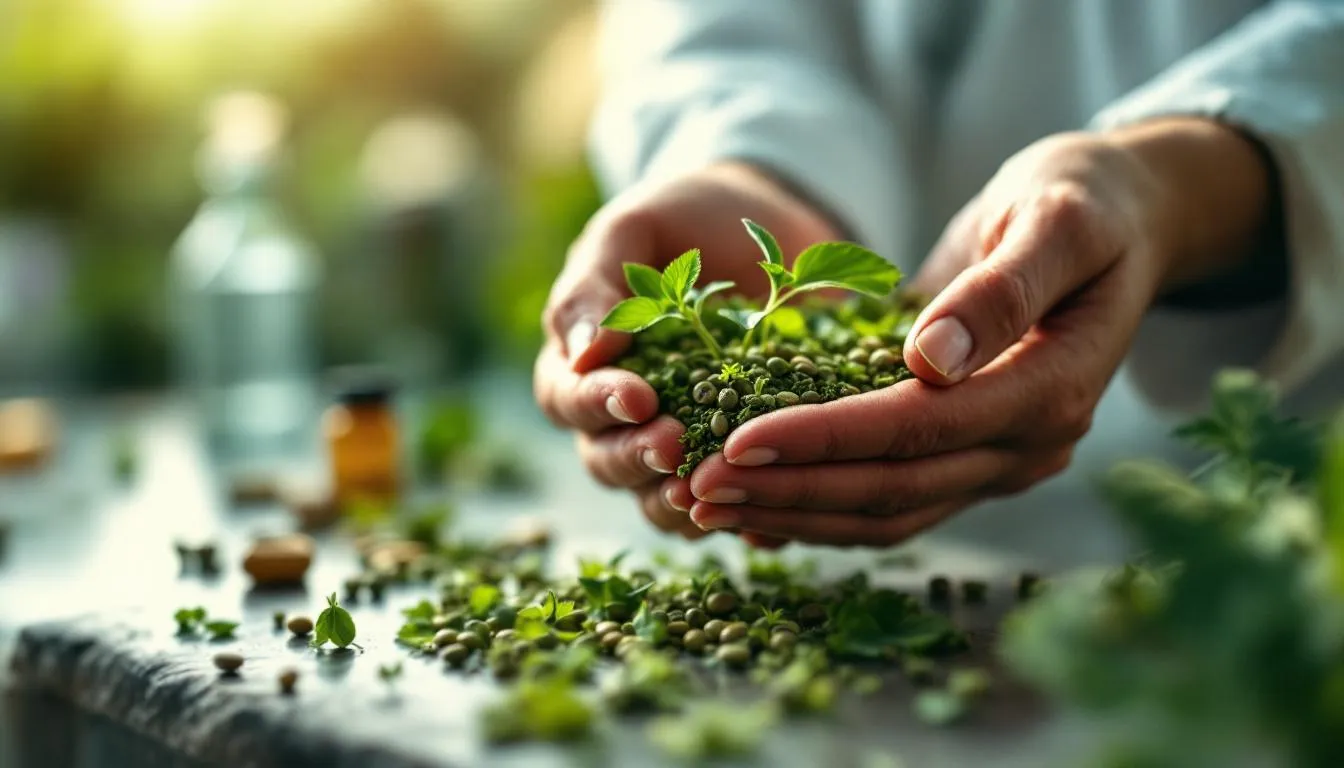
Table of Contents
What Is Herbal Medicine?
Herbal medicine is the practice of using plants — their leaves, roots, flowers, seeds, bark, or extracts — to prevent, treat, or manage health conditions. It’s the oldest form of medicine in human history, practiced on every inhabited continent, and it remains the primary healthcare system for an estimated 80% of the world’s population, according to the World Health Organization.
The Oldest Pharmacy on Earth
Humans have been using plants as medicine for at least 60,000 years. Archaeological evidence from a Neanderthal burial site in Shanidar Cave, Iraq, found pollen from medicinal plants — yarrow, chamomile, and others — deliberately placed with the body. Whether this was medicine, ritual, or both, it suggests that the connection between plants and healing is older than our own species.
Every ancient civilization developed sophisticated herbal pharmacopoeias. The Egyptians used garlic, juniper, and frankincense. The Ebers Papyrus, dating to about 1550 BCE, lists over 800 herbal prescriptions. Traditional Chinese Medicine, which dates back at least 2,500 years, catalogs thousands of plant-based remedies in texts like the Shennong Ben Cao Jing. India’s Ayurvedic system, similarly ancient, relies heavily on herbs like turmeric, ashwagandha, and holy basil. The Greek physician Dioscorides compiled De Materia Medica around 70 CE — a reference that remained the standard European pharmacological text for over 1,500 years.
Here’s the part that’s easy to forget: modern medicine grew out of herbal medicine. Not alongside it. From it. The distinction between “traditional” and “modern” medicine is recent — maybe 150 years old. Before that, all medicine was plant-based medicine.
How Herbal Medicine Actually Works (When It Works)
Plants are chemistry factories. Through millions of years of evolution, they’ve developed an extraordinary array of chemical compounds — alkaloids, flavonoids, terpenes, saponins, glycosides — many of which have real, measurable effects on human physiology.
When you take aspirin, you’re taking a synthetic version of salicin, a compound originally derived from willow bark. Digitalis, the heart medication, comes from foxglove. Morphine comes from opium poppies. Quinine, the malaria drug, comes from cinchona bark. Taxol, a chemotherapy drug, was discovered in Pacific yew tree bark. Roughly 25% of modern pharmaceuticals are derived from plant compounds, and many more were inspired by plant chemistry.
So saying “herbal medicine doesn’t work” is flat-out wrong. Some of it clearly works. The question is always which herbs, for which conditions, at what doses, and with what evidence.
Some well-studied examples:
- St. John’s Wort (Hypericum perforatum) — Multiple clinical trials show effectiveness comparable to standard antidepressants for mild to moderate depression. The Cochrane Collaboration, which reviews medical evidence, confirmed this in a 2008 meta-analysis.
- Ginger (Zingiber officinale) — Strong evidence for treating nausea, including motion sickness, morning sickness, and post-operative nausea.
- Echinacea — Mixed evidence. Some studies show modest reduction in cold duration; others show no benefit. The honest answer is “maybe slightly helpful, maybe not.”
- Garlic (Allium sativum) — Good evidence for modest blood pressure reduction and cholesterol-lowering effects, though the magnitudes are small.
The Wild West of Regulation
Here’s where things get uncomfortable. In the United States, herbal products are classified as dietary supplements under the 1994 Dietary Supplement Health and Education Act (DSHEA). This means they occupy a regulatory gray zone that would astonish most consumers.
Pharmaceutical drugs must prove they’re safe and effective through rigorous clinical trials before the FDA allows them on the market. Dietary supplements — including herbal products — face no such requirement. Manufacturers can sell herbal supplements without demonstrating safety, efficacy, or even that the bottle contains what the label claims. The FDA can only intervene after a product causes harm — a reactive approach that critics call dangerously inadequate.
And harm does happen. A 2013 study published in BMC Medicine tested 44 herbal supplements from 12 companies and found that one-third contained no detectable trace of the plant listed on the label. Some contained undisclosed fillers, allergens, or entirely different plants. A 2015 investigation by the New York Attorney General tested store-brand herbal supplements and found that 80% didn’t contain the herbs advertised.
The regulation situation varies internationally. Germany’s Commission E has evaluated hundreds of herbs for safety and efficacy since the 1970s, producing monographs that are considered among the most reliable herbal references worldwide. The European Medicines Agency maintains a Committee on Herbal Medicinal Products. Traditional Chinese Medicine and Ayurveda have their own regulatory frameworks in China and India, respectively.
Traditional Systems of Herbal Medicine
Traditional Chinese Medicine (TCM)
TCM uses herbs within a theoretical framework based on concepts like qi (vital energy), yin and yang, and the five elements. Practitioners don’t just prescribe individual herbs — they create complex formulas combining multiple plants, adjusted for each patient’s specific pattern of imbalance. A typical TCM formula might contain 8-15 different herbs.
The Chinese pharmacopoeia includes roughly 5,000 plant-based medicines. Some, like artemisinin — extracted from sweet wormwood (Artemisia annua) — have been validated by Western science. Tu Youyou won the 2015 Nobel Prize in Medicine for discovering artemisinin’s antimalarial properties, a discovery rooted in reading ancient Chinese medical texts.
Ayurvedic Medicine
India’s Ayurvedic system, at least 3,000 years old, classifies herbs according to their effects on three constitutional types (doshas): vata, pitta, and kapha. Turmeric, ashwagandha, and holy basil are staples. Ayurvedic herbal preparations called rasayanas are designed for long-term health maintenance rather than acute treatment.
One concern with some Ayurvedic products is contamination with heavy metals — lead, mercury, and arsenic — which are sometimes intentionally added in traditional formulations. Studies have found dangerous levels of metals in products sold in both India and Western markets.
Western Herbalism
European and American herbal traditions draw from Greek, Roman, and medieval sources, supplemented by Native American ethnobotany. The “Doctrine of Signatures” — the medieval idea that a plant’s appearance reveals its medicinal use (walnuts look like brains, so they must treat brain conditions) — was pre-scientific nonsense, but many useful plants were identified through centuries of trial and error.
Modern Western herbalism varies enormously in sophistication. Some practitioners are well-trained in botany, pharmacology, and clinical assessment. Others rely on folklore, anecdote, and wishful thinking. The quality gap is real and consequential.
The Safety Question
The biggest myth about herbal medicine is that “natural means safe.” Hemlock is natural. Deadly nightshade is natural. Ricin, one of the most lethal poisons known, comes from castor beans. “Natural” is not a synonym for “harmless.”
Specific safety concerns include:
Drug interactions. This is the most dangerous issue. St. John’s Wort alone interacts with over 200 pharmaceutical drugs. Patients often don’t tell their doctors about herbal supplements, and doctors often don’t ask. The result is preventable adverse reactions.
Contamination. Heavy metals, pesticides, bacteria, and adulterants have been found in herbal products worldwide. Without mandatory testing requirements (in the U.S.), consumers are essentially trusting manufacturers to police themselves.
Misidentification. Plants can look alike, and mistakes happen. In 1992, a Belgian weight-loss clinic accidentally substituted Aristolochia fangchi (which contains toxic aristolochic acid) for a similar-looking herb. Over 100 patients developed kidney failure, and some developed kidney cancer.
Dosage uncertainty. The concentration of active compounds in plants varies depending on growing conditions, harvest time, processing methods, and storage. Two products labeled “echinacea” might contain vastly different amounts of active compounds — or different species of echinacea entirely.
The Evidence Gap
Here’s the honest situation: most herbal remedies haven’t been subjected to the same rigorous testing as pharmaceutical drugs. Clinical trials are expensive — typically hundreds of millions of dollars — and there’s little financial incentive to test unpatentable plant compounds. You can’t patent willow bark. So who pays for the research?
Some organizations are trying. The NIH’s National Center for Complementary and Integrative Health (NCCIH) funds research on herbal products. Germany’s Commission E has produced evidence-based monographs. The Cochrane Collaboration has reviewed evidence for various herbs.
But the gap between what’s sold and what’s proven remains enormous. Thousands of herbal products line store shelves with vague health claims that have never been tested in controlled trials. This doesn’t mean they don’t work — absence of evidence isn’t evidence of absence. But it means consumers are often making decisions based on tradition, marketing, and hope rather than data.
Where Herbal Medicine Is Heading
The future probably isn’t “herbal medicine vs. modern medicine.” It’s integration. Pharmacologists are actively screening traditional plant medicines for new drug leads. The WHO has called for evidence-based integration of traditional medicine into national health systems. Research institutions increasingly study traditional remedies using modern scientific methods.
The smartest approach is neither uncritical acceptance nor blanket dismissal. Some herbal remedies work. Some don’t. Some are dangerous. The challenge is figuring out which is which — and that requires the same rigorous, evidence-based approach we apply to any other medical claim.
Frequently Asked Questions
Are herbal medicines actually effective?
Some are, some aren't, and many haven't been rigorously tested. St. John's Wort has solid clinical evidence for mild to moderate depression. Ginger has good evidence for nausea. Turmeric (curcumin) shows anti-inflammatory properties in studies. But many popular herbal remedies lack clinical evidence at the level required for pharmaceutical drugs. The honest answer is that it varies enormously by plant, preparation, condition, and individual — blanket claims in either direction are misleading.
Can herbal medicines interact with prescription drugs?
Absolutely, and this is a serious safety concern. St. John's Wort can reduce the effectiveness of birth control pills, blood thinners, HIV medications, and antidepressants. Ginkgo biloba can increase bleeding risk with aspirin or warfarin. Licorice root can affect blood pressure medications. Garlic supplements can interact with anticoagulants. Always tell your doctor about any herbal supplements you're taking — the interactions can be dangerous or even life-threatening.
Why aren't herbal supplements regulated like drugs?
In the United States, the Dietary Supplement Health and Education Act (DSHEA) of 1994 classifies herbal products as dietary supplements, not drugs. This means manufacturers don't need to prove safety or efficacy before selling them — the FDA can only act after problems are reported. Manufacturers can't claim to treat or cure diseases, but they can make "structure/function" claims like "supports immune health." Critics argue this regulatory gap puts consumers at risk; supporters argue it preserves access to traditional remedies.
What is the difference between herbal medicine and homeopathy?
They're completely different systems. Herbal medicine uses measurable doses of plant materials that contain active chemical compounds. Homeopathy uses extremely diluted substances (often diluted so much that no molecules of the original substance remain) based on the principle that "like cures like." Herbal medicine has a pharmacological basis — plants contain real chemicals that affect the body. Homeopathy's mechanism contradicts basic chemistry and physics, and systematic reviews have found it performs no better than placebo.
Further Reading
Cite this article
APA
WhatIs.site. (2025). What Is Herbal Medicine?. Retrieved May 27, 2026, from https://whatis.site/herbal-medicine MLA
"What Is Herbal Medicine?." WhatIs.site, July 15, 2025, https://whatis.site/herbal-medicine. Accessed May 27, 2026. Chicago
WhatIs.site. "What Is Herbal Medicine?." Last modified May 12, 2026. https://whatis.site/herbal-medicine. HTML
<a href="https://whatis.site/herbal-medicine">What Is Herbal Medicine?</a> — WhatIs.site Related Articles
What Is Anatomy?
Anatomy is the study of body structure in living organisms. Learn about gross and microscopic anatomy, organ systems, history, and why it matters in medicine.
scienceWhat Is Biology?
Biology is the scientific study of living organisms and life processes. Learn about cells, genetics, evolution, ecosystems, and the major branches of biology.
scienceWhat Is Chemistry?
Chemistry is the science of matter and how substances interact, bond, and transform. Learn about atoms, molecules, reactions, and why chemistry matters.
scienceWhat Is Botany?
Botany is the scientific study of plants — their structure, physiology, genetics, ecology, distribution, classification, and evolutionary relationships.
scienceWhat Is Agriculture?
Agriculture is the practice of cultivating plants, raising animals, and processing natural resources to produce food, fiber, and fuel.