 WhatIs.site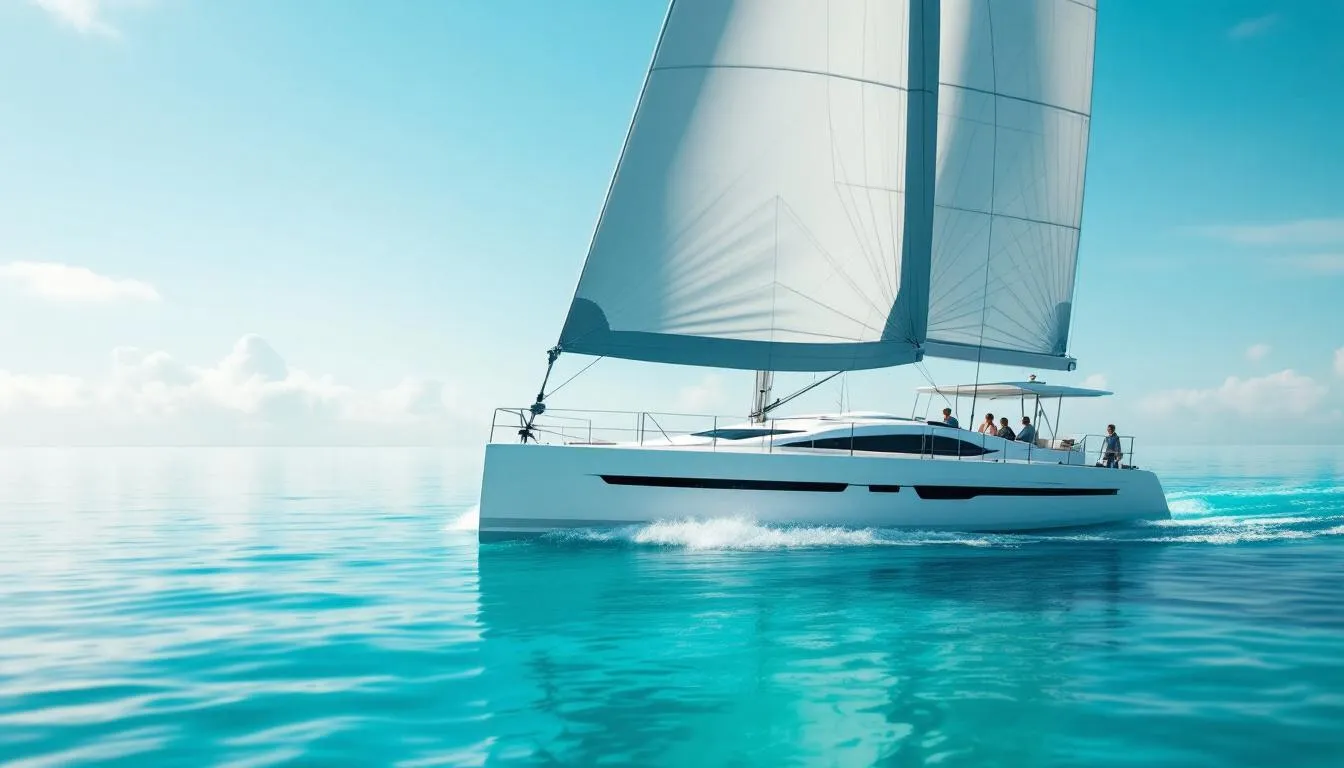
Table of Contents
What Is Yachting?
Yachting is the sport and recreation of sailing or motoring on a yacht — a vessel designed for pleasure rather than commercial work. It ranges from a weekend sailor tacking across a local bay in a 25-footer to billionaires cruising the Mediterranean on floating palaces with helipads and swimming pools.
The word “yacht” comes from the Dutch jaght, meaning “hunt,” because the original yachts were fast, light vessels used by the Dutch navy to chase pirates in shallow coastal waters during the 17th century. When England’s King Charles II received a yacht as a diplomatic gift in 1660, recreational yachting was born. He immediately started racing it against his brother’s boat on the Thames. Some things never change.
Types of Yachting
Sailing Yachts
This is yachting in its purest form — harnessing wind to move through water. Sailing yachts range from nimble 20-foot daysailers to 200-foot superyacht schooners with professional crews of 20.
The basic categories:
- Daysailers and dinghies (under 25 feet): Small, often crewed by one or two people, no cabin. Great for learning.
- Cruising sailboats (25-50 feet): Have cabins, kitchens (called galleys), and bathrooms (called heads). Designed for weekend trips or long-distance voyaging.
- Racing sailboats: Stripped-down, performance-optimized. From Olympic dinghies to 60-foot ocean racers.
- Superyachts (over 80 feet): The ones you see in magazines. Custom-built, often with professional crews.
Motor Yachts
Motor yachts trade the romance of sail for speed, space, and convenience. They range from modest cabin cruisers to the 590-foot Azzam, one of the largest private motor yachts ever built. Most motor yachts fall somewhere between 30 and 80 feet — big enough for comfortable cruising, small enough for an owner to handle.
Multihulls
Catamarans (two hulls) and trimarans (three hulls) have exploded in popularity over the past two decades. They offer more living space, greater stability (less heeling), and impressive speed. The trade-off? They’re wider, harder to dock, and more expensive per foot than monohulls.
Racing — Where Yachting Gets Serious
Yacht racing is where the sport sheds its leisure image and gets genuinely intense. Competitive sailors are elite athletes — fit, strategic, and willing to endure miserable conditions for a shot at winning.
The America’s Cup
The oldest trophy in international sport, predating the modern Olympics by 45 years. First raced in 1851, the America’s Cup is a match race between two teams sailing identical (or nearly identical) high-tech boats. Since 2013, the boats have been foiling catamarans — essentially flying above the water on hydrofoils at speeds exceeding 50 knots (57 mph). The technology and budgets involved are staggering, with teams spending $100 million or more per campaign.
The Vendée Globe
A solo, non-stop, unassisted race around the world. Sailors leave France, head south past the Cape of Good Hope, cross the Southern Ocean below Australia, round Cape Horn, and return to France — roughly 24,500 nautical miles taking 70-80 days. It’s been called the “Everest of sailing,” and for good reason. Competitors face hurricane-force winds, icebergs, equipment failures, and complete isolation.
Olympic Sailing
The Olympics feature multiple sailing classes, from single-handed dinghies to two-person skiffs and mixed-gender catamarans. Olympic sailors are some of the most skilled in the world — the boats are simple, so the racing comes down to pure technique, tactics, and fitness.
Local and Club Racing
Here’s something most people don’t realize: you don’t need money or your own boat to race sailboats. Most yacht clubs run weekly races, and skippers are constantly looking for crew. Show up at a yacht club on a Wednesday evening, say you’re interested in crewing, and chances are good someone will take you out. It’s one of the most accessible ways to experience competitive sailing.
The Cost Question
Let’s be honest — yachting’s reputation as a rich person’s hobby isn’t entirely undeserved. Owning a large yacht is expensive. There’s a saying in the boating world: “The two happiest days of a boat owner’s life are the day they buy the boat and the day they sell it.”
But here’s what most people miss: you don’t need to own a yacht to go yachting.
Crewing: Free. You trade your labor for the experience.
Sailing lessons: $500-$2,000 for a basic certification course through organizations like the American Sailing Association (ASA) or Royal Yachting Association (RYA).
Chartering: Renting a yacht for a week. A 35-foot sailboat in the Caribbean might run $3,000-$5,000 per week, split among friends. That’s comparable to a modest vacation.
Small boat ownership: A used 25-foot sailboat can cost $5,000-$15,000. Annual expenses (slip fees, insurance, maintenance) add another $3,000-$8,000 depending on your location.
Big boat ownership: This is where it gets eye-watering. A new 50-foot cruising sailboat costs $400,000-$1 million. A motor yacht of the same size runs $500,000-$2 million. And the rule of thumb is that annual operating costs run about 10% of the purchase price.
Learning to Sail
If you’re interested in yachting, sailing is the best place to start. It teaches you how wind, water, and boats interact — knowledge that applies whether you eventually move to motor yachts or stick with sail.
Most coastal and lakeside communities have sailing schools or yacht clubs offering courses. A basic keelboat certification takes about 2-4 days of instruction and gives you the skills to charter or sail small boats on your own.
The learning curve is real, though. Sailing involves understanding wind direction, sail trim, points of sail, navigation rules, weather patterns, and seamanship. It takes time. The reward is a skill that can take you literally anywhere in the world — people have sailed across oceans in boats smaller than most living rooms.
The Environmental Angle
Sailing is, in principle, one of the greenest ways to travel — you’re powered by wind. But the reality is more complicated. Fiberglass boats take enormous energy to manufacture. Anti-fouling paints leach chemicals into the water. And motor yachts burn fuel at rates that would make an SUV owner blush — a 60-foot motor yacht might burn 50-100 gallons of diesel per hour at cruising speed.
The industry is slowly changing. Electric and hybrid propulsion systems are appearing on smaller yachts. Sustainable boatbuilding materials are gaining traction. And some racing circuits, including the SailGP league, have made sustainability a core part of their competition format.
Why People Do It
Ask a hundred sailors why they sail, and you’ll get a hundred different answers. But a few themes come up again and again.
There’s the freedom — the feeling of being propelled by nothing but wind, moving at nature’s pace, disconnected from phones and email and traffic. There’s the challenge — sailing well requires constant problem-solving, and the ocean doesn’t care how experienced you think you are. There’s the community — yacht clubs and sailing organizations create tight social bonds.
And there’s something harder to articulate. When you’re on the water, the world simplifies. It’s you, the boat, the wind, and the sea. Everything else fades. In a world that’s increasingly noisy and overstimulating, that kind of clarity is worth a lot.
Frequently Asked Questions
How much does it cost to get into yachting?
It varies enormously. You can crew on someone else's boat for free, take sailing lessons for $500-$2,000, or buy a small used sailboat for $5,000-$15,000. Chartering a yacht for a week runs $2,000-$50,000+ depending on size and location. Owning a large yacht costs $1-10+ million to purchase, plus 10% of the purchase price annually for maintenance, crew, docking, and insurance.
Do you need a license to go yachting?
It depends on where you are. The United States has no federal boating license requirement, though many states require a boating safety course. In Europe, most countries require an International Certificate of Competence (ICC) or national equivalent. For offshore sailing or chartering, certifications from organizations like the Royal Yachting Association (RYA) or American Sailing Association (ASA) are often required or strongly recommended.
What is the difference between a yacht and a boat?
There's no precise dividing line, but generally a yacht is a recreational vessel over 23 feet (7 meters) long that's designed for pleasure cruising or racing. Boats is the broader term covering any watercraft. A yacht typically has living quarters (cabin, galley, head), while a small boat may not. In casual usage, 'yacht' also implies a certain level of luxury and size, though competitive racing yachts can be quite spartan.
Is yachting an Olympic sport?
Sailing has been an Olympic sport since 1900 (with a brief absence in 1904). The Olympic sailing program includes multiple classes of small racing dinghies and catamarans — events like the 49er, Laser/ILCA, and Nacra 17. These are high-performance racing boats, not luxury yachts, but competitive yacht racing and Olympic sailing share the same fundamental skills.
Further Reading
Cite this article
APA
WhatIs.site. (2025). What Is Yachting?. Retrieved May 27, 2026, from https://whatis.site/yachting MLA
"What Is Yachting?." WhatIs.site, July 15, 2025, https://whatis.site/yachting. Accessed May 27, 2026. Chicago
WhatIs.site. "What Is Yachting?." Last modified May 12, 2026. https://whatis.site/yachting. HTML
<a href="https://whatis.site/yachting">What Is Yachting?</a> — WhatIs.site Related Articles
What Is Marine Biology?
Marine biology is the study of ocean life, from microscopic plankton to blue whales, covering ecology, conservation, and how marine ecosystems actually work.
technologyWhat Is Marine Engineering?
Marine engineering is the branch of engineering that designs, builds, operates, and maintains the mechanical, electrical.
scienceWhat Is Oceanography?
Oceanography studies the ocean's physics, chemistry, biology, and geology. Learn how ocean science explains climate, ecosystems, and Earth's water systems.
technologyWhat Is Ocean Engineering?
Ocean engineering is the branch of engineering that designs, builds, and maintains structures, vehicles, instruments, and systems intended to operate in, on.