 WhatIs.site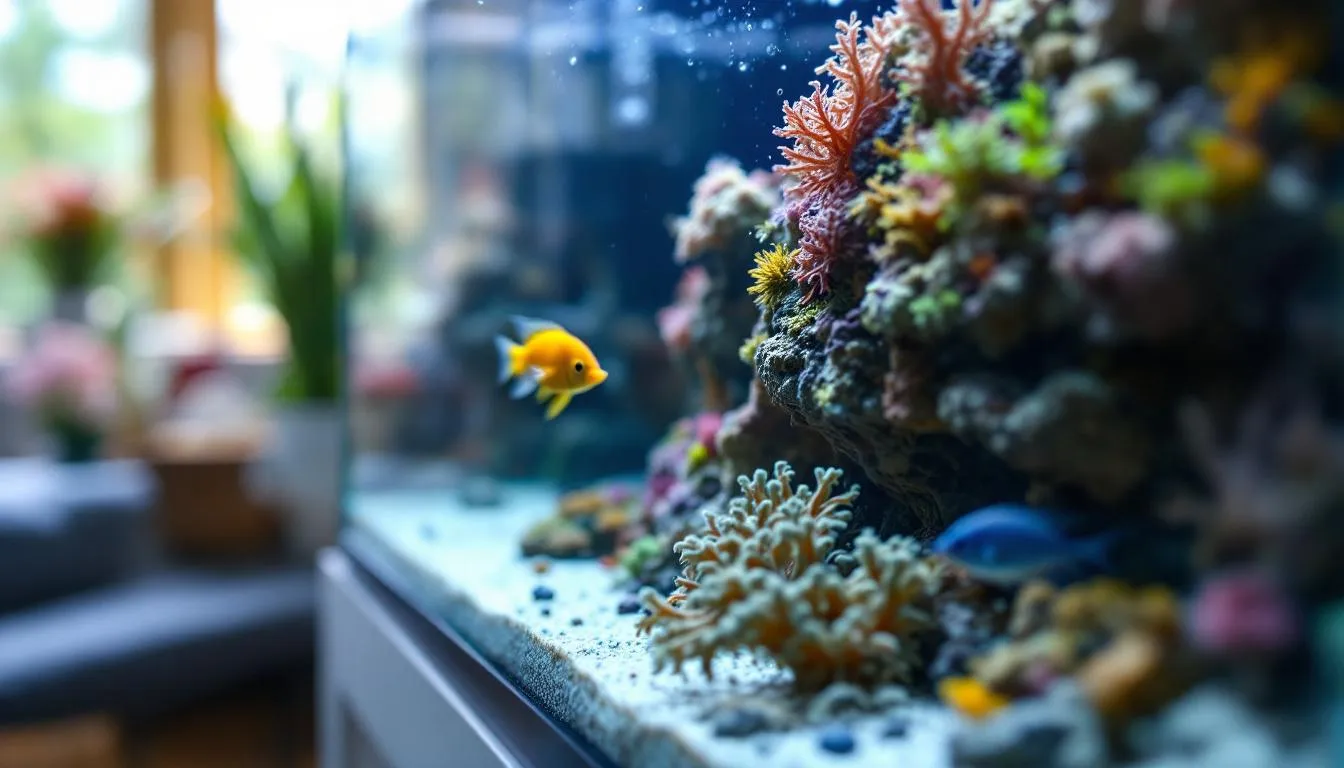
Table of Contents
What Is Saltwater Aquariums?
A saltwater aquarium is a glass or acrylic tank filled with synthetic ocean water, equipped with filtration, lighting, and temperature control to maintain living marine organisms — fish, corals, invertebrates, or all three. It’s essentially a miniature ocean ecosystem in your living room. The hobby ranges from simple fish-only setups to jaw-dropping reef tanks that rival the beauty of actual coral reefs, packed with living corals in electric blues, greens, pinks, and purples. It’s also one of the most demanding, expensive, and rewarding hobbies you can pursue.
Fish-Only vs. Reef
The two main types of saltwater aquariums have very different requirements and costs.
Fish-only (FOWLR — Fish Only With Live Rock) tanks keep marine fish with live rock (porous limestone colonized by beneficial bacteria and organisms) as the primary biological filtration. Lighting can be basic. Water chemistry doesn’t need to be as precise. These tanks are the entry point for most saltwater hobbyists. You can keep angelfish, tangs, wrasses, clownfish, and other marine fish without the complexity of coral care.
Reef tanks keep living corals alongside fish and invertebrates. This is where the hobby gets serious. Corals are living animals that need specific light spectrums (usually high-intensity LED fixtures costing $300-$1,000+), stable water chemistry (calcium, alkalinity, and magnesium must stay within narrow ranges), and strong water flow. A thriving reef tank is one of the most beautiful things you can create at home — and one of the most challenging to maintain.
Nano tanks (under 30 gallons) have become increasingly popular. Small all-in-one systems make saltwater accessible to people without space or budget for large setups. But smaller tanks are actually harder to keep stable — less water volume means faster changes in temperature and chemistry.
The Equipment
Setting up a saltwater aquarium requires more equipment than freshwater. Here’s what you need.
The tank. Glass or acrylic. Bigger is actually easier — larger water volume is more stable. A 40-75 gallon tank is ideal for beginners. Avoid tanks smaller than 20 gallons for your first saltwater setup unless you’re very disciplined about maintenance.
Filtration. Saltwater tanks use a combination of biological filtration (live rock and beneficial bacteria that convert toxic ammonia to less toxic nitrate), mechanical filtration (removing debris), and often a protein skimmer — a device that creates fine bubbles to remove dissolved organic waste before it breaks down. Protein skimmers are the single most important piece of equipment for saltwater tanks.
Lighting. Fish-only tanks need basic lighting. Reef tanks need specialized LED fixtures that provide the correct spectrum for coral photosynthesis — corals contain symbiotic algae (zooxanthellae) that photosynthesize and provide the coral with energy. Cheap lights grow algae. Good lights grow coral.
Heater and thermometer. Marine fish and corals need stable temperatures, typically 76-80°F. Temperature swings are a common cause of livestock stress and death.
Powerheads and wavemakers. Corals and fish need water movement — it delivers food, removes waste, and simulates natural ocean conditions. Reef tanks typically need 20-50x tank volume turnover per hour.
Test kits. You’ll test for salinity, pH, ammonia, nitrite, nitrate, and (for reef tanks) calcium, alkalinity, magnesium, and phosphate. Testing weekly is essential. Many hobbyists graduate to electronic monitors that provide continuous readings.
The Nitrogen Cycle
Before adding any fish, a new saltwater tank must “cycle” — establishing colonies of beneficial bacteria that process waste. Fish produce ammonia (toxic). Bacteria convert ammonia to nitrite (also toxic). Other bacteria convert nitrite to nitrate (much less toxic, removed by water changes).
This cycle takes 4-8 weeks. It’s boring. It requires patience. And skipping it kills fish. Many beginners add fish too soon, creating toxic conditions that stress or kill their livestock. The cycling process is the first test of whether you have the patience for this hobby.
The Livestock
Marine fish are stunning. Electric blue tangs, flame angelfish, mandarin dragonets, royal grammas — the color palette of a coral reef is genuinely otherworldly. But marine fish have specific requirements.
Compatibility matters. Some fish are aggressive. Some are territorial. Some will eat corals. Some need to be the only one of their species in the tank. Researching compatibility before buying is essential — adding a beautiful fish that terrorizes everything else in the tank is expensive and frustrating.
Tank size requirements. A yellow tang needs at least 75 gallons. A blue hippo tang needs 120+. Many fish sold in stores will outgrow small tanks. This is the most common beginner mistake — buying fish that need more space than you can provide.
Captive-bred vs. wild-caught. Captive-bred fish (clownfish, dottybacks, some gobies) are hardier, more disease-resistant, and don’t impact wild populations. Wild-caught fish are often stressed from collection and shipping, and some are caught using cyanide (an illegal but still practiced method in some regions). Buying captive-bred when possible is better for the fish and better for the ocean.
Corals are classified as soft corals (easier, more forgiving), LPS (Large Polyp Stony — moderate difficulty), and SPS (Small Polyp Stony — demanding, requiring excellent water quality and intense lighting). Start with soft corals and work your way up.
The Maintenance Routine
A well-maintained saltwater aquarium requires consistent attention.
Daily: Feed fish (small amounts, twice daily is better than one large feeding). Check temperature. Look at livestock for signs of disease or stress. Top off evaporated water with fresh (not salt) water — only water evaporates, leaving salt behind, so you replace with freshwater to maintain salinity.
Weekly: Test water parameters. Perform a 10-20% water change with properly mixed saltwater. Clean the glass. Empty the protein skimmer collection cup.
Monthly: Clean equipment. Replace filter media if needed. Dose supplements (calcium, alkalinity) for reef tanks.
This routine takes 30-60 minutes per week once established. The first few months require more attention as the tank matures and stabilizes.
The Honest Truth
Saltwater aquariums are more expensive, more demanding, and more frustrating than freshwater. Fish will die despite your best efforts. Equipment will fail at the worst possible time. Algae will grow where you don’t want it. You’ll spend money you didn’t plan to spend.
But a thriving saltwater aquarium — especially a reef tank — is genuinely one of the most beautiful things you can have in your home. Watching fish glide through living coral under blue light, seeing a coral extend its feeding tentacles at night, watching a cleaner shrimp pick parasites off a fish — it’s a window into a world most people only see on nature documentaries. The complexity is the cost of admission. For the people who stick with it, it’s worth every bit of effort.
Frequently Asked Questions
How much does a saltwater aquarium cost?
A basic fish-only saltwater setup (30-55 gallon tank with equipment) costs $500-$1,500 to start. A reef tank with corals costs $1,500-$5,000+ depending on size, lighting, and livestock. Ongoing monthly costs (salt mix, water, electricity, food, supplements) run $30-$100+. Fish cost $10-$300+ each; corals range from $20 to several hundred dollars per piece. The honest answer is that saltwater aquariums are significantly more expensive than freshwater in both setup and maintenance.
Is a saltwater aquarium hard to maintain?
Harder than freshwater, yes, but not impossibly so. The main challenge is maintaining stable water chemistry — salinity, pH, alkalinity, calcium, magnesium, nitrate, and phosphate all need to stay within specific ranges. Weekly water changes (10-20% of tank volume with properly mixed saltwater) and regular testing are essential. Reef tanks with corals demand more precision than fish-only tanks. Automated equipment (auto-top-off systems, dosing pumps) has made maintenance much easier than it was a decade ago.
Can you keep a clownfish (like Nemo) in a saltwater aquarium?
Yes, clownfish are actually one of the best saltwater fish for beginners. They're hardy, captive-bred (so no wild collection impact), affordable ($15-$40), and don't need a large tank — a pair can thrive in a 20-gallon tank. They will host in anemones, but they don't require one — they'll happily adopt certain corals or even a powerhead as their 'home.' After Finding Nemo (2003), clownfish became the most popular marine aquarium fish, and the demand for captive-bred specimens actually helped advance marine fish breeding.
Further Reading
Cite this article
APA
WhatIs.site. (2025). What Is Saltwater Aquariums?. Retrieved May 27, 2026, from https://whatis.site/saltwater-aquariums MLA
"What Is Saltwater Aquariums?." WhatIs.site, July 15, 2025, https://whatis.site/saltwater-aquariums. Accessed May 27, 2026. Chicago
WhatIs.site. "What Is Saltwater Aquariums?." Last modified May 12, 2026. https://whatis.site/saltwater-aquariums. HTML
<a href="https://whatis.site/saltwater-aquariums">What Is Saltwater Aquariums?</a> — WhatIs.site Related Articles
What Is Reptile Keeping?
Reptile keeping is the hobby of maintaining reptiles — lizards, snakes, turtles, tortoises, and crocodilians — as captive animals, typically as pets.
everyday conceptsWhat Is Recycling?
Recycling is the process of collecting waste materials and converting them into new products instead of discarding them in landfills or incinerators.
scienceWhat Is Animal Behavior?
Animal behavior is the scientific study of how animals act, interact, and respond to their environment — covering instinct, learning, and communication.
scienceWhat Is Anatomy?
Anatomy is the study of body structure in living organisms. Learn about gross and microscopic anatomy, organ systems, history, and why it matters in medicine.
scienceWhat Is Agriculture?
Agriculture is the practice of cultivating plants, raising animals, and processing natural resources to produce food, fiber, and fuel.