 WhatIs.site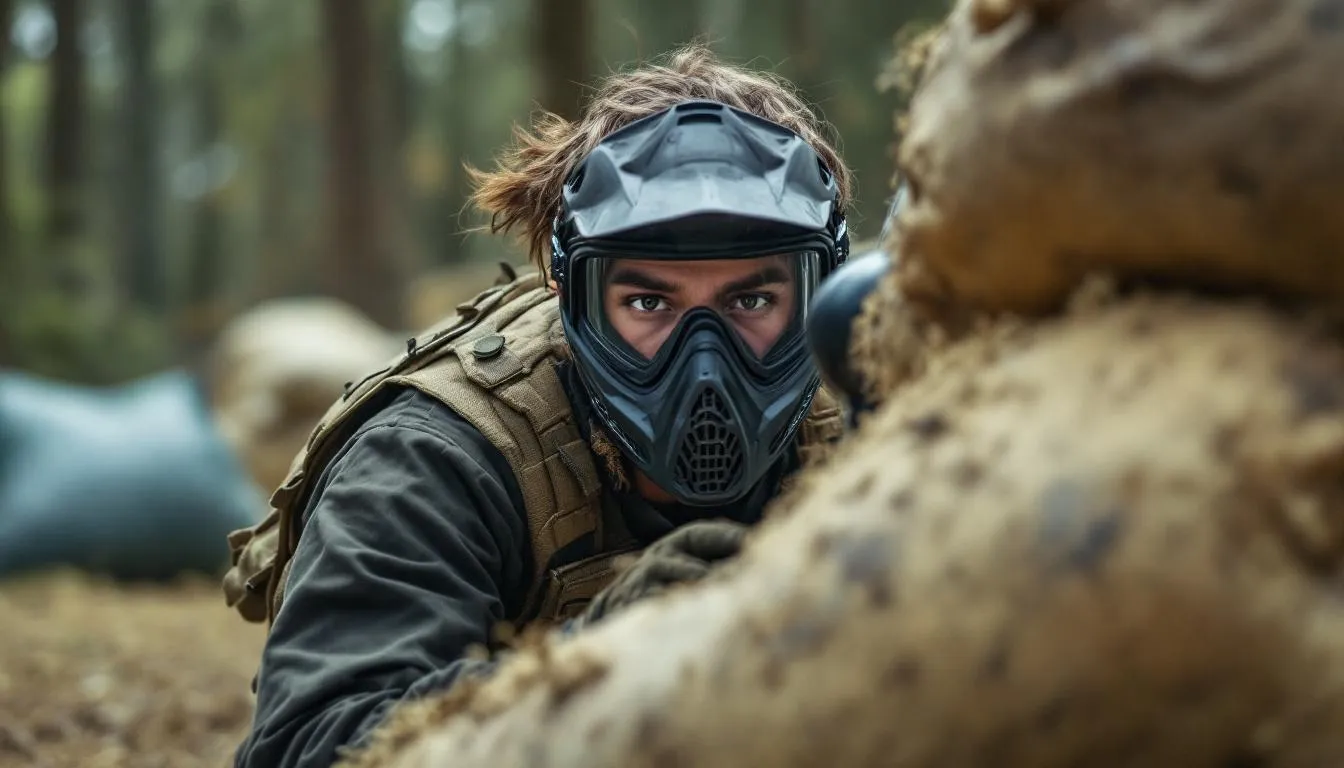
Table of Contents
What Is Paintball?
Paintball is a competitive sport in which players use compressed-air-powered markers to shoot gelatin capsules filled with water-soluble paint at opponents. When a paintball hits a player and breaks, it leaves a visible paint splatter — and that player is eliminated from the round. It’s essentially organized tag with paint and protective gear, played on fields ranging from wooded outdoor courses to inflatable bunker arenas.
How It Started
The first paintball game took place on June 7, 1981, in Henniker, New Hampshire. Twelve friends used forestry marking guns — devices designed to mark trees for logging — to play a capture-the-flag game across 80 acres of woods. The idea came from a debate between a stockbroker and a writer about whether street smarts or wilderness instincts would prevail in a survival scenario. They decided to settle it with paint.
The concept caught on fast. Commercial paintball fields opened within a year. Purpose-built paintball markers replaced forestry guns. The National Survival Game (the first organized paintball league) formed in 1982. By the late 1980s, paintball was a recognized sport with organized tournaments.
Today, the global paintball industry generates an estimated $1-2 billion annually. Roughly 5 million Americans play at least once a year, and the sport has spread worldwide.
How the Game Works
The basic format is simple: two teams start on opposite sides of a field, and the objective is to eliminate opponents by marking them with paint or complete a specific mission (capture a flag, control a point, etc.).
Elimination — hit an opponent, they’re out. A player is eliminated when a paintball hits them and breaks, leaving a visible mark. “Splatter” that bounces off without breaking doesn’t count. Players call themselves out on the honor system in recreational play; referees judge in competitive matches.
Game types include capture the flag (grab the opposing team’s flag and return it to your base), elimination (last team standing wins), attack/defend (one team assaults a position, the other defends), and various scenario-based formats.
Field types vary widely. Woodsball uses natural terrain — trees, hills, streams, and natural cover. Speedball uses a flat field with identical inflatable bunkers arranged symmetrically, emphasizing fast-paced action and teamwork. Scenario paintball creates large-scale events with hundreds of players, themed storylines, and objectives that play out over hours.
The Equipment
Markers (the industry’s preferred term over “guns”) use compressed air or CO2 to propel paintballs at velocities capped at 280-300 feet per second — fast enough to break on impact but generally safe at typical engagement distances. Markers range from basic mechanical rental guns to electronic tournament markers firing 15+ balls per second.
Paintballs are .68 caliber gelatin capsules filled with water-soluble, non-toxic paint. They’re biodegradable and wash out of clothing (usually). Quality varies — tournament-grade paint is rounder and more consistent, while recreational paint is cheaper but less accurate.
Goggles/masks are the single most important piece of equipment. Rated paintball masks protect eyes, face, and ears from impacts. They are absolutely mandatory on every field, no exceptions. A paintball to an unprotected eye can cause permanent blindness. This is the one safety rule that has zero tolerance — your mask stays on whenever you’re on the field with loaded markers.
Clothing should cover exposed skin. Long sleeves, pants, and gloves reduce the sting of impacts. Many players wear padded jerseys or chest protectors. Dark or camouflage clothing helps in woodsball; bright jerseys are standard in competitive speedball.
The Competitive Scene
Organized paintball competition operates at local, regional, national, and international levels. The two main competitive formats are:
5-man speedball is the most common tournament format. Two teams of five play on a symmetrical field of inflatable bunkers. Games are fast — typically 2-5 minutes — and decided by flag captures or eliminations. Professional leagues include the National Xball League (NXL).
10-man and scenario events are larger-format competitions emphasizing strategy, communication, and sustained play. Events like Oklahoma D-Day and Living Legends draw thousands of players for multi-day scenarios.
Professional paintball players train seriously — physical fitness, marker handling, snap shooting, communication, and coordinated team movements. Top teams practice several days a week and travel nationally for events.
The Culture
Paintball culture spans a wide spectrum. Casual players show up at commercial fields a few times a year for birthday parties or team-building events. Regular players invest in equipment and play weekly. Competitive players train, travel, and compete with the dedication of any amateur athlete.
The sport has a strong military/tactical aesthetic that attracts some players and puts off others. Woodsball players often wear camouflage and military-style gear. Speedball culture leans more toward athletic wear with team jerseys and bright colors.
There’s a notable emphasis on sportsmanship and safety culture. Fields enforce strict rules about velocity limits, barrel covers in safe zones, and mask requirements. The community generally self-polices — cheating (wiping paint off to avoid elimination) is universally despised and can get you banned from fields.
Is It Worth Trying?
If you’ve never played, a day of recreational paintball is one of the most fun things you can do outdoors. The combination of physical activity, strategy, teamwork, and adrenaline is hard to replicate in any other sport. Yes, getting hit stings briefly. But five minutes into your first game, you’ll be too focused on the action to worry about it.
Most commercial fields offer rental packages that include everything you need. Bring friends, wear clothes you don’t mind getting paint on, stay hydrated, and keep your mask on. That’s really all there is to it.
Frequently Asked Questions
Does paintball hurt?
Yes, but usually not as much as people fear. A paintball impact feels like a firm flick or a snapping rubber band. The pain is brief — a sting lasting a few seconds. Hits on bare skin leave welts or bruises that fade within days. Wearing appropriate clothing (long sleeves, layers) and protective gear significantly reduces discomfort. Most players report that the anticipation is worse than the actual hit.
How safe is paintball?
Paintball has a lower injury rate per participant than many mainstream sports including football, soccer, and basketball. Eye protection is mandatory and is the single most important safety measure — paintball goggles are designed to withstand impacts at 300+ fps. Most injuries are minor bruises, sprains from running on uneven terrain, or heat-related issues. Serious injuries are rare when safety rules are followed.
What equipment do you need for paintball?
Essential equipment includes a paintball marker (gun), a hopper (holds paintballs), a compressed air or CO2 tank, paintball-rated goggles or mask (required), and appropriate clothing. Rental packages at fields typically include everything you need for $30-$60 per session. Serious players invest in their own markers ($200-$1,500+), upgraded masks, and tactical gear.
Further Reading
Cite this article
APA
WhatIs.site. (2025). What Is Paintball?. Retrieved May 27, 2026, from https://whatis.site/paintball MLA
"What Is Paintball?." WhatIs.site, July 15, 2025, https://whatis.site/paintball. Accessed May 27, 2026. Chicago
WhatIs.site. "What Is Paintball?." Last modified May 12, 2026. https://whatis.site/paintball. HTML
<a href="https://whatis.site/paintball">What Is Paintball?</a> — WhatIs.site