 WhatIs.site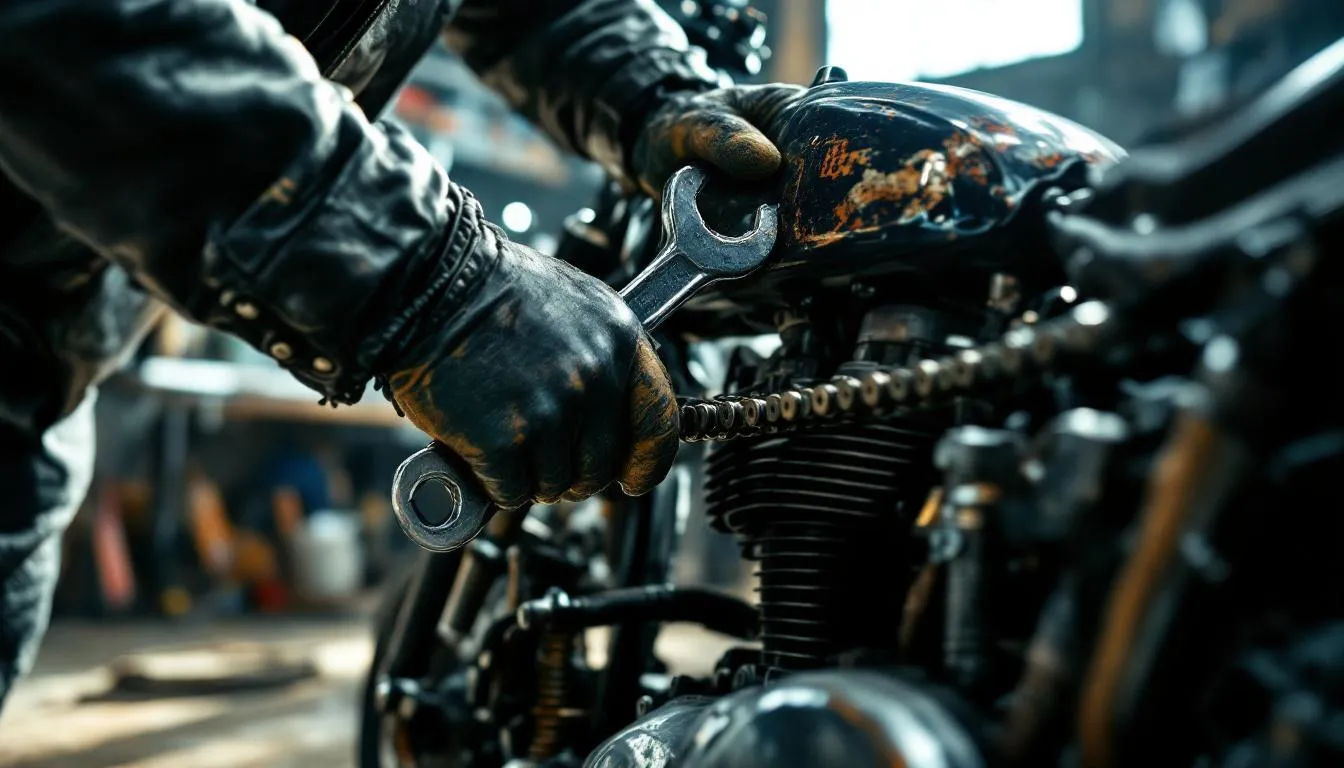
Table of Contents
What Is Motorcycle Maintenance?
Motorcycle maintenance is the regular care, inspection, and repair of motorcycles to keep them running safely, reliably, and efficiently. Unlike cars — which can often tolerate neglected maintenance for thousands of miles — motorcycles are less forgiving. They have fewer safety margins, more exposed components, and two-wheeled dynamics that demand everything works correctly.
A well-maintained motorcycle is a joy to ride. A poorly maintained one is a hazard. Given that motorcyclists are roughly 29 times more likely per mile traveled to die in a crash than car occupants (according to NHTSA), maintenance isn’t optional — it’s survival.
The Essential Tasks
Pre-Ride Checks (Every Ride)
Before you start the engine, spend 60 seconds checking: tire pressure and condition, oil level, chain tension and lubrication (if chain-driven), brake lever and pedal feel, lights and turn signals, and coolant level (liquid-cooled bikes). The acronym T-CLOCS (Tires/wheels, Controls, Lights, Oil, Chassis, Stands) covers the complete pre-ride inspection.
Oil Changes (Every 3,000-5,000 Miles)
Motorcycle engines run at higher RPMs and temperatures than car engines, demanding more from their oil. Regular changes with manufacturer-specified oil and filter keep the engine protected. This is the most common DIY maintenance task — it requires minimal tools, takes about 30 minutes, and saves $50-100 versus shop prices.
Chain Maintenance (Every 300-600 Miles)
Chain-drive motorcycles need regular chain cleaning (with chain-specific cleaner, not WD-40), lubrication, and tension adjustment. A neglected chain wears faster, reduces power delivery, and can break catastrophically. Shaft-drive and belt-drive bikes avoid this maintenance entirely.
Brake Inspection
Check brake pad thickness, disc condition, and brake fluid level regularly. Brake fluid absorbs moisture over time, reducing its boiling point — flush and replace brake fluid every 1-2 years. Spongy brake lever feel demands immediate attention.
Air Filter
A dirty air filter restricts airflow and reduces performance. Paper filters are replaced; reusable filters are cleaned and re-oiled. Check every 5,000-10,000 miles depending on riding conditions.
Coolant (Liquid-Cooled Bikes)
Check coolant level regularly and flush/replace every 2 years or per manufacturer specs. Overheating can cause catastrophic engine damage. Air-cooled bikes rely on ambient airflow and don’t have coolant systems.
Valve Adjustment
Engine valves need periodic clearance checking and adjustment — typically every 10,000-26,000 miles depending on the engine. This is one of the more complex maintenance tasks, requiring feeler gauges and often significant disassembly. Many riders have this done at a shop.
Tools for DIY Maintenance
A basic motorcycle tool kit includes: metric socket set, combination wrenches, hex key set, torque wrench, chain cleaning brush and lubricant, oil filter wrench, tire pressure gauge, paddock stand or center stand, and the factory service manual for your specific model.
The service manual is the single most important tool. It provides torque specifications, fluid capacities, maintenance intervals, and step-by-step procedures specific to your motorcycle. Generic advice doesn’t cut it — a sportbike, cruiser, and adventure bike have different requirements.
When to See a Professional
Some tasks exceed most home mechanics’ capabilities or require specialized equipment: suspension rebuilds, electrical diagnostics, fuel injection tuning, wheel bearing replacement, and major engine work. There’s no shame in having a professional handle complex jobs — the cost of getting it wrong on a motorcycle is measured in more than dollars.
Find a reputable independent shop or dealer service department. Ask riding community forums for recommendations. A good mechanic is worth their weight in motorcycle parts.
The Philosophy
Robert Pirsig’s Zen and the Art of Motorcycle Maintenance (1974) used motorcycle care as a metaphor for quality, attention, and the relationship between human and machine. The metaphor works because motorcycle maintenance genuinely rewards attentiveness. When you maintain your own motorcycle, you develop an intimate understanding of how it works, what’s normal and what’s not, and how your actions affect its performance.
You don’t have to wrench on your own bike. But if you ride one, understanding what keeps it running — and what happens when maintenance is neglected — makes you a safer, more confident rider. The motorcycle gives you everything it has. The least you can do is keep it in shape to do so.
Frequently Asked Questions
How often should a motorcycle be serviced?
Most manufacturers recommend service intervals of every 3,000-6,000 miles or annually, whichever comes first. Oil changes are typically needed every 3,000-5,000 miles. Chain maintenance (cleaning and lubrication) should happen every 300-600 miles. Tire pressure should be checked before every ride. Always consult your owner's manual for specific intervals.
Can I do motorcycle maintenance myself?
Many basic tasks are DIY-friendly: oil changes, chain cleaning and adjustment, air filter replacement, brake pad inspection, and tire pressure checks. More complex work — valve adjustments, suspension tuning, electrical diagnostics — typically requires specialized tools and knowledge. A factory service manual for your specific model is essential for DIY maintenance.
What is the most important maintenance task?
Tire condition and pressure. Motorcycles have only two contact patches with the road, each about the size of a credit card. Under-inflated, worn, or damaged tires dramatically increase crash risk. Check pressure before every ride and inspect tread and sidewalls regularly. After tires, chain condition and brake function are the next priorities.
Further Reading
Cite this article
APA
WhatIs.site. (2025). What Is Motorcycle Maintenance?. Retrieved May 27, 2026, from https://whatis.site/motorcycle-maintenance MLA
"What Is Motorcycle Maintenance?." WhatIs.site, July 15, 2025, https://whatis.site/motorcycle-maintenance. Accessed May 27, 2026. Chicago
WhatIs.site. "What Is Motorcycle Maintenance?." Last modified May 12, 2026. https://whatis.site/motorcycle-maintenance. HTML
<a href="https://whatis.site/motorcycle-maintenance">What Is Motorcycle Maintenance?</a> — WhatIs.site Related Articles
What Is Automotive Engineering?
Automotive engineering is the branch of engineering focused on designing, developing, and manufacturing vehicles. Learn about powertrains, safety, and EVs.
technologyWhat Is Mechanical Engineering?
Mechanical engineering is the branch of engineering that deals with the design, analysis, manufacturing, and maintenance of mechanical systems.
sportsWhat Is Motorcycle Racing?
Motorcycle racing is competitive motorsport on two-wheeled vehicles, encompassing everything from grand prix circuit racing at 220 mph to motocross riders.