 WhatIs.site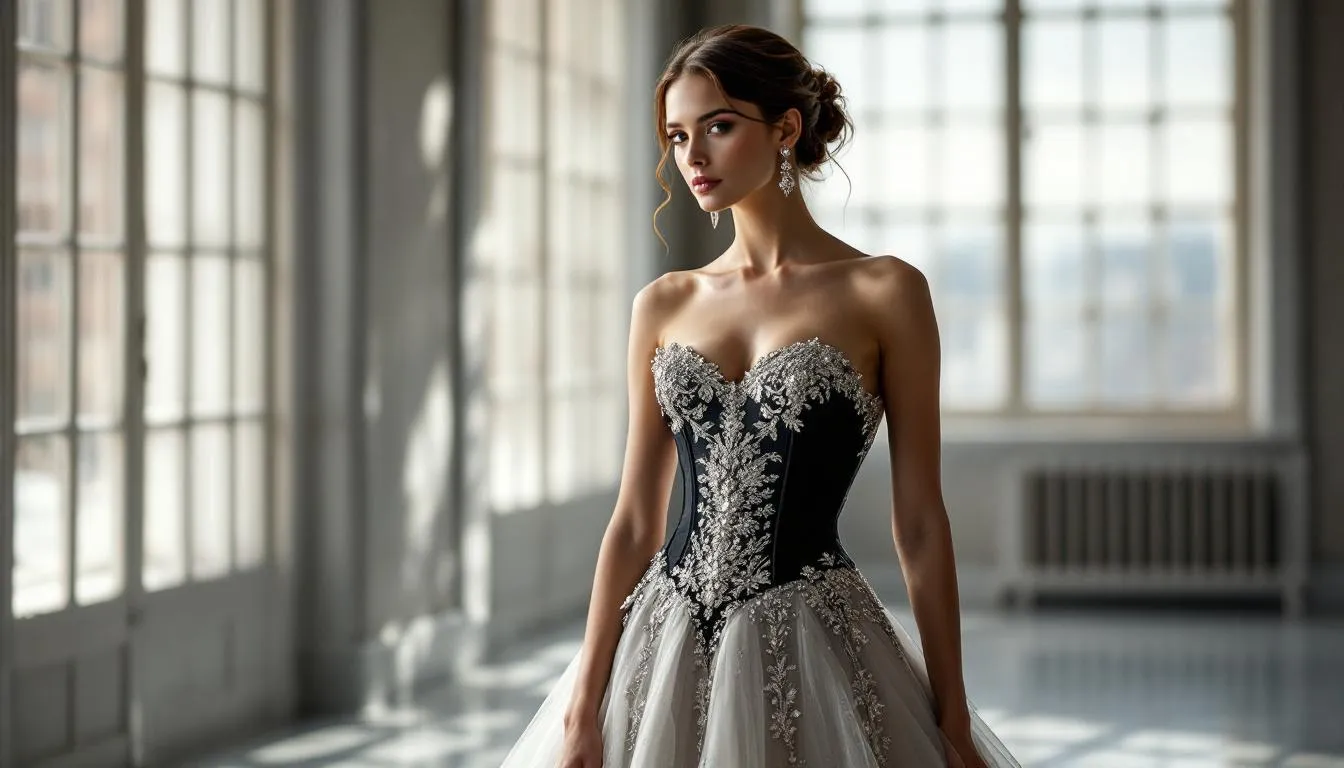
Table of Contents
What Is Haute Couture?
Haute couture — French for “high dressmaking” — is the pinnacle of fashion craftsmanship. These are one-of-a-kind garments designed for specific clients, sewn entirely by hand in Parisian ateliers, and governed by regulations so strict that the term is legally protected in France. Only a handful of fashion houses on the planet are allowed to call their work haute couture.
The Rules Are Surprisingly Rigid
This is not a casual label. The French Ministry of Industry, through the Chambre Syndicale de la Haute Couture, sets specific criteria that a fashion house must meet:
- Maintain an atelier (workshop) in Paris with at least 15 full-time employees
- Present a collection of at least 25 original designs twice per year (January and July) during Paris Couture Week
- Create made-to-order garments with one or more fittings for private clients
Break these rules and you lose the designation. It is not a style or an aesthetic — it is a regulated standard, more like an appellation for wine than a marketing term.
As of 2025, only about 15 to 17 houses hold full member status. The list includes names you would expect: Chanel, Dior, Givenchy, Jean Paul Gaultier, Valentino, Schiaparelli. A few guest and correspondent members — often newer or international designers — also show during couture week but under different classification.
What Makes It So Expensive
A single haute couture gown can take 800 to 2,000 hours to produce. That is not an exaggeration — it is the documented average for houses like Chanel and Dior. Here is where all those hours go:
Fabric selection involves choosing from the finest materials available — silk from specific Italian mills, lace from Calais or Chantilly, custom-woven textiles that may be produced in runs of just a few meters.
Pattern making starts from scratch for each client. The house builds a custom dress form (or uses a mannequin adjusted to the client’s exact measurements). There are typically three to five fittings, each involving modifications down to the millimeter.
Handwork is where the real time accumulates. Embroidery, beading, featherwork, and other embellishments are done entirely by hand, often by specialized artisan workshops called metiers d’art. Chanel owns several of these workshops — Lesage for embroidery, Lemarie for feathers and flowers, Massaro for shoes — specifically to preserve these craft traditions.
The result? Prices that start around $10,000 for a relatively simple piece and frequently exceed $100,000. Some elaborate gowns top $500,000. The client base is estimated at fewer than 4,000 people worldwide.
A Brief History
Charles Frederick Worth, an Englishman working in Paris, is generally credited with inventing haute couture in the 1850s. Before Worth, dressmakers were anonymous craftspeople who followed their clients’ instructions. Worth flipped that active — he designed collections, showed them on live models, and told clients what they should wear. He was, effectively, the first fashion designer in the modern sense.
The Chambre Syndicale was established in 1868 to regulate the industry, and Paris became the undisputed center of high fashion. The early 20th century brought Coco Chanel, Christian Dior, Cristobal Balenciaga, and Yves Saint Laurent — designers whose couture work defined entire decades of style.
The 1960s nearly killed it. Ready-to-wear fashion exploded, youth culture rejected formality, and the client base shrank dramatically. By the 1990s, many industry observers predicted haute couture would die entirely. It didn’t — but it changed purpose.
Why It Still Exists
Here is the honest truth: almost no fashion house makes money from couture itself. The economics do not work when you are paying 20 seamstresses for months to produce one dress for one person.
So why bother? Because haute couture functions as the ultimate brand-building exercise. Those spectacular runway shows — which cost $1 million or more to stage — generate massive media coverage that sells perfume, handbags, cosmetics, and ready-to-wear clothing. When Dior shows a $300,000 ballgown at couture week, they are really selling $50 lipsticks and $3,000 bags to millions of consumers who will never set foot in the atelier.
The shows also serve as laboratories. Ideas that debut on the couture runway often trickle down — in simplified, mass-producible forms — to ready-to-wear collections and eventually to fast fashion. A silhouette that appears in couture in January might appear in a Zara store eighteen months later.
The Artisans Behind the Seams
The real story of haute couture is not the designers — it is the petites mains (literally “little hands”), the highly skilled artisans who execute the work. These craftspeople train for years in specific disciplines: embroidery, pleating, tailoring, millinery, glove-making. Many work in the same ateliers their entire careers.
France has recognized several of these workshops as Entreprises du Patrimoine Vivant (Living Heritage Companies), acknowledging their role in preserving traditional craft skills. The concern is real — as older artisans retire, finding young replacements willing to do painstaking handwork for modest pay gets harder. Some houses have started their own training programs to address the gap.
Couture in the Modern Era
Today’s couture week looks quite different from its mid-century heyday. Social media has turned runway shows into global spectacles. Celebrity clients — who receive dresses for free in exchange for wearing them to red-carpet events — have become crucial marketing tools. And some designers, like Iris van Herpen, use 3D printing and laser cutting alongside traditional handwork, pushing the definition of “craftsmanship” into new territory.
The tension between tradition and experimentation is what keeps haute couture interesting. It is simultaneously the most conservative and the most experimental corner of fashion — bound by century-old regulations but free from commercial pressure to produce wearable, sellable clothing. When a couture designer sends a model down the runway in an unwearable sculpture made of optical fibers, they are asking a question about what clothing can be. That question, more than the garments themselves, is what haute couture is really about.
Frequently Asked Questions
How much does a haute couture dress cost?
Prices typically start around $10,000 for a simple cocktail dress and can exceed $100,000 for an elaborate gown. Some runway showpieces with extensive beading or embroidery cost over $500,000. The price reflects hundreds or thousands of hours of handwork by specialized artisans.
How many haute couture houses exist today?
As of 2025, the Chambre Syndicale officially designates roughly 15 to 17 member houses as haute couture, including Chanel, Dior, Givenchy, and Valentino. A small number of guest and correspondent members also show during couture week.
Can anyone call their clothing haute couture?
In France, no. The term is legally protected. A fashion house must meet strict criteria set by the Chambre Syndicale de la Haute Couture, including maintaining a Paris atelier with at least 15 full-time staff and producing a minimum number of original designs per season.
Further Reading
Cite this article
APA
WhatIs.site. (2025). What Is Haute Couture?. Retrieved May 27, 2026, from https://whatis.site/haute-couture MLA
"What Is Haute Couture?." WhatIs.site, July 15, 2025, https://whatis.site/haute-couture. Accessed May 27, 2026. Chicago
WhatIs.site. "What Is Haute Couture?." Last modified May 12, 2026. https://whatis.site/haute-couture. HTML
<a href="https://whatis.site/haute-couture">What Is Haute Couture?</a> — WhatIs.site Related Articles
What Is Interior Design?
Interior design is the art and science of creating interior spaces that are functional, safe, and aesthetically pleasing.
arts amp cultureWhat Is Illustration?
Illustration is visual art created to explain, decorate, or tell stories alongside text. Learn about styles, careers, and the shift from print to digital.
philosophyWhat Is Aesthetics?
Aesthetics is the branch of philosophy studying beauty, taste, and art. Learn its history, key thinkers, and why it still shapes how we see the world.
arts amp cultureWhat Is Men's Fashion?
Men's fashion is the design, production, and cultural expression of clothing for men. Learn about history, styles, industry trends, and key designers.