 WhatIs.site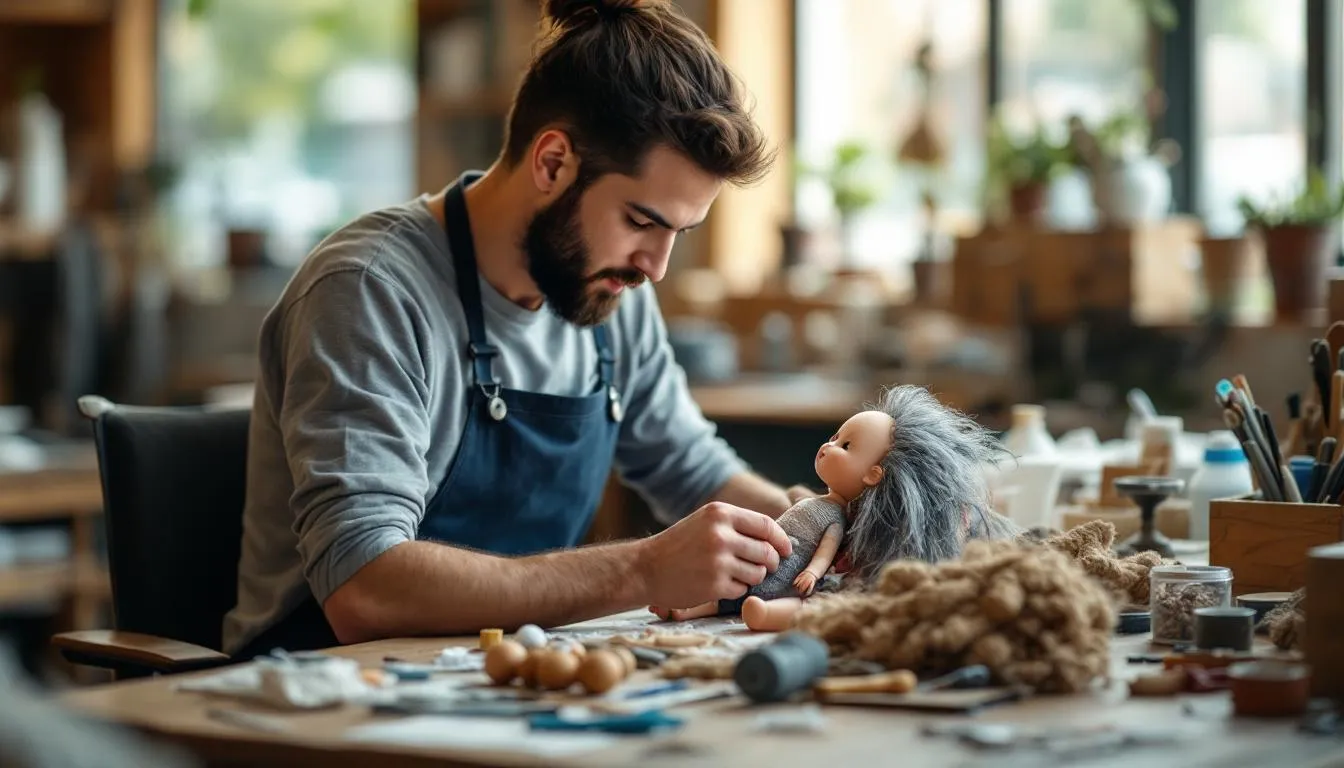
Table of Contents
What Is Doll Making?
Doll making is the craft of creating human or humanoid figures from materials like fabric, clay, porcelain, wood, or resin. It ranges from simple sewn rag dolls to hyper-realistic sculpted figures that blur the line between toy and fine art. Humans have been making dolls for at least 4,000 years — they’re among the oldest known manufactured objects — and the craft remains vibrant today, sustained by artisan makers, collectors, and a renewed appreciation for handmade objects.
Ancient Roots
The oldest known dolls date to around 2000 BC — flat wooden paddle dolls from Egyptian tombs, with geometric painted features and string hair. Whether they were children’s toys, ritual objects, or funeral offerings (probably all three) is debated, but their existence tells us something fundamental: humans have always felt compelled to create small human figures.
Greek and Roman children played with jointed dolls made from clay, wood, bone, and ivory — some with movable arms and legs. Japanese Hina dolls (dating to at least the Heian period, 794-1185 AD) served ceremonial purposes, displayed annually during the Hina Matsuri festival. African carved figures, Inuit bone dolls, and Mesoamerican clay figurines all demonstrate that doll making is genuinely universal.
The dolls people make reflect what those people value. Victorian porcelain dolls embodied idealized femininity. Kachina dolls of the Hopi represent spiritual beings. Fashion dolls from 18th-century France served as miniature mannequins displaying the latest styles to international customers. The doll is a cultural mirror.
Materials and Techniques
Cloth and fabric dolls are the most accessible starting point. Patterns range from simple flat shapes (like traditional Amish dolls, intentionally faceless) to complex three-dimensional soft sculpture with wire armatures, needle-sculpted features, and elaborate costuming. Waldorf dolls, with their simple knit bodies and minimal features, encourage imaginative play through deliberate simplicity.
Polymer clay (brands like Sculpey and Fimo) revolutionized artisan doll making when it became widely available in the 1980s. It cures in a home oven, takes fine detail, and can be sanded, painted, and finished to remarkable smoothness. Many modern art dollmakers sculpt heads and hands from polymer clay while using fabric for bodies.
Porcelain is the traditional fine doll material. The process involves pouring liquid porcelain (slip) into plaster molds, drying, firing in a kiln at 2,300°F, painting features with china paints, and firing again. It’s time-intensive and requires specialized equipment, but porcelain’s luminous, skin-like quality is unmatched by other materials.
Wood carving produces folk dolls with distinctive character — German nutcrackers, Russian nesting dolls (matryoshka), Pinocchio-style jointed figures, and the whittled folk dolls of Appalachian tradition. Each carving tradition carries the aesthetic sensibility of its culture.
Resin casting allows makers to produce limited editions from original sculpts. The artist creates a master in clay, makes a silicone mold, and casts copies in resin. Ball-jointed dolls (BJDs) — strung with elastic so every joint poses — are commonly produced this way and have a passionate global collecting community.
The Art Doll Movement
Starting in the 1970s, doll making began gaining recognition as a legitimate art form rather than merely a craft or toy-making activity. The National Institute of American Doll Artists (NIADA), founded in 1963, promotes dolls as art and juried exhibitions showcase work of extraordinary technical and artistic merit.
Art dolls today occupy galleries, museums, and high-end collectors’ shelves. Artists like Lisa Lichtenfels (soft sculpture figures so realistic they’re unsettling), Marina Bychkova (porcelain dolls exploring themes of beauty and vulnerability), and Virginie Ropars (ethereal polymer clay figures) have elevated doll making to fine art status with price tags to match.
The line between doll and sculpture is genuinely blurry. When does a figurative sculpture become a doll? Is it about materials? Jointing? Intent? The doll-making community generally embraces the ambiguity — what matters is the work, not the category.
Ball-Jointed Dolls
The BJD community deserves special mention because it represents one of the most active and creative segments of modern doll culture. These dolls — typically 20-70 cm tall, with multiple points of articulation strung with internal elastic — originated in Asian doll companies (Volks, Fairyland, Iplehouse) but now include makers worldwide.
BJD culture is participatory. Owners customize their dolls extensively — face-ups (painting), wig styling, eye changes, body modifications, and elaborate costuming. Photography of BJDs constitutes its own art form. Online communities share customization techniques, commission face-up artists, and organize meetups.
A single BJD costs $200-$1,000+ from commercial makers, and owners routinely invest comparable amounts in customization. The community is global, predominantly female, and remarkably welcoming to newcomers.
Getting Started
Doll making requires patience more than talent. Your first doll will be clumsy — everyone’s is. The materials are forgiving (especially fabric and polymer clay), the tools are inexpensive, and the online instruction available is extraordinary.
Start with what appeals to you. If you sew, try a cloth doll pattern. If you’re drawn to sculpting, pick up some polymer clay and follow a face-sculpting tutorial. If you want something between a kit and scratch-building, BJD face-up customization lets you practice painting and finishing on a professionally made form.
The community is one of doll making’s greatest assets. Forums, Instagram accounts, Facebook groups, and YouTube channels offer endless inspiration, instruction, and encouragement. Doll making is a craft that rewards obsession — the more you look at dolls, the more you notice details, the more your own work improves. It’s a slow art, and that slowness is part of its charm.
Frequently Asked Questions
What materials are used for making dolls?
Common materials include polymer clay (Sculpey, Fimo), porcelain (traditional fine dolls), fabric and cloth (rag dolls, soft sculpture), wood (carved folk dolls), bisque (unglazed porcelain), resin (cast in molds), papier-mache, wax, and corn husks. Modern artisan dollmakers also use air-dry clay, silicone (for hyper-realistic dolls), and 3D-printed components. Material choice depends on the style, intended use, and maker's expertise.
How much are handmade dolls worth?
Artisan doll prices range enormously. Simple cloth dolls sell for 25-75 dollars. Polymer clay art dolls range from 100 to 1,000+ dollars depending on detail and the artist's reputation. Porcelain dolls by established artists command 500 to 5,000 dollars. Ball-jointed dolls (BJDs) from independent makers sell for 300 to 2,000 dollars. Exceptional one-of-a-kind art dolls by renowned artists can sell for 10,000 dollars or more at auction or through galleries.
How do you start making dolls?
Begin with cloth dolls or polymer clay — both are forgiving materials with low startup costs. Online tutorials (YouTube, Craftsy, Skillshare) cover basic techniques. Start with a simple pattern or a basic sculpted head, and expect your first attempts to look rough. Join doll-making communities online (Instagram, Facebook groups, doll forums) for feedback and inspiration. A basic polymer clay starter kit costs about 30-50 dollars; fabric doll supplies are even less.
Further Reading
Cite this article
APA
WhatIs.site. (2025). What Is Doll Making?. Retrieved May 27, 2026, from https://whatis.site/doll-making MLA
"What Is Doll Making?." WhatIs.site, July 15, 2025, https://whatis.site/doll-making. Accessed May 27, 2026. Chicago
WhatIs.site. "What Is Doll Making?." Last modified May 12, 2026. https://whatis.site/doll-making. HTML
<a href="https://whatis.site/doll-making">What Is Doll Making?</a> — WhatIs.site Related Articles
What Is Sewing?
Sewing is the craft of joining pieces of fabric or other materials using needle and thread — either by hand or with a sewing machine.
arts amp cultureWhat Is Sculpture?
Sculpture is the art of creating three-dimensional forms — objects that exist in physical space, that you can (sometimes) walk around.
arts amp cultureWhat Is Ceramics?
Ceramics is the art and science of creating objects by shaping clay (or other earthy materials) and hardening them permanently through high-temperature.
arts amp cultureWhat Is Embroidery?
Embroidery is the craft of decorating fabric with needle and thread. Explore its history, techniques, styles, materials, and the modern embroidery revival.