 WhatIs.site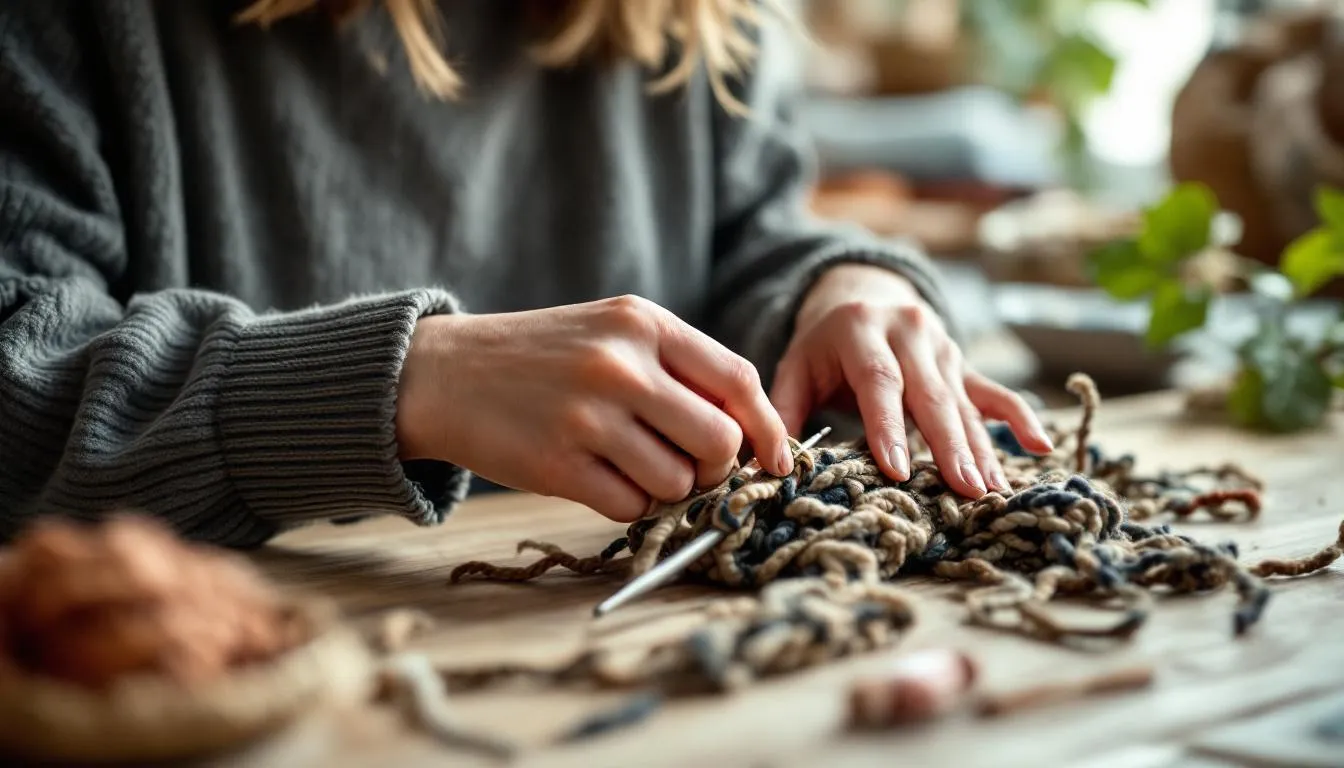
Table of Contents
What Is Crochet?
Crochet is a fiber craft that uses a single hooked needle to interloop yarn or thread into fabric, one stitch at a time. The name comes from the French word “crochet,” meaning “small hook.” It produces everything from delicate lace doilies to chunky blankets to sculptural amigurumi toys — all from the same basic technique of pulling loops through loops.
The One Thing Nobody Can Machine-Make
Here’s something remarkable about crochet that separates it from nearly every other textile craft: it cannot be replicated by machines. Knitting has been mechanized since the 16th century. Weaving was mechanized during the Industrial Revolution. But the complex, three-dimensional looping motion of crochet has resisted every attempt at automation.
This means every single crocheted item in existence was made by a human being. That granny square afghan at your grandmother’s house? Handmade. The amigurumi stuffed animal on Etsy? Handmade. The lace collar on a Victorian dress in a museum? Handmade. There is no other way.
Basic Stitches
Crochet builds from a surprisingly small set of fundamental stitches.
Chain (ch): The starting point for almost everything. You create a series of interlocking loops that form a foundation row. It’s the crochet equivalent of casting on in knitting.
Single crochet (sc): The most basic stitch. Insert the hook, pull through a loop, yarn over, pull through both loops. It creates a tight, dense fabric perfect for items that need structure — bags, baskets, pot holders.
Double crochet (dc): Taller than single crochet, creating a more open, flexible fabric. You yarn over before inserting the hook, which adds height. Blankets, scarves, and garments frequently use double crochet because it works up quickly and has a nice drape.
Half double crochet (hdc): Falls between single and double in height and density. It’s the Goldilocks stitch — not too tight, not too open.
Treble crochet (tr): Even taller, creating a very open, lacy fabric. Used in decorative patterns and lacework.
From these five stitches, combined with variations in placement, grouping, and sequence, you can create thousands of patterns. The mathematical structure of crochet is genuinely interesting — mathematicians have used crochet to model hyperbolic geometry because the craft naturally produces the curved, ruffled surfaces that hyperbolic planes require.
A Fuzzy History
The exact origins of crochet are surprisingly unclear. No definitive evidence of crochet exists before the early 19th century — which is strangely recent for such a fundamental craft. Some historians speculate it evolved from Chinese needlework, Arabian knotting, or South American practices, but concrete documentation is lacking.
What’s clear is that crochet became enormously popular in Ireland during the 1840s famine. Irish crochet lace — an incredibly elaborate technique that creates three-dimensional floral motifs joined by mesh grounds — became an important source of income for impoverished families. Lace pieces were exported to England and America, and the money earned helped families survive.
By the late 19th century, crochet was a standard domestic skill taught to girls across Europe and America. The 20th century saw waves of popularity — the granny square explosion of the 1970s, the craft revival of the 2000s, and the current social media-driven renaissance.
The Modern Renaissance
Crochet is having a moment. Ravelry (the craft community platform) has over 9 million members. Crochet-related content generates billions of views on YouTube and TikTok. Yarn sales have grown consistently, and the demographic of crafters has shifted younger and more diverse.
Several factors drive this revival. Social media makes learning easy — video tutorials on YouTube have replaced the grandmother-teaches-granddaughter transmission model. Sustainability appeals — making your own items from natural fibers feels better than buying fast fashion. Mental health benefits are real — the repetitive motions of crochet have been compared to meditation, and studies suggest craft activities reduce stress and anxiety.
Amigurumi — the Japanese art of crocheting small stuffed creatures — has become hugely popular, combining crochet technique with sculpting and character design. The results are genuinely adorable, and the projects are small enough to complete quickly, providing regular hits of creative satisfaction.
Getting Started
The barrier to entry is remarkably low. A crochet hook costs $3-$8. A skein of beginner-friendly acrylic yarn costs $3-$5. Total startup investment: about the price of a fancy coffee.
Start with a chain. Then learn single crochet. Make a dishcloth or a simple scarf — something flat and rectangular that lets you practice consistent tension and stitch counting without worrying about shaping. Most people can produce a usable item within their first week of practice.
The learning curve flattens quickly. Once you’ve mastered the basic stitches, reading patterns becomes the next skill. Crochet patterns use standardized abbreviations (sc = single crochet, ch = chain, etc.) that look intimidating at first but decode easily with a reference chart.
Common beginner mistakes include crocheting too tightly (relax your grip), losing count of stitches (use stitch markers), and accidentally increasing or decreasing (count every row). All are normal and fixable.
The Community
Crochet has one of the most welcoming craft communities around. Local yarn shops host “stitch and bitch” groups (the informal name is longstanding and affectionate). Online communities on Reddit, Facebook, and Ravelry offer pattern help, project inspiration, and encouragement. The atmosphere tends toward supportive rather than competitive.
Charity crochet is significant too. Organizations distribute handmade blankets to hospitals, shelters, and disaster relief efforts. Project Linus has delivered over 8 million handmade blankets to children in need. The combination of creating something useful while helping someone is a powerful motivator.
Crochet offers something increasingly rare — a productive activity that’s also genuinely relaxing, produces a tangible result, can be done while socializing or watching TV, costs almost nothing, and connects you to a worldwide community of makers. That’s a lot of value from a three-dollar hook and a ball of yarn.
Frequently Asked Questions
What is the difference between crochet and knitting?
Crochet uses one hooked needle and works with one active loop at a time. Knitting uses two pointed needles with many active loops (stitches) on the needles simultaneously. Crochet fabric tends to be thicker and sturdier; knitted fabric is typically thinner and more stretchy. Crochet is generally considered easier to learn, and mistakes are simpler to fix since you can't 'drop' stitches.
What do you need to start crocheting?
A crochet hook (size H/8 or 5mm is good for beginners), a ball of medium-weight yarn (acrylic is affordable and forgiving), and scissors. That is genuinely all you need. The total investment is under 10 dollars. A beginning project like a dishcloth or scarf can be completed in a few hours once you learn the basic chain and single crochet stitches.
Can crochet be done by machines?
No — and this is remarkable. While knitting can be replicated by machines (and most commercial knitwear is machine-made), crochet cannot be effectively mechanized. The complex, looping motion of a crochet hook has resisted automation. Every crocheted item you see was made by human hands, which makes crochet products inherently handmade.
Further Reading
Cite this article
APA
WhatIs.site. (2025). What Is Crochet?. Retrieved May 27, 2026, from https://whatis.site/crochet MLA
"What Is Crochet?." WhatIs.site, July 15, 2025, https://whatis.site/crochet. Accessed May 27, 2026. Chicago
WhatIs.site. "What Is Crochet?." Last modified May 12, 2026. https://whatis.site/crochet. HTML
<a href="https://whatis.site/crochet">What Is Crochet?</a> — WhatIs.site Related Articles
What Is Knitting?
Knitting is the craft of creating fabric by interlocking loops of yarn using two or more needles.
arts amp cultureWhat Is Cross-Stitch?
Cross-stitch is a form of embroidery where X-shaped stitches are sewn onto gridded fabric to create patterns and images.
arts amp cultureWhat Is Embroidery?
Embroidery is the craft of decorating fabric with needle and thread. Explore its history, techniques, styles, materials, and the modern embroidery revival.
arts amp cultureWhat Is Textile Arts?
Textile arts encompass all art forms made with fibers and fabric, from weaving to embroidery. Learn the major techniques, history, and modern revival.
everyday conceptsWhat Is Philosophy of Law?
Philosophy of law examines what law is, why it has authority, and its relationship to morality. Learn about legal positivism, natural law, and key debates.