 WhatIs.site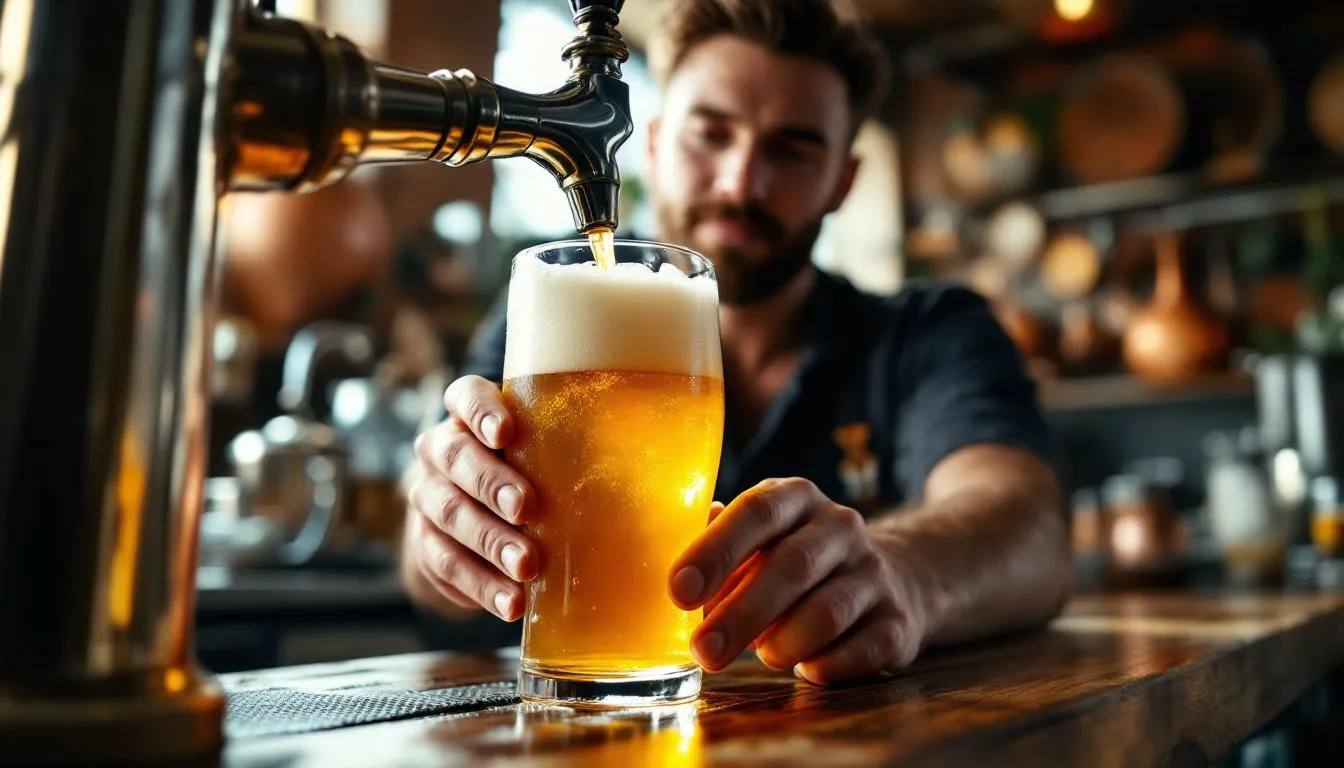
Table of Contents
What Is Craft Beer?
Craft beer is beer produced by small, independent breweries that prioritize flavor, quality, and brewing tradition over mass production. The craft beer movement has transformed the American (and increasingly global) beer industry from a market dominated by a handful of giant producers into one with nearly 10,000 independent breweries offering an extraordinary range of styles.
The Revolution in a Pint Glass
To understand craft beer, you need to understand what came before it. After Prohibition ended in 1933, the U.S. beer market consolidated rapidly. By 1980, a handful of companies — Anheuser-Busch, Miller, Coors — controlled roughly 90% of American beer production. Their product was deliberately mild: light, fizzy, inoffensive lager designed for mass appeal. Choice was minimal. If you wanted beer with actual flavor, you were mostly out of luck.
The craft movement started small. Fritz Maytag bought the struggling Anchor Brewing Company in San Francisco in 1965 and began making flavorful, traditional beers. Jack McAuliffe founded New Albion Brewing in 1976 — often called the first modern American microbrewery. Ken Grossman started Sierra Nevada in 1980, and his Pale Ale became arguably the most influential craft beer ever brewed.
Homebrewing legalization in 1978 (signed by President Carter) provided the pipeline. Thousands of enthusiasts began brewing at home, developing skills and palates that many eventually turned professional. Charlie Papazian’s The Complete Joy of Home Brewing (1984) became the movement’s bible.
What Qualifies as “Craft”
The Brewers Association — the trade group representing small brewers — defines a craft brewery using three criteria:
Small: Annual production of 6 million barrels or less (about 3% of the U.S. market).
Independent: Less than 25% of the brewery is owned or controlled by an alcohol industry member that isn’t itself craft.
Traditional: The majority of its total beverage alcohol volume is in beers with traditional or creative brewing ingredients and fermentation.
These definitions are debated constantly. When a beloved craft brewery gets acquired by a multinational (Goose Island by Anheuser-Busch, Wicked Weed by the same), craft purists feel betrayed. The acquiring companies argue the beer doesn’t change. Critics counter that the business dynamics do — shelf space allocated to pseudo-craft brands squeezes genuinely independent breweries.
The Styles
Craft beer’s greatest contribution is variety. Where macro-breweries offered light lager, craft offers dozens of distinct styles.
India Pale Ale (IPA) dominates craft sales — roughly 40% of craft beer sold is some form of IPA. Originally brewed strong and hoppy for the journey from England to India, the American IPA has become its own thing entirely, showcasing American hop varieties (Citra, Mosaic, Simcoe) that produce tropical fruit, pine, and citrus flavors.
Stout and porter offer roasted, chocolate, and coffee flavors from dark malts. Guinness is the world’s most famous stout, but craft versions push the style further — imperial stouts aged in bourbon barrels, pastry stouts with vanilla and cocoa, milk stouts with lactose for sweetness.
Wheat beers (hefeweizen, witbier) are lighter and often cloudy, with banana and clove notes (German style) or coriander and orange peel (Belgian style). They’re excellent entry points for people transitioning from macro lagers.
Sour beers — lambics, goses, Berliner weisses — use bacteria and wild yeast to create tart, acidic flavors that range from gently tangy to aggressively sour. This category has exploded in popularity, with fruited sours becoming gateway beers for wine and cocktail drinkers.
Lagers aren’t just for macro breweries. Craft-brewed pilsners, helles, and Marzen demonstrate that simple, clean beer made with quality ingredients is anything but boring. The rise of “craft lager” represents a maturation of the market — after years of extreme flavors, many drinkers are circling back to balance and drinkability.
The Economics
Craft beer is a $29 billion industry in the United States (2023). But the growth story has gotten more complicated.
The boom years (2010-2018) saw double-digit annual growth, thousands of new brewery openings, and seemingly endless consumer appetite for new brands and styles. By 2020, the market showed signs of maturation. Growth slowed. Competition intensified. Many newer breweries struggled with thin margins, rising ingredient costs, and distribution challenges.
The brewery taproom model has changed the economics significantly. Many craft breweries now sell the majority of their beer on-premises, cutting out distributors and retailers and capturing much higher margins. A pint that sells for $7 at the taproom might yield $4 in profit. That same beer in a six-pack at a store might yield $1 per pint to the brewery.
The Social Element
Craft breweries have become community gathering places in a way that few other businesses have. The typical taproom is family-friendly (many allow dogs and children), offers rotating food trucks, hosts trivia nights and live music, and creates a social space that fills a gap left by declining participation in traditional community institutions.
This social function matters. In an era when people report increasing isolation and fewer “third places” (spaces between home and work where community happens), craft brewery taprooms have stepped into the role that local pubs, coffee shops, and social clubs once filled.
What’s Next
The craft beer market faces a generational challenge. Younger drinkers (Gen Z in particular) consume less alcohol overall than previous generations, and when they do drink, they’re as likely to choose hard seltzers, canned cocktails, or natural wine as craft beer.
Smart breweries are adapting — many now produce non-alcoholic beers, hard seltzers, or coffee alongside their core beer lineup. The ones that survive and thrive will likely be those that combine quality beer with a compelling social experience.
Craft beer changed how America drinks — from bland uniformity to extraordinary variety. Whether the industry can maintain its independent spirit while navigating consolidation pressure, shifting demographics, and changing drinking habits will define its next chapter. The beer itself, when it’s good, remains one of the great pleasures of eating and drinking culture.
Frequently Asked Questions
What makes a beer 'craft'?
The Brewers Association defines a craft brewery as small (producing fewer than 6 million barrels annually), independent (less than 25% owned by a non-craft alcohol company), and traditional (using traditional brewing ingredients and methods). In practice, craft beer is generally characterized by emphasis on flavor, quality, and variety over mass-market consistency.
How many craft breweries exist in the United States?
As of 2024, the United States has approximately 9,700 craft breweries, up from fewer than 100 in 1980. Craft beer accounts for roughly 24% of U.S. beer sales by revenue and about 13% by volume. The number of breweries per capita is higher than at any point since the 1870s.
What is the difference between an ale and a lager?
The difference is yeast. Ales use top-fermenting yeast (Saccharomyces cerevisiae) that works at warmer temperatures (60-75 degrees Fahrenheit), producing fruitier, more complex flavors in 1-3 weeks. Lagers use bottom-fermenting yeast (Saccharomyces pastorianus) at cooler temperatures (35-50 degrees Fahrenheit), producing cleaner, crisper flavors over 4-8 weeks.
Further Reading
Cite this article
APA
WhatIs.site. (2025). What Is Craft Beer?. Retrieved May 27, 2026, from https://whatis.site/craft-beer MLA
"What Is Craft Beer?." WhatIs.site, July 15, 2025, https://whatis.site/craft-beer. Accessed May 27, 2026. Chicago
WhatIs.site. "What Is Craft Beer?." Last modified May 12, 2026. https://whatis.site/craft-beer. HTML
<a href="https://whatis.site/craft-beer">What Is Craft Beer?</a> — WhatIs.site Related Articles
What Is Beer Brewing?
Beer brewing is the process of converting grain starches — usually from malted barley — into a fermented alcoholic beverage through mashing, boiling.
arts amp cultureWhat Is Gastronomy?
Gastronomy is the study and appreciation of food and cooking as a cultural, scientific, and artistic practice.
lifestyleWhat Is Wine Tasting?
Wine tasting is the sensory evaluation of wine's appearance, aroma, flavor, and finish. Learn tasting techniques, common terms, and how to develop your palate.
everyday conceptsWhat Is Cooking?
Cooking is the practice of preparing food using heat and technique. Learn about cooking methods, the science behind flavor, kitchen basics, and food culture.
everyday conceptsWhat Is Cocktail Making?
Cocktail making is the practice of combining spirits, mixers, and other ingredients to create mixed drinks.