 WhatIs.site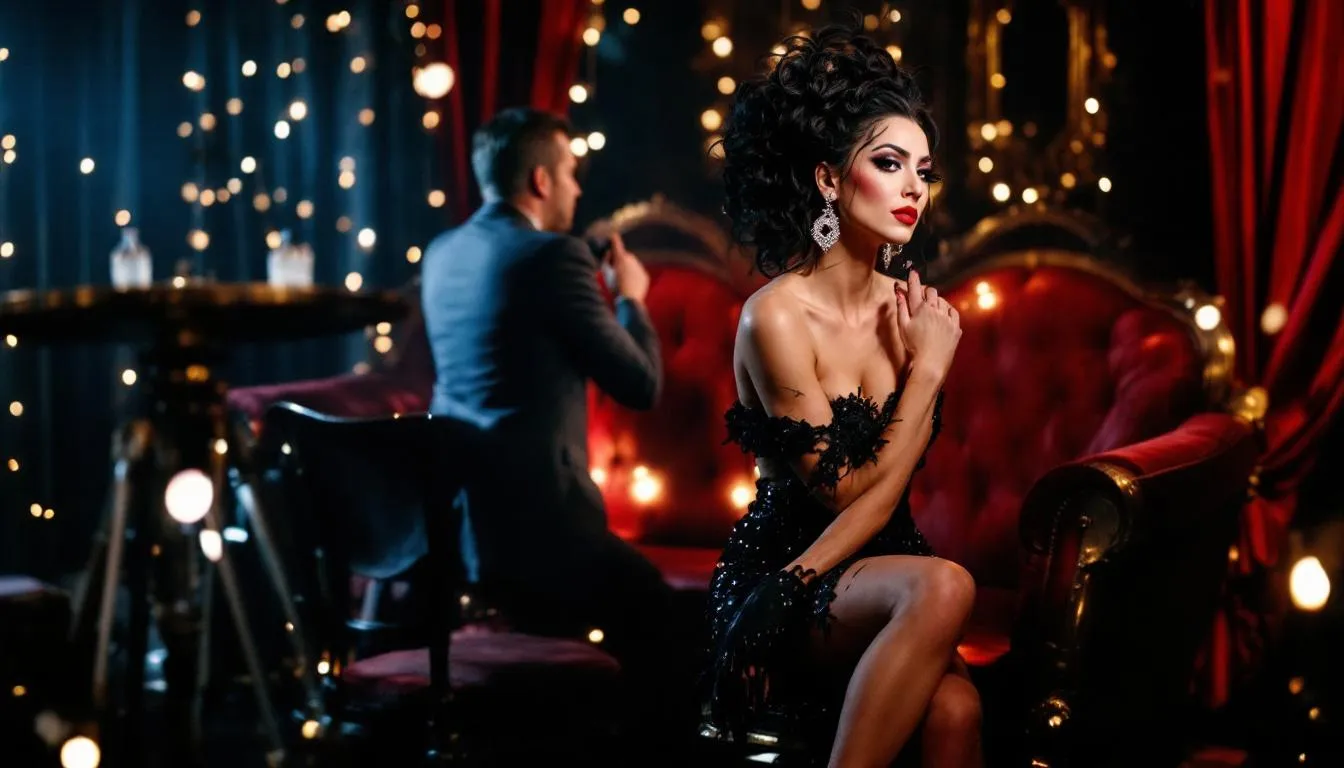
Table of Contents
What Is Cabaret?
Cabaret is a form of live entertainment featuring music, comedy, dance, drama, and spoken word, typically performed in intimate nightclub, bar, or restaurant settings where audiences sit at tables rather than in theater-style seating. The close proximity between performer and audience creates an electric, interactive atmosphere that larger venues can’t replicate.
Born in Bohemian Paris
The word “cabaret” originally meant a simple drinking establishment. The artistic cabaret was born in 1881 when Rodolphe Salis opened Le Chat Noir (The Black Cat) in Paris’s Montmartre district. Salis combined drinks and food with poetry readings, satirical songs, puppet shows, and shadow theater, creating a new kind of venue where artists, intellectuals, and the curious public mixed.
The concept spread rapidly. By 1900, artistic cabarets operated across Europe. The Moulin Rouge (opened 1889) — technically a dance hall rather than a cabaret — became the most famous Parisian entertainment venue through its association with can-can dancers, Toulouse-Lautrec’s posters, and bohemian culture.
Weimar Berlin: Cabaret’s Golden Age
Cabaret’s most legendary chapter unfolded in Berlin during the Weimar Republic (1919-1933). In the chaotic years between World War I and Hitler’s rise, Berlin became Europe’s most creatively liberated city. Cabarets like the Wintergarten and the Kabarett der Komiker offered political satire, avant-garde performance, jazz, drag shows, and sexual frankness that would have been unthinkable elsewhere.
This era — immortalized in Christopher Isherwood’s stories (later adapted into the musical and film Cabaret) — combined artistic brilliance with political urgency. Cabaret performers openly mocked the Nazis as they rose to power. When Hitler became chancellor in 1933, cabaret was among the first cultural forms suppressed. Many performers fled to the United States, bringing cabaret traditions with them.
The American Cabaret Tradition
American cabaret developed its own character, particularly in New York City. The Algonquin Hotel’s Oak Room, Café Carlyle, and the Blue Angel became showcases for sophisticated song interpretation. The American cabaret tradition emphasized the vocalist’s art — performers like Mabel Mercer, Bobby Short, and Barbara Cook perfected the art of inhabiting a song and creating intimate connection with audiences.
The Great American Songbook — standards by Cole Porter, Irving Berlin, George Gershwin, and others — became cabaret’s core repertoire. A skilled cabaret singer takes a familiar song and reveals new meanings through phrasing, timing, and personal interpretation. It’s not about vocal pyrotechnics. It’s about storytelling.
What Makes Cabaret Different
Intimacy — Audiences sit feet from performers, often at tables with drinks. This proximity creates a directness impossible in a theater. Performers make eye contact, address individuals, and react to the room in real time. The fourth wall doesn’t exist.
Eclecticism — A single cabaret evening might include a jazz vocalist, a comedian, a drag performer, a burlesque dancer, and a spoken word artist. The variety format — inherited from vaudeville and music hall — keeps audiences engaged and gives emerging artists exposure.
Political edge — From Weimar Berlin to modern-day political comedy, cabaret has historically been a space for social commentary. The intimate setting allows performers to be more provocative and topical than mass media permits. Satire, parody, and direct political statement are part of the tradition.
Artistic freedom — Without the commercial pressures of mainstream theater or the format constraints of television, cabaret allows performers to experiment. New material is tested, unusual combinations are attempted, and failure is part of the process.
The Neo-Cabaret Revival
Starting in the late 1990s and accelerating through the 2000s, cabaret experienced a significant revival. Several factors contributed:
Neo-burlesque — Performers like Dita Von Teese brought theatrical striptease back to mainstream cultural attention, attracting new audiences to cabaret venues.
Variety shows — Events combining circus, comedy, music, and spectacle — like La Clique and La Soirée — introduced cabaret-style entertainment to festival and theater audiences.
Queer culture — Drag performance, which has deep roots in cabaret tradition, gained enormous mainstream visibility. RuPaul’s Drag Race brought cabaret-adjacent performance to millions of television viewers.
Social media — Instagram and TikTok gave cabaret performers platforms to reach audiences far beyond their local scenes, driving attendance and creating international followings.
Cabaret Today
Major cabaret scenes exist in New York (Joe’s Pub, 54 Below, The Duplex), London (Soho Theatre, Proud Cabaret), Berlin (Bar jeder Vernunft, Chamäleon Theater), Melbourne (which hosts the world’s largest cabaret festival), and numerous other cities.
Contemporary cabaret encompasses an extraordinary range: traditional song interpretation, political comedy, drag extravaganzas, circus-cabaret hybrids, immersive theatrical experiences, and experimental performance art. The common thread is intimacy, directness, and the live energy that comes from performers and audiences sharing a small space.
The form’s accessibility matters too. You don’t need a Broadway theater or a concert arena to stage cabaret. A microphone, a spotlight, and a room with chairs is enough. This low barrier to entry means cabaret functions as an incubator for emerging performers and a laboratory for established artists trying new material.
Cabaret survives because live, intimate performance satisfies something that screens and streaming cannot. The person standing three feet away, singing directly to you, responding to your reactions in real time — that’s an experience no technology replicates. It was true in 1881 Paris, and it’s true now.
Frequently Asked Questions
Where did cabaret originate?
Cabaret originated in Paris in the 1880s. Le Chat Noir, opened in 1881 in the Montmartre district, is generally considered the first true cabaret. These venues combined drinking, dining, and entertainment — poetry readings, satirical songs, comedy sketches — in an intimate, bohemian atmosphere that distinguished them from larger theaters and music halls.
What is the difference between cabaret and burlesque?
Cabaret is a broader entertainment form encompassing music, comedy, dance, and theatrical performance. Burlesque specifically features theatrical striptease, comedy, and parody, often with elaborate costumes and choreography. The two overlap significantly — burlesque acts frequently appear in cabaret shows — but cabaret encompasses a wider range of performance styles.
Is cabaret still popular today?
Yes. Cabaret has experienced a revival since the early 2000s. Cities like New York, London, Berlin, and Melbourne have active cabaret scenes. The neo-burlesque movement brought new audiences. Cabaret festivals draw thousands of performers and attendees annually. The form's intimacy and flexibility — any small venue can host cabaret — keep it accessible.
Further Reading
Cite this article
APA
WhatIs.site. (2025). What Is Cabaret?. Retrieved May 27, 2026, from https://whatis.site/cabaret MLA
"What Is Cabaret?." WhatIs.site, July 15, 2025, https://whatis.site/cabaret. Accessed May 27, 2026. Chicago
WhatIs.site. "What Is Cabaret?." Last modified May 12, 2026. https://whatis.site/cabaret. HTML
<a href="https://whatis.site/cabaret">What Is Cabaret?</a> — WhatIs.site Related Articles
What Is Art History?
Art history is the scholarly study of visual arts — painting, sculpture, architecture, photography, and other visual forms — examining how they were created.
arts amp cultureWhat Is Ballet?
Ballet is a highly technical form of classical dance originating in Renaissance Italy, characterized by precise movements, pointed feet, and graceful.
everyday conceptsWhat Is Blues Music?
Blues is a music genre that originated in African American communities in the Mississippi Delta and broader Deep South during the late 19th century.
arts amp cultureWhat Is Acting?
Acting is the art of embodying a character — adopting their thoughts, emotions, voice, and physical behavior to tell a story for an audience.
arts amp cultureWhat Is Museology?
Museology is the study of museums, their purpose, organization, and role in society. Learn about museum theory, practice, and how collections are managed.