 WhatIs.site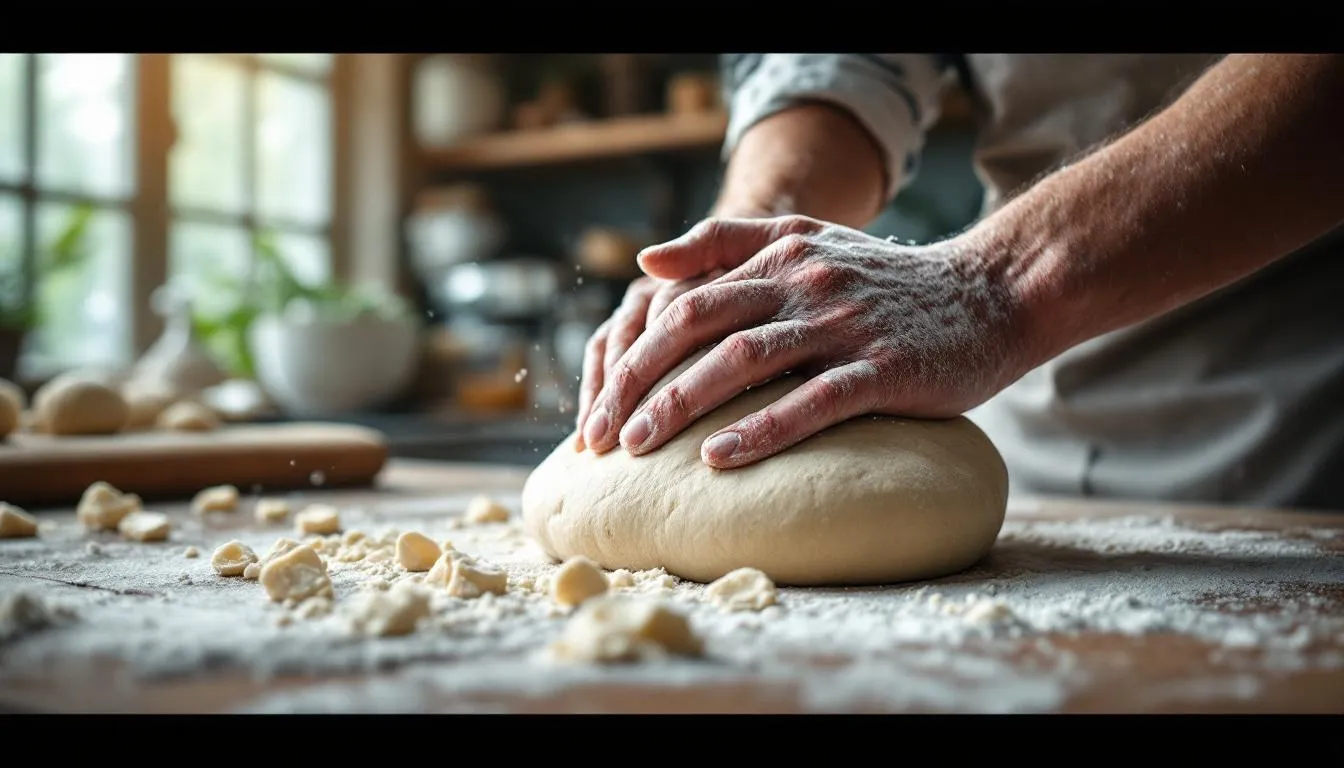
Table of Contents
What Is Bread Making?
Bread making is the process of mixing flour, water, salt, and a leavening agent (yeast or sourdough starter) into dough, then shaping and baking it. Archaeological evidence suggests humans have been making bread for at least 14,000 years — long before agriculture, when flatbreads were baked from ground wild grains on heated stones.
The Simplest Recipe, the Deepest Craft
Four ingredients. That’s all bread requires: flour, water, salt, yeast. You can make edible bread on your first attempt with zero experience. And you can spend a lifetime refining your technique without exhausting the possibilities.
The gap between “edible bread” and “extraordinary bread” is where the craft lives. It’s in the hydration percentage that produces an open crumb. The autolyse that relaxes the gluten before kneading. The shaping technique that gives the loaf tension. The scoring pattern that controls the oven spring. Each variable affects the final result, and the combinations are essentially infinite.
The Science
Bread making is applied food chemistry). Here’s what’s actually happening:
Mixing — Flour meets water. Proteins in the flour (glutenin and gliadin) hydrate and begin forming gluten, an elastic, stretchy network. This network is the skeleton of your bread.
Kneading — Physical manipulation aligns gluten strands, strengthening the network. A well-kneaded dough stretches thin enough to see light through it (the “windowpane test”). No-knead methods achieve similar results through long rest times — the fermentation process itself develops gluten.
Fermentation — Yeast consumes sugars in the flour and produces carbon dioxide gas and small amounts of ethanol. The CO2 inflates the gluten network, making the dough rise. Longer fermentation also allows enzymes to break starches into sugars and produces hundreds of flavor compounds — this is why slow-risen bread tastes more complex.
Baking — Heat transforms the dough. Yeast dies at about 140°F. Gluten sets. Starches gelatinize. The Maillard reaction and caramelization create the brown, flavorful crust. Steam in the oven (from the dough itself or added moisture) keeps the crust flexible during initial expansion (oven spring) before it sets.
Types of Bread
White bread — Made from refined flour with bran and germ removed. Light, soft, mild-flavored. The most consumed bread type worldwide.
Whole wheat — Uses flour containing all parts of the grain (bran, germ, endosperm). More nutritious, denser, stronger flavor. The bran cuts through gluten strands, which is why 100% whole wheat loaves are typically denser than white.
Sourdough — Leavened with a wild fermentation culture rather than commercial yeast. The lactic acid bacteria produce organic acids that give sourdough its tang and may make the bread more digestible. Artisan bread making frequently centers on sourdough.
Flatbreads — Unleavened or minimally leavened breads: naan, pita, tortillas, chapati, focaccia. These represent the oldest bread forms and remain staples across cultures.
Enriched breads — Doughs enriched with butter, eggs, sugar, and/or milk: brioche, challah, panettone. These are richer, softer, and more cake-like than lean breads.
Rye bread — Uses rye flour, which contains less gluten-forming protein than wheat. Rye breads are typically denser, darker, and more flavorful. German and Scandinavian traditions produce remarkable rye breads that bear little resemblance to the light “rye” bread found in American supermarkets.
The No-Knead Revolution
In 2006, Mark Bittman published Jim Lahey’s no-knead bread recipe in the New York Times, and it changed home baking overnight. The recipe uses a tiny amount of yeast, 12-18 hours of fermentation at room temperature, and baking in a preheated Dutch oven. No kneading required.
The result — crusty, chewy, open-crumbed bread with minimal effort — demonstrated that time could replace labor in bread making. The long fermentation develops gluten through enzymatic activity rather than physical manipulation. The Dutch oven traps steam, creating the crispy crust that home bakers had struggled to achieve.
This recipe introduced millions of people to bread making who had assumed it required skill, equipment, and hours of active work. It doesn’t. It requires patience, flour, water, salt, and yeast.
Common Problems and Solutions
Bread didn’t rise? Yeast may be dead (test by dissolving in warm water with sugar — it should foam within 10 minutes). Water temperature may have been too hot (above 120°F kills yeast). Or the dough didn’t ferment long enough.
Dense, heavy crumb? Not enough kneading (or fermentation time in no-knead methods), too much flour, or oven temperature too low. A kitchen scale eliminates the flour measurement problem.
Flat loaf? Over-proofed (the gluten network stretched beyond its limit and collapsed) or under-developed gluten. Shape the loaf tighter to create surface tension that holds the shape during baking.
Pale, soft crust? Need more heat and steam. Baking at 450-500°F with steam (Dutch oven, pan of water in the oven, or spraying) produces the crispy, caramelized crust that good bread needs.
Why People Keep Coming Back
There’s something about bread making that connects to something deep. The physical act of kneading — rhythmic, repetitive, meditative — is genuinely calming. The smell of baking bread triggers real neurological pleasure responses. And the satisfaction of slicing into a loaf you made from four basic ingredients is disproportionate to the effort involved.
Bread making is also forgiving in ways that most baking is not. Unlike pastry or cake, where precise ratios determine success or failure, bread tolerates improvisation. A little more water? You get a more open crumb. A little less salt? Still bread. Forgot to add the salt entirely? Okay, you’ll notice that one, but the loaf is still edible.
Humanity has been making bread for 14,000 years. The process has been refined, industrialized, and mechanized — but the fundamental act of mixing grain and water, watching it rise, and baking it into something nourishing hasn’t changed. You’re participating in one of the oldest human activities every time you pull a loaf from your oven. That continuity is worth something.
Frequently Asked Questions
What is gluten and why does it matter in bread?
Gluten is a network of proteins (glutenin and gliadin) that forms when wheat flour is mixed with water. It gives bread dough its elasticity and traps carbon dioxide gas produced by yeast, allowing bread to rise. Without gluten, bread would be flat and dense. Kneading develops the gluten network, creating the stretchy, airy texture of well-made bread.
What is the difference between yeast bread and sourdough?
Yeast bread uses commercially produced baker's yeast (Saccharomyces cerevisiae) as its sole leavening agent. Sourdough uses a wild fermentation starter containing both wild yeast and lactic acid bacteria, which produce the characteristic tangy flavor. Sourdough fermentation takes longer (12-48 hours vs. 1-3 hours) but develops more complex flavors.
Why does bread go stale?
Staling is primarily caused by starch retrogradation — the starch molecules in bread recrystallize over time, making the crumb firm and dry. Surprisingly, refrigeration accelerates staling (though it prevents mold). Storing bread at room temperature in a bread box preserves freshness longest. Freezing effectively pauses staling and is the best long-term storage method.
Further Reading
Cite this article
APA
WhatIs.site. (2025). What Is Bread Making?. Retrieved May 27, 2026, from https://whatis.site/bread-making MLA
"What Is Bread Making?." WhatIs.site, July 15, 2025, https://whatis.site/bread-making. Accessed May 27, 2026. Chicago
WhatIs.site. "What Is Bread Making?." Last modified May 12, 2026. https://whatis.site/bread-making. HTML
<a href="https://whatis.site/bread-making">What Is Bread Making?</a> — WhatIs.site Related Articles
What Is Artisan Bread Making?
Artisan bread making is the craft of producing handmade bread using traditional techniques, long fermentation, and simple ingredients like flour, water, and.
food and drinkWhat Is Sourdough?
Sourdough is a type of bread made through a long, slow fermentation process using a sourdough starter—a living culture of wild yeast and lactic acid bacteria.
scienceWhat Is Fermentation?
Fermentation is a metabolic process where microorganisms convert sugars into acids, gases, or alcohol. Learn how it works in food, drinks, and industry.
scienceWhat Is Food Science?
Food science is the applied discipline that uses biology, chemistry, and engineering to study the nature of food, the causes of its deterioration.
everyday conceptsWhat Is Baking?
Baking is the method of cooking food by surrounding it with dry heat in an enclosed space, typically an oven.