 WhatIs.site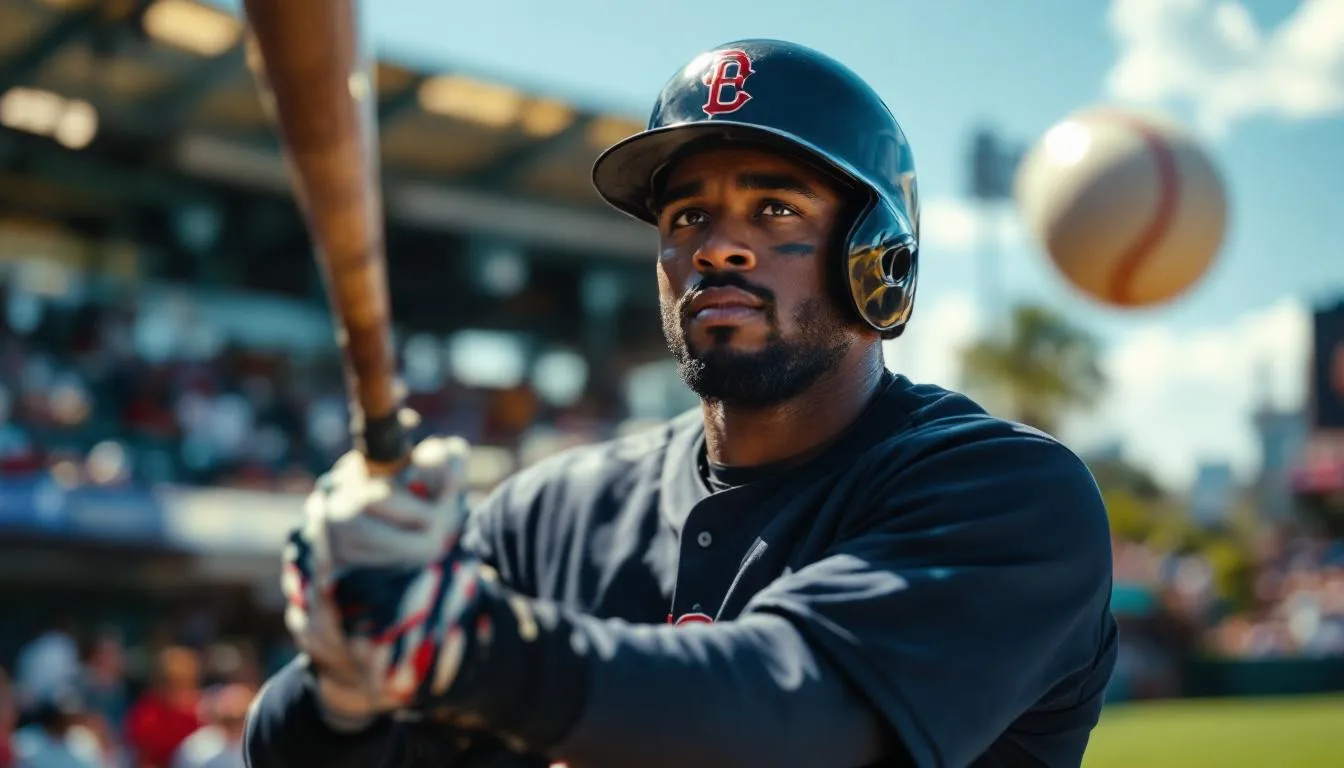
Table of Contents
What Is Baseball?
Baseball is a bat-and-ball sport played between two teams of nine players on a diamond-shaped field. One team bats (tries to hit a thrown ball and run around four bases to score runs) while the other pitches and fields (tries to get batters out). After nine innings of alternating offense and defense, the team with more runs wins.
Origins and Mythology
The popular myth that Abner Doubleday invented baseball in Cooperstown, New York, in 1839 is exactly that — a myth. Baseball evolved gradually from various bat-and-ball games, primarily the English game of rounders and the American game of town ball. The first recorded baseball rules were written by Alexander Cartwright and the Knickerbocker Base Ball Club in 1845.
The first professional team, the Cincinnati Red Stockings, began paying players in 1869. The National League formed in 1876, the American League in 1901, and the two began competing in the World Series in 1903. For the next 60 years, baseball was the undisputed king of American sports.
The sport’s darker history includes decades of racial segregation. Black players were excluded from the major leagues until Jackie Robinson broke the color barrier with the Brooklyn Dodgers in 1947 — a moment of genuine courage that changed both baseball and American society. The Negro Leagues, which operated from the 1920s to the 1960s, produced some of the greatest players in baseball history, many of whom never had the chance to play in the majors.
The Mechanics
Pitching and Hitting
The core contest in baseball is pitcher versus batter. The pitcher throws the ball toward home plate at speeds ranging from 70 mph (a changeup) to over 100 mph (a fastball). The batter has roughly 400 milliseconds to decide whether to swing — and another 150 milliseconds to execute the swing. Hitting a round ball with a round bat squarely is, by many estimates, the single most difficult skill in professional sports.
A major league pitch doesn’t just travel fast — it moves. A curveball can drop over a foot as it approaches the plate. A slider breaks laterally. A changeup arrives 10-15 mph slower than expected, disrupting the batter’s timing. The physics behind pitch movement involves the Magnus effect: spin creates air pressure differentials that push the ball in the direction of spin.
Fielding
When the batter puts the ball in play, nine fielders must position themselves to make the play. Infielders (first base, second base, shortstop, third base) handle ground balls and short pops. Outfielders (left, center, right) chase fly balls. The catcher crouches behind home plate, receiving pitches and directing the defense.
Defensive positioning has been revolutionized by analytics. Teams now shift fielders based on spray charts showing where each batter tends to hit the ball. A left-handed pull hitter might face four infielders on the right side of the diamond. (MLB restricted extreme shifts starting in 2023, requiring two infielders on each side.)
Baserunning
Reaching base is only the start. Runners must advance from first to second to third to home to score. They can advance on hits, walks, stolen bases, sacrifice plays, and errors. Baserunning is strategic — a fast runner on first creates pressure on the pitcher and opens up offensive options.
Stolen bases require reading the pitcher’s movements, explosive acceleration, and precise sliding technique. The record for stolen bases in a season — 130 by Rickey Henderson in 1982 — required extraordinary speed and an almost uncanny ability to read pitchers’ intentions.
The Analytics Revolution
Baseball was the first major sport to be transformed by data analysis. The “Moneyball” approach, pioneered by the Oakland Athletics’ front office in the early 2000s (and immortalized in Michael Lewis’s 2003 book), used statistical analysis to identify undervalued players and strategies.
Concepts that were once radical — on-base percentage matters more than batting average, strikeouts for pitchers matter less than preventing hard contact, launch angle and exit velocity predict hitting outcomes — are now mainstream. Every MLB team employs analysts, and technology like Statcast tracks the speed, spin, and trajectory of every pitch and batted ball in real time.
The analytics movement has changed how the game is played. Teams pitch more specialized relievers (rather than relying on starting pitchers to finish games), shift defensive alignments, and value patient at-bats that result in walks. Whether these changes have made the game more or less entertaining is debated constantly.
The Structure of MLB
Major League Baseball has 30 teams split into the American League and National League, each with three divisions. The regular season spans 162 games from April through September — an almost absurdly long schedule that rewards consistency over any single hot streak. The postseason expands to 12 teams competing in a multi-round playoff culminating in the World Series.
The minor league system acts as a development pipeline. Six levels of minor league baseball give young players years of professional experience before reaching the majors. The journey from amateur draft to big-league debut typically takes 3-5 years.
Global Reach
Baseball is huge in Japan (Nippon Professional Baseball), South Korea (KBO League), Cuba, the Dominican Republic, Venezuela, and Taiwan. The Dominican Republic alone has produced over 800 major leaguers — an extraordinary number for a nation of 11 million people. The World Baseball Classic, held every four years, showcases international competition.
Japan’s baseball culture is particularly intense. High school baseball tournaments draw national television audiences, and professional games feature organized cheering sections with coordinated songs and chants for each batter.
Why Baseball Endures
Baseball is slower than football, less continuous than basketball, and less dramatic moment-to-moment than soccer. Its critics call it boring. Its fans call it meditative.
The sport’s pace creates space for anticipation, conversation, and attention to detail that faster sports don’t allow. Every pitch carries strategic weight. Every at-bat is a self-contained drama. And because teams play 162 games, the season unfolds like a novel rather than a short story — with subplots, character arcs, and a slow build toward October.
The statistics add a layer that other sports can’t match. Baseball has been tracking detailed individual performance data since the 1870s, creating a historical record that lets you compare players across eras with reasonable precision. Whether Ted Williams or Mike Trout was the better hitter is a question you can actually analyze — and argue about endlessly.
Frequently Asked Questions
How long is a baseball game?
A standard MLB game has nine innings with no game clock. Average game length has been about 2 hours and 40 minutes since the introduction of the pitch clock in 2023, down from over 3 hours in previous years. Games can theoretically last indefinitely if tied, though extra innings have been shortened by rule changes.
Why is baseball called 'America's Pastime'?
Baseball earned this title because it was the dominant professional sport in the United States from the 1850s through the 1960s. It predated football and basketball as organized professional sports and was deeply woven into American culture, community life, and national identity. While football has surpassed it in TV ratings, the nickname endures.
What is a perfect game in baseball?
A perfect game occurs when a pitcher (or combination of pitchers) retires every batter faced with no hits, walks, errors, or hit batters — 27 batters up, 27 batters out. It is the rarest achievement in baseball. Only 24 perfect games have been thrown in MLB history since 1880.
Further Reading
Cite this article
APA
WhatIs.site. (2025). What Is Baseball?. Retrieved May 27, 2026, from https://whatis.site/baseball MLA
"What Is Baseball?." WhatIs.site, July 15, 2025, https://whatis.site/baseball. Accessed May 27, 2026. Chicago
WhatIs.site. "What Is Baseball?." Last modified May 12, 2026. https://whatis.site/baseball. HTML
<a href="https://whatis.site/baseball">What Is Baseball?</a> — WhatIs.site Related Articles
What Is Sports History?
Sports history is the study of how organized physical competition developed across human civilizations.
scienceWhat Is Sports Science?
Sports science applies biology, physics, and psychology to improve athletic performance, prevent injuries, and optimize training. Here's how it works.
scienceWhat Is Statistics?
Statistics is the science of collecting, analyzing, and interpreting data to make decisions under uncertainty. Learn its methods, concepts, and applications.
scienceWhat Is Physics?
Physics is the science of matter, energy, and the fundamental forces governing the universe. Learn how physics explains everything from atoms to galaxies.
health amp wellnessWhat Is Exercise Physiology?
Exercise physiology studies how your body responds and adapts to physical activity, covering energy systems, muscle function, and training principles.