 WhatIs.site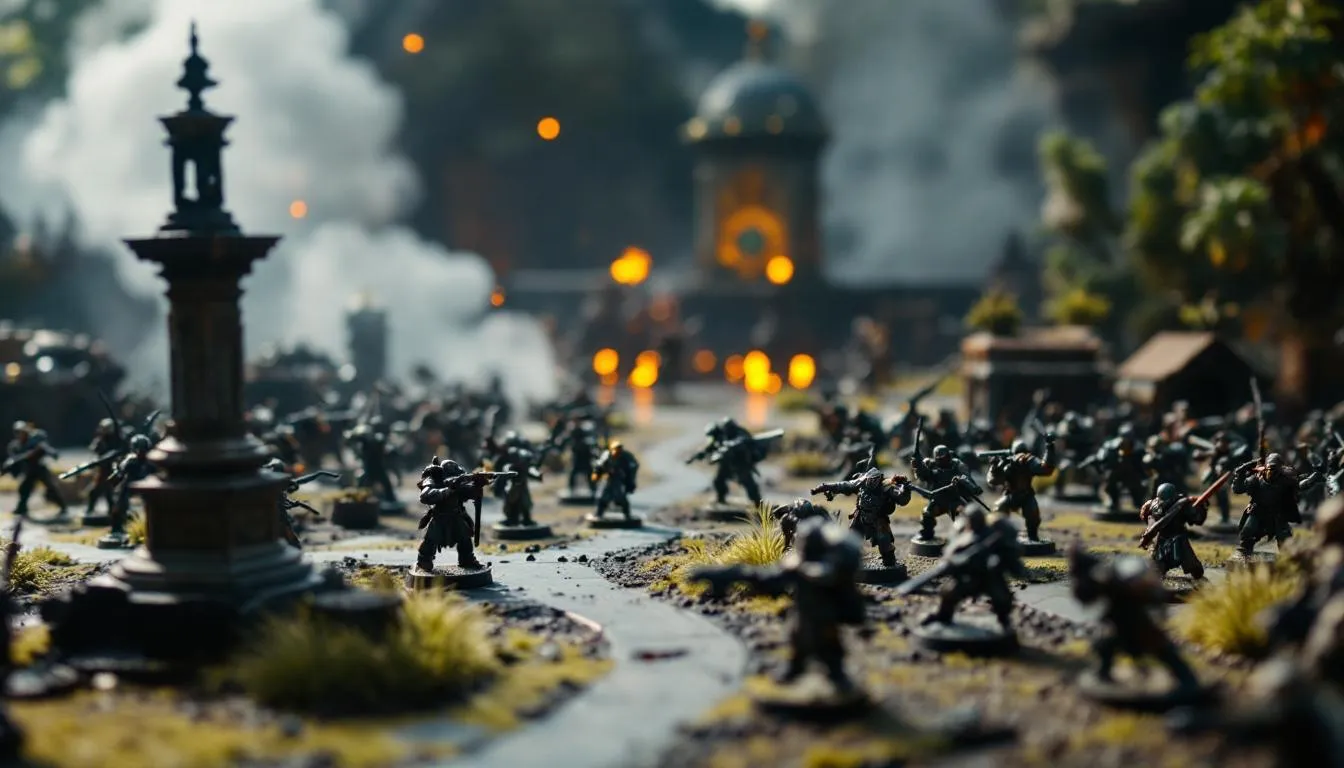
Table of Contents
What Is Warhammer?
Warhammer is a franchise of tabletop miniature wargames created by Games Workshop, a British company founded in 1975. Players collect, assemble, and paint small plastic miniature figures representing armies, then use them to play strategic battles on tabletop terrain. The two main game systems are Warhammer 40,000 (a grim science-fiction setting) and Warhammer Age of Sigmar (a high-fantasy setting). Together, they form one of the most commercially successful and culturally influential tabletop gaming properties in the world.
The Two Universes
Warhammer 40,000
“In the grim darkness of the far future, there is only war.” That tagline encapsulates Warhammer 40K’s setting perfectly. Set in the 41st millennium, humanity is ruled by a decaying Imperium governed in the name of the God-Emperor — a psychically powerful being who has sat immobile on the Golden Throne for 10,000 years, sustained by the daily sacrifice of thousands of psychics.
The Imperium fights an endless war against threats from every direction: Orks (warlike green-skinned aliens who fight because fighting is fun), Tyranids (extragalactic swarm organisms that consume entire worlds), Chaos (corrupting forces from an alternate dimension called the Warp), Necrons (ancient robotic undead), and various other alien races.
The Space Marines — genetically enhanced super-soldiers organized into Chapters of roughly 1,000 warriors — are the Imperium’s greatest defenders. They’re the most iconic Warhammer faction and the entry point for most new players.
The setting is deliberately absurd and bleak. The Imperium is a fascist theocracy that commits atrocities routinely. There are no good guys. Every faction is morally compromised. This darkness is played with enough excess and dark humor that it reads as satire rather than endorsement.
Warhammer Age of Sigmar
Age of Sigmar replaced the original Warhammer Fantasy Battles in 2015 (a controversial decision among longtime fans). It’s set across multiple magical realms connected by mystical pathways, featuring the forces of Order (led by the god-king Sigmar and his Stormcast Eternals), Chaos, Death, and Destruction.
The setting allows more varied and fantastical armies — from tree-spirit woodland creatures to vampire lords commanding legions of the dead to steampunk dwarven airship fleets. The rules are generally considered more accessible than 40K’s, making it a popular entry point for new players.
How the Game Works
A typical game involves two players, each commanding an army of 50-100+ miniatures on a table covered with terrain (buildings, hills, forests, rivers). Armies are built to a point value — each unit has a points cost, and both armies must equal the same total to ensure a fair match.
Players alternate turns, during which they move units, shoot ranged weapons, charge into close combat, and resolve melee. Dice rolls (usually six-sided) determine whether attacks hit, wound, and get through armor. Strategic decisions about positioning, target priority, and timing determine outcomes more than raw luck.
Games take 2-4 hours depending on army size and experience level. Competitive play uses standardized missions with specific objectives — it’s rarely just “kill everything.” Holding terrain, completing mission actions, and scoring points often matter more than destroying the enemy army.
The Painting Hobby
For many Warhammer enthusiasts, painting miniatures is the primary draw — the gaming is secondary. The miniatures are exquisitely detailed plastic kits that require assembly (cutting from sprues, gluing) and painting with acrylic model paints.
The skill ceiling is enormous. Beginners can produce table-ready miniatures with basic techniques: base coating, washing (applying diluted dark paint that settles into recesses to create shadows), and drybrushing (lightly dragging a mostly-dry brush across raised surfaces to create highlights).
Advanced painters use techniques like blending, non-metallic metal effects, object-source lighting, and freehand detail that can turn a 28mm miniature into a museum-quality work of art. Painting competitions at events like Golden Demon and Crystal Brush showcase work that’s genuinely stunning.
The therapeutic aspect of miniature painting is widely reported — the focused, repetitive, hands-on nature of the work produces a meditative state that many hobbyists describe as their primary stress relief.
The Lore
Warhammer’s fictional universes are supported by hundreds of novels, codex books, short stories, and audio dramas published by Black Library (Games Workshop’s publishing arm). The lore is extraordinarily deep — decades of accumulated world-building have created settings rich enough to support serious narrative fiction.
Dan Abnett’s Gaunt’s Ghosts series and the Horus Heresy series (a 54-book saga about the events leading to the Emperor’s internment on the Golden Throne) are particularly well-regarded. The fiction attracts readers who never play the tabletop game.
The Business
Games Workshop is one of the most successful specialty retailers in the world, with a market capitalization that has at times exceeded several billion pounds. The company operates over 500 stores worldwide and has maintained consistent growth by expanding into licensing (video games, TV shows, merchandise), improving miniature quality, and cultivating a dedicated community.
The business model is controversial among hobbyists. Miniature prices have risen steadily, and Games Workshop maintains tight control over its intellectual property. But the company’s investment in product quality, community engagement, and retail experience has kept the hobby growing — particularly among younger players, whom the company actively courts through starter sets and simplified game modes.
Getting Started
A Start Collecting or Combat Patrol box ($110-$170) provides a small army, while a starter set ($55-$170) includes two small armies, basic rules, dice, and a play mat. Add a hobby knife, plastic glue, and a basic paint set ($30-$50), and you’re in the hobby for under $200.
The learning curve for both building/painting and playing is real but well-supported. YouTube tutorials for painting are abundant (channels like Squidmar Miniatures, Midwinter Minis, and Games Workshop’s own Warhammer TV). Local game stores host beginner events and demo games. The community, despite its reputation for gatekeeping in some corners, is largely enthusiastic about welcoming new players.
Warhammer is expensive, time-consuming, and occasionally overwhelming in its complexity. It’s also creative, strategic, social, and deeply satisfying for the right person. If you’ve ever wanted to paint a tiny medieval knight or command a battalion of space warriors, this is the hobby that’s been waiting for you.
Frequently Asked Questions
What is the difference between Warhammer 40K and Warhammer Age of Sigmar?
Warhammer 40,000 (40K) is set in a dystopian science-fiction universe 38,000 years in the future, featuring genetically enhanced Space Marines, alien races, and the decaying Imperium of Man. Warhammer Age of Sigmar is set in a high-fantasy universe of magical realms with gods, monsters, and warriors. They share the same parent company (Games Workshop) and similar miniature-based gameplay mechanics, but their settings, lore, and model ranges are completely separate.
How expensive is the Warhammer hobby?
The entry cost for a basic army is roughly $300-$600, including a starter set, paints, brushes, and glue. A full competitive army can cost $500-$1,500 or more in models alone. Individual character models cost $30-$60, while large kits can exceed $100. Paints and hobby supplies add ongoing costs. The hobby is genuinely expensive, though buying secondhand, splitting starter sets, and painting slowly can reduce the financial burden.
Do you have to paint the miniatures?
Technically no — you can play with unpainted or assembled-only models. But painting is considered a core part of the hobby by most enthusiasts. Many tournaments require minimum painting standards (called 'three-color minimum'). The painting hobby is deeply rewarding in its own right, and many Warhammer hobbyists spend more time painting than playing. Games Workshop sells a detailed paint range specifically designed for their miniatures.
Further Reading
Cite this article
APA
WhatIs.site. (2025). What Is Warhammer?. Retrieved May 27, 2026, from https://whatis.site/warhammer MLA
"What Is Warhammer?." WhatIs.site, July 15, 2025, https://whatis.site/warhammer. Accessed May 27, 2026. Chicago
WhatIs.site. "What Is Warhammer?." Last modified May 12, 2026. https://whatis.site/warhammer. HTML
<a href="https://whatis.site/warhammer">What Is Warhammer?</a> — WhatIs.site Related Articles
What Is Wargaming?
Wargaming is the hobby of simulating military conflicts using miniatures, boards, or computers. Learn about its history, types, strategy, and community.
everyday conceptsWhat Is Video Game Design?
Video game design is the process of creating game rules, mechanics, levels, and player experiences. Learn about design roles, processes, and key concepts.
everyday conceptsWhat Is Video Game History?
Video game history is the story of how a niche academic experiment in the 1950s became a $180 billion global industry that reaches over 3 billion people.