 WhatIs.site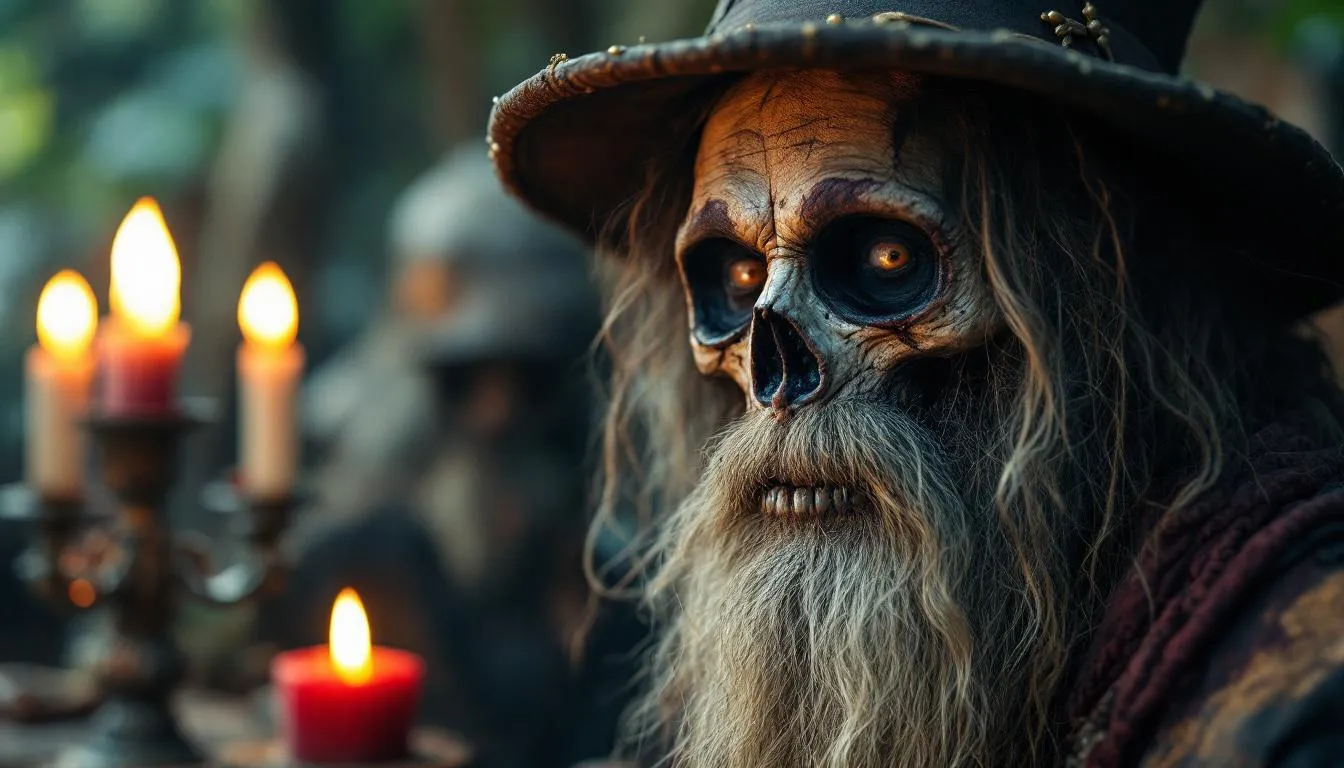
Table of Contents
What Is Voodoo?
Voodoo — more accurately spelled Vodou (Haitian) or Vodun (West African) — is a religion rooted in West African spiritual traditions, shaped by the transatlantic slave trade, and practiced primarily in Haiti, parts of West Africa, and Louisiana. It involves belief in a supreme creator, a pantheon of spirits (called lwa or loa), ancestor veneration, and ceremonial practices that connect the living with the spiritual world. It is not, despite what decades of horror movies have told you, about sticking pins in dolls.
Origins: Africa to the Caribbean
Vodou’s roots lie in the traditional religions of the Fon and Ewe peoples of present-day Benin, Togo, and Ghana. The word “vodun” means “spirit” or “deity” in the Fon language. These traditions involved a supreme creator (Mawu-Lisa), a large pantheon of spirits governing natural forces and human affairs, elaborate rituals with drumming and dance, and communication between the living and the spiritual world.
When millions of West Africans were enslaved and transported to the Caribbean and Americas, they carried these beliefs with them. In Haiti (then the French colony of Saint-Domingue), enslaved people were forced to convert to Catholicism, but they preserved their spiritual practices by associating their traditional spirits with Catholic saints. This wasn’t shallow disguise — it was a genuine synthesis that created something new.
The lwa Legba (the guardian of crossroads and communication) became associated with Saint Peter (who holds the keys to heaven’s gates). Erzulie Freda (the spirit of love and beauty) was linked to the Virgin Mary. Ogou (the warrior spirit) was connected to Saint James the Greater. These correspondences weren’t random — practitioners identified genuine parallels between the spiritual functions.
Core Beliefs and Practices
Bondye and the Lwa
Haitian Vodou recognizes a supreme creator called Bondye (from the French “Bon Dieu” — Good God). Bondye is considered too distant and too vast for direct human contact. Communication with the divine happens through the lwa — spirits who serve as intermediaries.
The lwa are organized into “nations” (nanchon) that reflect their African origins. The Rada lwa are generally cool, benevolent spirits associated with Dahomean (Fon) traditions. The Petro lwa are hotter, more aggressive spirits often associated with the Creole experience of slavery and resistance.
Each lwa has specific preferences, colors, symbols, songs, and offerings. Serving the lwa properly — through offerings, ceremonies, and respectful behavior — maintains a beneficial relationship between the human and spirit worlds.
Ceremonies
Vodou ceremonies involve drumming, singing, dancing, prayer, and offerings, typically led by a priest (houngan) or priestess (mambo). The ceremonies take place at a temple (hounfour or peristyle) around a central post (poteau-mitan) that symbolizes the connection between earth and the spirit world.
The most dramatic element of Vodou ceremony is spirit possession — when a lwa temporarily takes over a participant’s body. This isn’t viewed as frightening or demonic. It’s considered a sacred honor. The possessed person (called the “horse” because they’re being “ridden” by the spirit) takes on the personality, speech patterns, and mannerisms of the lwa. The community interacts with the lwa through the possessed person, seeking advice, healing, or spiritual guidance.
Ancestor Veneration
Respect for ancestors is central. The dead are believed to maintain interest in and influence over their living descendants. Proper funeral rites, regular remembrances, and maintaining family altars ensure that ancestors remain protective rather than neglected and potentially troublesome.
The Haitian Revolution Connection
Vodou played a documented role in the Haitian Revolution (1791-1804) — the only successful slave revolution in history. The ceremony at Bois Caiman in August 1791, led by the houngan Dutty Boukman, is traditionally cited as the spiritual catalyst for the uprising. During this ceremony, enslaved Africans swore to fight for their freedom, reportedly making a blood pact with the spirits.
Whether the Bois Caiman ceremony happened exactly as described is historically debated, but Vodou’s role in organizing and motivating the revolution is well-established. The religion provided a shared identity and communication network among enslaved people from diverse African ethnic backgrounds. After independence, Vodou became central to Haitian national identity — though it also faced periodic suppression by Haitian governments seeking international respectability.
The Misconception Problem
No religion has been more thoroughly misrepresented in popular culture than Vodou. The distortions started with colonial-era propaganda — European powers portrayed African religions as demonic to justify slavery and colonial conquest. Hollywood amplified these stereotypes into a collection of horror tropes: zombies, voodoo dolls, curses, and evil sorcerers.
The reality is thoroughly different. Vodou is a community-centered religion that provides spiritual guidance, healing, social structure, and cultural identity to its practitioners. Its ceremonies are communal celebrations, not dark rituals. Its priests and priestesses function as spiritual advisors, healers, and community leaders.
The zombie myth has a grain of truth — ethnobotanist Wade Davis documented cases in Haiti where a combination of neurotoxins (including tetrodotoxin from puffer fish) was allegedly used to induce a death-like state. But this practice, if it exists, is sorcery (boko) explicitly distinguished from legitimate Vodou priesthood.
Vodou Today
Haiti’s Vodou gained official recognition as a religion in 2003. The Haitian diaspora has spread the practice to New York, Miami, Montreal, and other cities. In New Orleans, Louisiana Voodoo (a distinct but related tradition) is both a living spiritual practice and, unfortunately, a tourist commodity — the French Quarter is full of “voodoo shops” selling trinkets that have little to do with actual practice.
In West Africa, Vodun continues as a living tradition. Benin’s annual Vodun Day (January 10) is a national holiday celebrating the religion’s cultural importance. The Vodun temple complexes of Ouidah, Benin, are significant cultural heritage sites.
For practitioners, Vodou isn’t exotic or frightening. It’s church. It’s community. It’s the framework through which they understand their relationship to the spiritual world, their ancestors, and each other. The gap between that reality and its Hollywood caricature remains one of the most persistent misrepresentations of any world religion.
Frequently Asked Questions
Do voodoo dolls actually exist?
Not in the way Hollywood portrays them. Sticking pins into a doll to harm someone at a distance is not a practice in Haitian Vodou or Louisiana Voodoo. Some practitioners do use small figures or poppets in rituals, but these are typically used for healing, protection, or communication with spirits — not for inflicting pain. The 'voodoo doll' as a weapon is largely a Hollywood and tourist-shop invention.
Is voodoo evil?
No. Vodou is a legitimate religion with ethical principles, community structure, and spiritual practices. The association with evil comes from centuries of racist stereotyping, colonial suppression of African religions, and sensationalized media portrayals. Like most religions, Vodou includes moral guidelines about treating others well. Some practitioners do engage in sorcery (which the religion itself distinguishes from proper spiritual practice), but this is not representative of the faith.
How many people practice voodoo?
An estimated 60 million people practice some form of Vodou or related Afro-diasporic religions worldwide. Haiti has the largest concentration — Vodou is practiced alongside Catholicism by the majority of the population. Louisiana Voodoo, Brazilian Candomble, and Cuban Santeria are related traditions with distinct characteristics. West African Vodun, the ancestral tradition, is practiced by several million people in Benin, Togo, and Ghana.
Further Reading
Cite this article
APA
WhatIs.site. (2025). What Is Voodoo?. Retrieved May 27, 2026, from https://whatis.site/voodoo MLA
"What Is Voodoo?." WhatIs.site, July 15, 2025, https://whatis.site/voodoo. Accessed May 27, 2026. Chicago
WhatIs.site. "What Is Voodoo?." Last modified May 12, 2026. https://whatis.site/voodoo. HTML
<a href="https://whatis.site/voodoo">What Is Voodoo?</a> — WhatIs.site Related Articles
What Is Prophecy?
Prophecy is the claim that a person has received a message from a divine or supernatural source and is communicating it to others.
religionWhat Is Quakerism?
Quakerism — formally the Religious Society of Friends — is a Christian-rooted religious movement founded in 17th-century England on the belief that every.