 WhatIs.site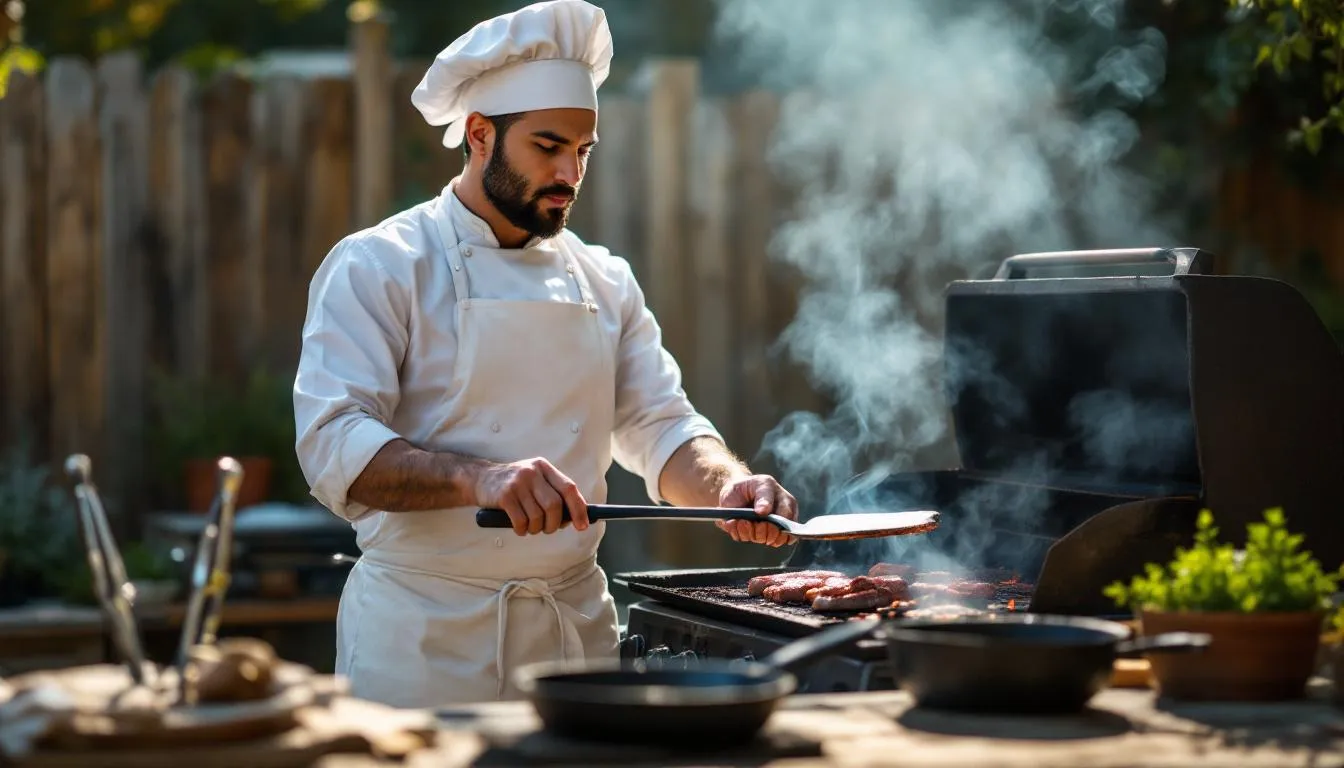
Table of Contents
What Is Grilling?
Grilling is cooking food over direct heat — typically from burning charcoal, gas flames, or wood — at temperatures ranging from 400 to 700 degrees Fahrenheit. It’s one of the oldest cooking methods humans have (we’ve been cooking over fire for at least 400,000 years), and it remains one of the most popular. About 75% of American adults own a grill.
Roughly 60% of them grill year-round, not just in summer. There’s something about cooking over open flame that feels right in a way that microwaving dinner never will.
How It Works
Grilling cooks through three mechanisms simultaneously.
Radiation — heat radiates from the coals or burners directly to the food’s surface. This is the primary heat source and what gives grilled food its characteristic seared exterior.
Conduction — where the food contacts the hot grill grates, heat transfers directly, creating grill marks (those crosshatch lines). Grill marks aren’t just cosmetic — they’re areas of intensified Maillard reaction, producing deeper flavor compounds.
Convection — hot air circulates around the food, especially when the lid is closed. This is more significant in covered grills and is essential for cooking thicker items evenly.
The Maillard reaction is the key chemistry. When proteins and sugars are heated above roughly 280°F, they undergo a complex cascade of chemical reactions producing hundreds of new flavor and aroma compounds. That brown, crusty, intensely flavorful exterior on a grilled steak? That’s the Maillard reaction. It’s the difference between boiled chicken and grilled chicken — same protein, completely different experience.
Charcoal vs. Gas
This debate has been going on for decades and will never be settled, so here are the facts.
Charcoal burns hotter (up to 700°F or higher), produces combustion byproducts that add smoky flavor, and gives you the option to add wood chunks for additional smoke. Lump charcoal (natural hardwood burned down to carbon) burns hotter and cleaner than briquettes. Briquettes (compressed charcoal mixed with binders) burn more evenly and predictably. Charcoal requires 15-20 minutes to reach cooking temperature and produces ash that needs disposal.
Gas grills ignite with a button, reach cooking temperature in 10 minutes, offer precise temperature control via knobs, and clean up easily. They don’t produce the same smoky compounds — the flavor difference is real but smaller than charcoal advocates insist. Adding a smoker box with wood chips narrows the gap further.
Wood — some grillers skip the middleman and cook directly over hardwood coals. Oak, hickory, mesquite, cherry, and apple each contribute distinct flavors. This is the original and arguably the best method, but it requires more skill in fire management.
Direct vs. Indirect Heat
Understanding this distinction is probably the single biggest improvement most grillers can make.
Direct heat — food placed directly over the heat source. Used for thin, quick-cooking items: steaks (4-8 minutes per side), burgers (3-4 minutes per side), chicken breasts (6-8 minutes per side), vegetables (2-5 minutes), fish fillets (3-5 minutes). High heat, short time.
Indirect heat — food placed away from the heat source, with the lid closed. The grill becomes an oven. Used for thicker items that need time to cook through without burning the exterior: whole chickens (60-90 minutes at 350°F), pork roasts, thick steaks that need to reach temperature internally before getting a final sear.
The two-zone setup combines both. Push all the charcoal to one side (or light only half the gas burners). The hot side is for searing; the cool side is for gentle cooking. Start thick items on the cool side until nearly done, then move them to the hot side for a final sear. This technique alone solves the most common grilling problem — a burger that’s charred outside and raw inside.
Common Mistakes
Not preheating the grill. A properly preheated grill (15-20 minutes for charcoal, 10-15 for gas) prevents sticking and produces better sear. Putting food on a cold grill is like putting a steak in a cold pan — you get gray, steamed meat instead of a brown crust.
Moving the food too much. Put it down and leave it alone. Constant flipping prevents proper browning. Most items need to be flipped exactly once. If the food sticks when you try to flip it, it’s not ready — the Maillard reaction will release it naturally when the crust has formed.
Not resting the meat. When you cut into meat immediately off the grill, juices pour out onto the cutting board. Resting for 5-10 minutes (depending on size) allows the juices to redistribute through the meat. A rested steak is noticeably juicier than one cut immediately.
Relying on time instead of temperature. “Grill the chicken for 7 minutes per side” is useless advice if you don’t know how hot your grill is, how thick the chicken is, or what temperature it started at. An instant-read thermometer costs $15 and eliminates guesswork entirely.
Pressing burgers with a spatula. This squeezes out fat and juices — the exact things that make a burger taste good. The sizzle sounds impressive. The result is a dry, compressed puck.
Beyond Meat
Grilled vegetables are genuinely great and dramatically underappreciated. Zucchini, bell peppers, asparagus, corn on the cob, portobello mushrooms, onion slices, eggplant — all benefit from high heat and a little char. Toss with oil and salt before grilling. Most vegetables cook in 3-8 minutes over direct heat.
Grilled fruit — peaches, pineapple, watermelon — caramelizes the sugars and adds smokiness. Grilled peaches with ice cream is one of the best desserts you can make in summer, and it takes about four minutes.
Pizza on the grill produces results closer to a wood-fired pizza oven than your kitchen oven can manage. The bottom gets crispy and spotted from the direct heat while the toppings cook from the radiant heat above (with the lid closed). It requires some practice but the results are exceptional.
Grilling is simple enough for a beginner and deep enough for a lifetime of improvement. Start with good heat, a clean grate, and a thermometer. Everything else you learn along the way.
Frequently Asked Questions
What is the difference between grilling and barbecue?
Grilling uses direct, high heat (400-700°F) for short cook times — steaks, burgers, chicken breasts, vegetables. Barbecue uses indirect, low heat (200-275°F) for long cook times — brisket, pork shoulder, ribs. Grilling takes minutes; barbecue takes hours. They're different techniques that happen to use similar equipment. The confusion is understandable — people say 'barbecue' when they mean 'grilling' all the time.
Is charcoal or gas grilling better?
Charcoal produces higher heat (up to 700°F), adds smoky flavor, and gives better sear marks. Gas is more convenient — instant ignition, precise temperature control, easier cleanup. For flavor purists, charcoal wins. For weeknight convenience, gas wins. Many serious grillers own both. The food quality gap is smaller than charcoal partisans claim — technique matters more than fuel source.
How do you know when meat is done on the grill?
Use an instant-read thermometer — it's the only reliable method. Beef: 130°F for medium-rare, 140°F for medium. Chicken: 165°F (thighs can handle 175-180°F and taste better). Pork: 145°F for chops and tenderloin. The 'poke test' and color-based methods are unreliable. A $15 instant-read thermometer is the single best investment you can make for better grilling.
Further Reading
Cite this article
APA
WhatIs.site. (2025). What Is Grilling?. Retrieved May 27, 2026, from https://whatis.site/grilling MLA
"What Is Grilling?." WhatIs.site, July 15, 2025, https://whatis.site/grilling. Accessed May 27, 2026. Chicago
WhatIs.site. "What Is Grilling?." Last modified May 12, 2026. https://whatis.site/grilling. HTML
<a href="https://whatis.site/grilling">What Is Grilling?</a> — WhatIs.site Related Articles
What Is Gourmet Cooking?
Gourmet cooking elevates food through premium ingredients, precise techniques, and artful presentation. Learn what separates gourmet from everyday cooking.
scienceWhat Is Food Science?
Food science is the applied discipline that uses biology, chemistry, and engineering to study the nature of food, the causes of its deterioration.
scienceWhat Is Fermentation?
Fermentation is a metabolic process where microorganisms convert sugars into acids, gases, or alcohol. Learn how it works in food, drinks, and industry.
everyday conceptsWhat Is Seafood Cookery?
Seafood cookery covers the techniques for preparing fish, shellfish, and other marine foods. Learn methods, safety tips, and how to buy fresh seafood.