 WhatIs.site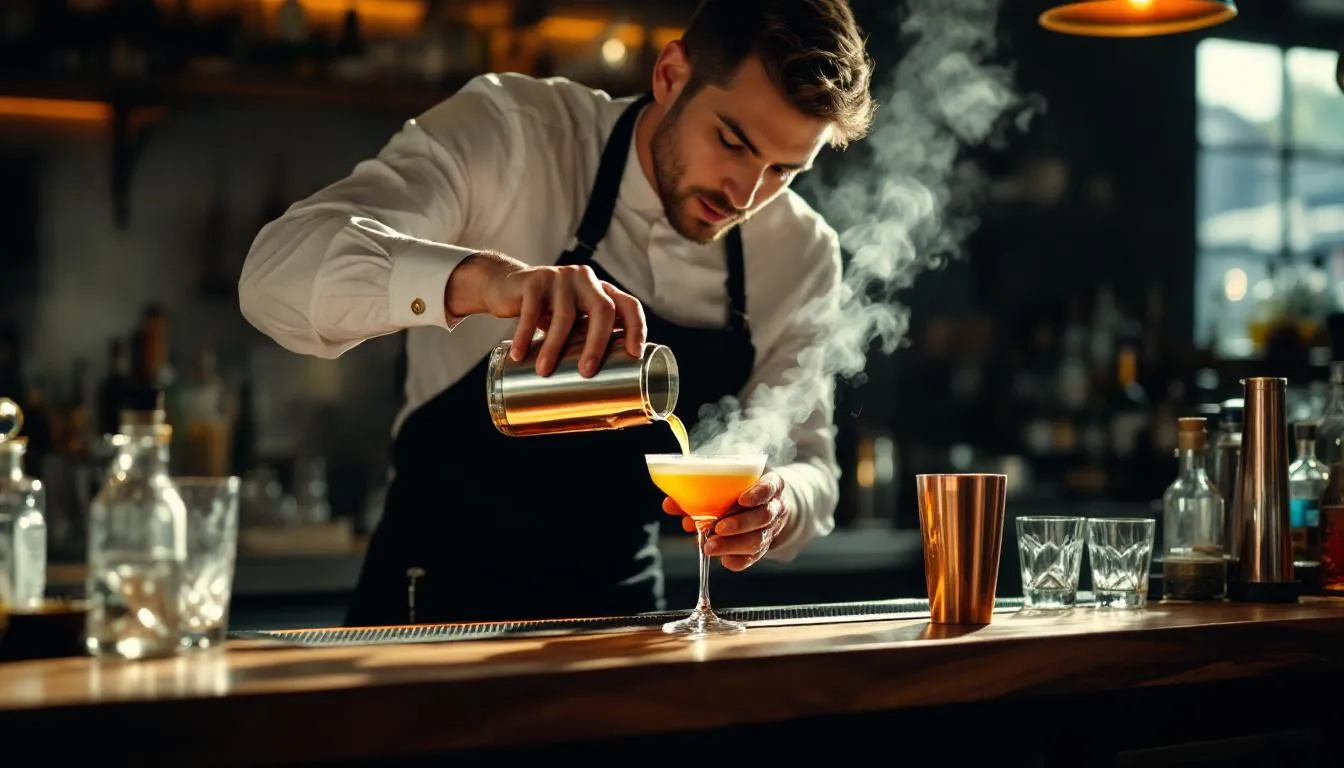
Table of Contents
What Is Bartending?
Bartending is the profession of preparing and serving alcoholic and non-alcoholic beverages at a bar, restaurant, hotel, event venue, or nightclub. It combines product knowledge (spirits, wines, beers, cocktails), technical skill (mixing, measuring, garnishing), and interpersonal ability (reading customers, managing pace, handling difficult situations).
More Than Pouring Drinks
The stereotype of bartending — someone who pours beer and makes Jack and Cokes — undersells the profession considerably. Modern bartending, particularly at craft cocktail bars, requires deep knowledge of spirits, an understanding of flavor balance, physical dexterity, and the social intelligence to manage a room full of strangers with varying levels of sobriety.
A skilled bartender is simultaneously a craftsperson, a performer, a therapist, a bouncer, and a small-business manager. They’re also standing on their feet for 8-12 hours at a stretch, working nights, weekends, and holidays, in environments that are loud, chaotic, and occasionally dangerous.
The profession is ancient. The earliest known taverns date to Mesopotamia around 1800 BCE, and the Code of Hammurabi included regulations for tavernkeepers — suggesting that managing drunk customers has been a challenge for roughly 4,000 years. The modern cocktail bartender emerged in mid-19th century America, when figures like Jerry Thomas (author of the first cocktail book in 1862) elevated drink-mixing into an art.
The Craft Cocktail Renaissance
Starting in the early 2000s, a cocktail revival movement transformed bartending. Bars like Milk & Honey in New York and The Violet Hour in Chicago returned to pre-Prohibition techniques and recipes: fresh-squeezed juices instead of premade mixes, hand-chipped ice, house-made syrups and bitters, and careful attention to balance and dilution.
This movement, sometimes called the “craft cocktail renaissance,” elevated bartending’s prestige and complexity. Top cocktail bars now make their own tonic water, age cocktails in barrels, clarify juices with milk protein, and experiment with techniques borrowed from professional kitchens. The chemistry involved — understanding how acids, sugars, aromatics, and dilution interact — is genuine applied food science.
The result for drinkers: cocktails that taste dramatically better than what most bars served 25 years ago. The result for bartenders: higher expectations, more training, and — at the best establishments — significantly better pay.
Essential Skills
Drink Knowledge
A professional bartender should know the major spirit categories (whiskey, vodka, gin, rum, tequila/mezcal, brandy), their subcategories, and how they behave in drinks. Wine and beer knowledge is expected too, since many bars serve all three.
The core cocktail templates provide a framework. A sour (spirit + citrus + sweetener) gives you the Margarita, Daiquiri, and Whiskey Sour. A spirit-forward stirred drink (spirit + sweetener/modifier + bitters) gives you the Old Fashioned, Manhattan, and Negroni. Understanding these templates means you can riff on them infinitely rather than memorizing hundreds of individual recipes.
Speed and Efficiency
In a busy bar, a bartender might serve 200-400 drinks in a shift. Speed comes from bar setup (mise en place — having everything in its place before service), efficient movement (minimizing steps), and practiced muscle memory for common pours and techniques.
Free pouring — measuring spirits by counting rather than using a jigger — is standard in high-volume bars. A practiced bartender can pour accurate 1.5-ounce shots consistently while simultaneously making conversation, taking orders, and monitoring the room.
Customer Management
The social dimension of bartending is arguably more challenging than the technical one. Bartenders assess customers’ moods, manage expectations, handle complaints, and — critically — monitor intoxication levels. Serving visibly intoxicated customers is illegal in most jurisdictions and exposes both the bartender and the establishment to significant legal liability.
The best bartenders create an atmosphere. They remember regulars’ names and drink preferences. They make newcomers feel welcome. They read the room — knowing when someone wants conversation and when they want to be left alone. This skill isn’t taught in bartending school. It’s learned through thousands of interactions behind the bar.
Behind the Business
Bars operate on tight margins. Liquor typically carries a 75-85% markup (a $6 pour from a $30 bottle), but labor, rent, insurance, licensing, and breakage eat into those margins significantly. Restaurant management principles apply — inventory control, cost tracking, staff scheduling, and regulatory compliance are all part of running a bar.
Bartenders directly affect a bar’s profitability through upselling (suggesting premium spirits or add-ons), speed (more drinks per hour means more revenue), waste control (over-pouring is expensive), and customer retention (regulars are the backbone of most bar businesses).
The Physical and Social Toll
Bartending is harder on the body and social life than outsiders realize. Standing for entire shifts causes chronic foot, back, and knee issues. Repetitive motions — shaking, cutting, reaching — produce joint strain. The noise level in many bars exceeds safe exposure limits. Late-night schedules disrupt sleep patterns and make maintaining relationships outside the industry difficult.
The proximity to alcohol creates additional risks. Substance abuse rates among bartenders exceed the general population, though the industry is increasingly addressing this through support programs and a growing movement toward mindful drinking culture.
Getting Into Bartending
Most bartenders start as barbacks — assistants who stock ice, wash glasses, and learn by watching. Formal bartending schools exist and teach basics, but many bar managers value hands-on experience over classroom training. Starting at a high-volume casual bar builds speed; moving to a craft cocktail bar builds technique and knowledge.
The profession rewards people who are genuinely interested in hospitality — the art of making someone else’s evening better. If you enjoy people, have good hands, can handle chaos, and don’t mind working while everyone else is playing, bartending might be your thing. Just be prepared: nobody “just pours drinks.”
Frequently Asked Questions
How much do bartenders make?
The Bureau of Labor Statistics reports a median hourly wage of about $14.50 for bartenders (2023), but tips dramatically increase actual earnings. In busy urban bars and upscale establishments, bartenders commonly earn $40,000-80,000+ annually including tips. High-volume nightclub bartenders in major cities can earn six figures.
Do you need a license to be a bartender?
Requirements vary by state and country. Most U.S. states require bartenders to be at least 18 or 21 years old. Some states mandate alcohol server certification (like TIPS or ServSafe Alcohol). A few jurisdictions require a bartending license. Formal bartending school is not legally required anywhere, though it can help with job placement.
What are the most important cocktails a bartender should know?
The essential cocktails include the Old Fashioned, Margarita, Martini, Manhattan, Daiquiri, Whiskey Sour, Negroni, Mojito, Moscow Mule, and Cosmopolitan. Mastering these covers the fundamental techniques (stirring, shaking, muddling, building) and spirit categories. Most other cocktails are variations on these templates.
Further Reading
Cite this article
APA
WhatIs.site. (2025). What Is Bartending?. Retrieved May 27, 2026, from https://whatis.site/bartending MLA
"What Is Bartending?." WhatIs.site, July 15, 2025, https://whatis.site/bartending. Accessed May 27, 2026. Chicago
WhatIs.site. "What Is Bartending?." Last modified May 12, 2026. https://whatis.site/bartending. HTML
<a href="https://whatis.site/bartending">What Is Bartending?</a> — WhatIs.site Related Articles
What Is Food Science?
Food science is the applied discipline that uses biology, chemistry, and engineering to study the nature of food, the causes of its deterioration.
scienceWhat Is Chemistry?
Chemistry is the science of matter and how substances interact, bond, and transform. Learn about atoms, molecules, reactions, and why chemistry matters.
financeWhat Is Entrepreneurship?
Entrepreneurship is the process of creating and running a new business. Learn about startup strategy, risk, funding, business plans, and what it takes.
businessWhat Is Restaurant Management?
Restaurant management is the practice of running a food service business, covering operations, staffing, finances, menu planning, and customer experience.
scienceWhat Is Food Chemistry?
Food chemistry is the branch of chemistry that studies the chemical composition of food, the chemical changes food undergoes during processing, cooking.